
🇮🇹 Italy
MinestroneItalian vegetable soup
A thick Italian soup of many seasonal vegetables, usually with beans and pasta or rice. No single recipe defines it; it belongs to cucina povera.
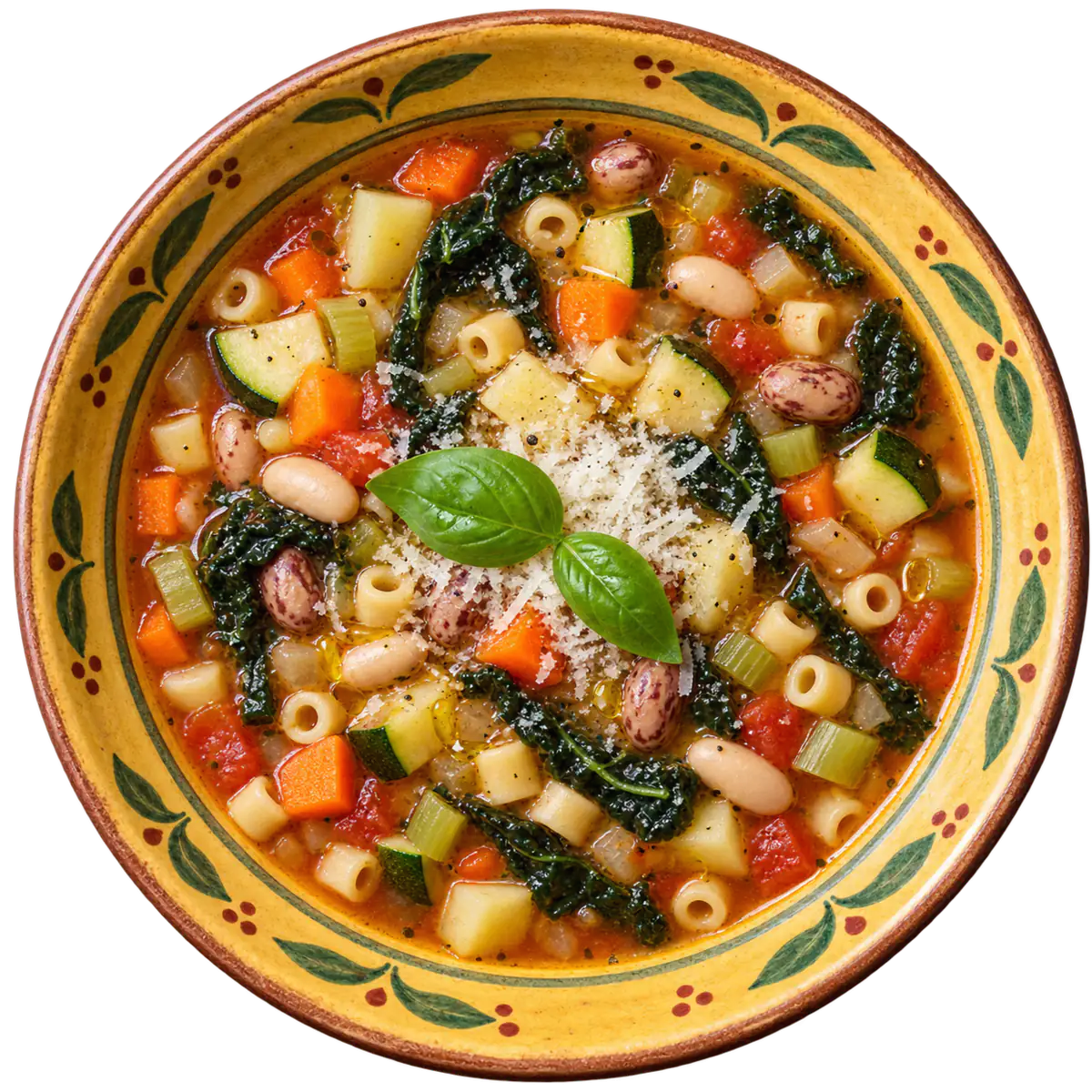
Origin and history
Minestrone is the 'big minestra' of Italian cucina povera, a soup of seasonal vegetables and beans finished with pasta or rice, made in a different way in every region. Pellegrino Artusi gave his version in La scienza in cucina (1891), prefaced by the story of a minestrone he ate in Livorno in 1855 just as cholera reached the town, and invited readers to adapt it to local vegetables. Milan's version takes rice, Genoa's is finished with pesto.
Make it at home
- Makes
- 6 servings
- Total time
- 2 h 30 min
- Hands-on
- 45 min
Ingredients
- 200 g1 cup (7 oz) dried borlotti (cranberry) beans, soaked overnight; or 500 g / 1.1 lb fresh shelled borlotti in summer, or two 400 g (14 oz) cans, drained
- 4 tbsp extra virgin olive oil, plus more to serve
- 50 g2 oz pancetta or prosciutto fat, finely chopped; optional, leave out for a meatless soup
- 1 onion, finely chopped
- 1 garlic clove, finely chopped
- 2 carrots, diced
- 2 celery ribs, diced
- 2 (about 350 g)2 (about 12 oz) potatoes, peeled, diced
- 2 (about 300 g)2 (about 10 oz) zucchini, diced
- 150 g5 oz green beans, cut in short lengths
- 300 g10 oz (about 1/4 head) savoy cabbage (verza), cored, cut in thin strips
- 100 g3.5 oz (2 packed cups) Swiss chard or spinach, cut in strips
- 200 g3/4 cup tomato passata, or 2 ripe tomatoes, fresh tomatoes peeled and chopped
- 2 l8 1/2 cups water or light meat broth, hot
- 1 piece Parmigiano Reggiano rind, scraped clean; optional
- 150 g5 oz (about 1 cup) small soup pasta (ditalini) or Arborio/Vialone rice
- a small handful of flat-leaf parsley or basil, chopped
- salt and black pepper, to taste
- 60 g2 oz (about 2/3 cup) Parmigiano Reggiano, grated, to serve
Method
-
1. Drain the soaked beans, cover them with fresh unsalted water by 5 cm (2 in) and simmer gently for about 1 hour, until tender but not split. Keep them in their cooking water. (Skip this step with fresh or canned beans.)
-
2. In a large heavy pot, warm the olive oil over medium-low heat with the pancetta, if using, until the fat turns translucent, about 3 minutes.
-
3. Add the onion, garlic, carrots and celery and cook gently, stirring now and then, for 10 minutes, until the onion is soft and golden but not browned.
-
4. Add the potatoes, green beans and cabbage, stir to coat them in the fat and let them wilt for 5 minutes.
-
5. Stir in the passata or chopped tomatoes and cook for 2 to 3 minutes.
-
6. Pour in the hot water or broth, add the drained beans with a ladle of their cooking water, and drop in the Parmigiano rind. Season lightly with salt.
-
7. Bring to a gentle simmer, half-cover and cook for 45 minutes, stirring from time to time so nothing catches on the bottom.
-
8. Add the zucchini and the chard or spinach and simmer for 20 to 30 minutes more, until the potatoes break when pressed against the side of the pot.
-
9. Crush a ladleful of beans and potatoes against the side of the pot with a spoon and stir them back in to thicken the soup. Add a little hot water if it has become too dense.
-
10. Add the pasta or rice and cook, stirring often, until just tender, usually 10 to 15 minutes; the soup should be thick, almost spoonable.
-
11. Take the pot off the heat, remove the rind, stir in the parsley or basil, check the salt and pepper, and let it rest for 10 minutes.
-
12. Serve in deep bowls with a thread of raw olive oil and grated Parmigiano at the table.
Notes
- Total time: 2 h 30 min, plus overnight soaking.
- This is the everyday home minestrone of central and northern Italy: a soffritto, whatever the garden or market offers, beans, and pasta or rice. There is no fixed list. Artusi himself told readers to change his recipe to suit their town and the vegetables at hand.
- Seasons: in summer use fresh borlotti, zucchini, green beans, ripe tomatoes and basil; in winter use dried beans, more cabbage, cavolo nero, leeks, pumpkin or squash, and tomato passata instead of fresh tomatoes.
- Artusi's version (1891): fresh beans cooked in meat broth, savoy cabbage, spinach and a little chard wilted dry, a battuto of prosciutto fat, garlic and parsley, julienned celery, carrot, potato and zucchini, a little tomato, then rice added until the soup is almost dry, finished with Parmigiano. Some cooks add a piece of pork rind (cotenna) to the pot.
- Milan: minestrone alla milanese uses rice rather than pasta, usually pancetta or pork rind, and in summer is often eaten lukewarm or cold.
- Genoa: the Ligurian minestrone is cooked without a soffritto and finished with basil pesto; it has its own page as the Genoese variant (minestrone/genovese).
- Tuscany: winter minestrone thick with cavolo nero and white beans is often ladled over bread; the reboiled bread-and-bean soup is a separate soup, ribollita.
- Substitutions: canned beans work but give a thinner, less creamy broth; add them with the zucchini so they do not fall apart. Any short pasta (broken spaghetti, small tubes) can replace ditalini.
- Make ahead: minestrone tastes better the next day. If you plan to keep it, cook the pasta or rice separately and add it to each reheated portion, because it keeps absorbing liquid; loosen leftovers with hot water.
Adapted from Pellegrino Artusi, La scienza in cucina e l'arte di mangiar bene (1891), recipe 47, Minestrone, YesMilano (City of Milan), Minestrone alla milanese, and The Pasta Project, Minestrone with pesto genovese (notes on seasonal vegetables and pasta).
Variants
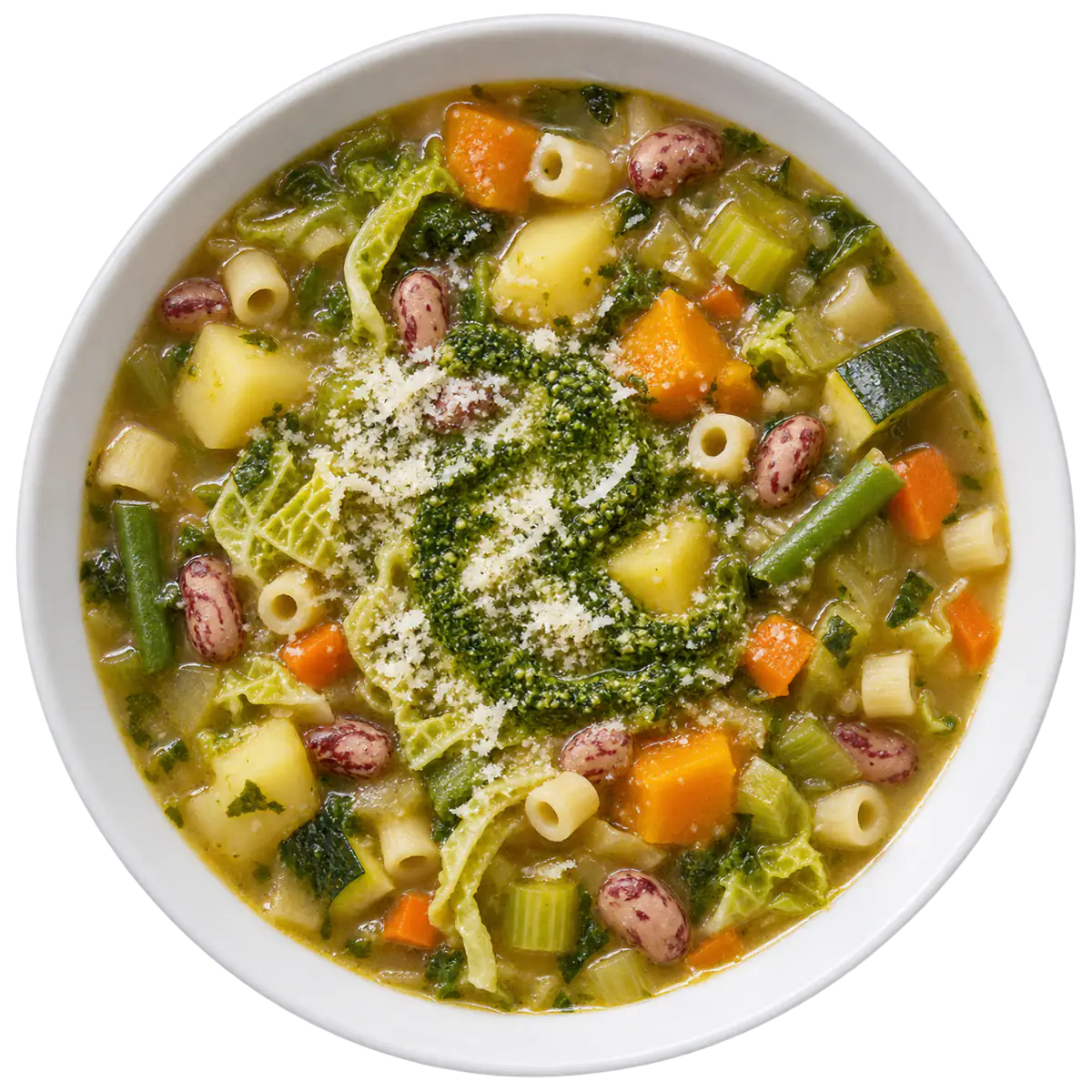
At the festivals
Served at 11 festivals in United States, France, Italy, Brazil, and Switzerland.
Earlier editions
- November 07, 2026
- September 26, 2026
- August 11, 2026
-
February 21, 2026
🇫🇷 Ollioules, France
10th Fête de la Soupe
-
October 05, 2025
🇮🇹 Pieve Ligure, Italy
Festa del Minestrone di Monte Santa Croce
On the menu as minestrone alla genovese
- August 21, 2025
- August 11, 2025 – August 13, 2025
- January 25, 2025
-
May 29, 2024 – September 01, 2024
🇧🇷 São Paulo, Brazil
Festival de Sopas da CEAGESP
On the menu as Sopa Minestrone Vegetariana com Shitaki
- December 09, 2022
Show all 17
-
July 16, 2022
🇮🇹 Montebruno, Italy
Sagra del Minestrone alla Genovese di Montebruno
On the menu as Minestrone alla Genovese con Pesto e “Bricchetti”
-
November 16, 2019
🇫🇷 Lanta, France
Si tu viens, mes pot'iront
On the menu as La minestrone de Micka
By familles Benetti/Barthère
-
August 24, 2019
🇧🇷 Telêmaco Borba, Brazil
15º Buffet de Sopas
-
August 20, 2019
🇮🇹 Rezzoaglio, Italy
Cabanne in Festa, 11th edition
-
January 26, 2019
🇫🇷 Ollioules, France
Fête de la Soupe d'Ollioules
- November 14, 2015
- November 15, 2008