
🇰🇷 South Korea · Korea
MiyeokgukKorean seaweed soup
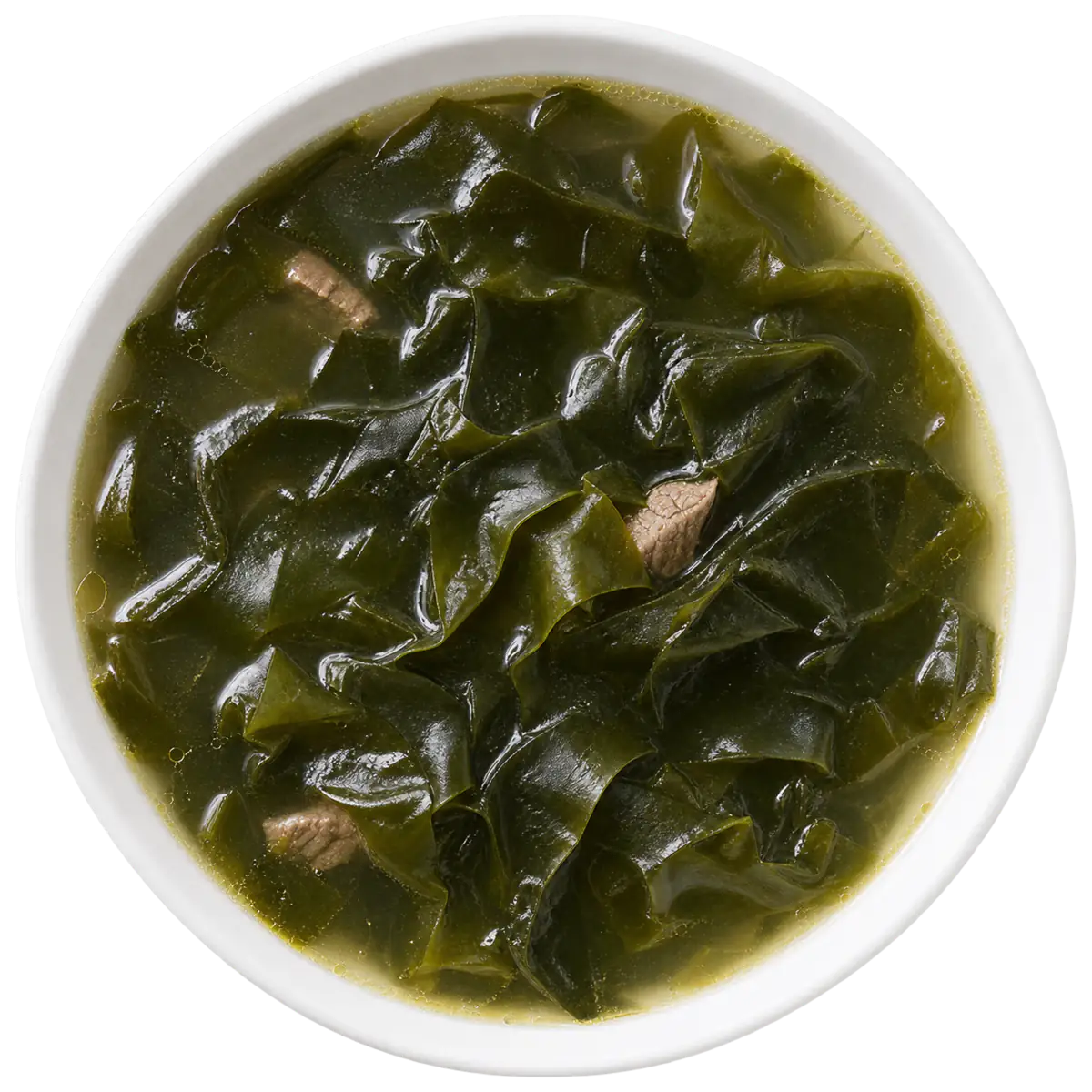
A Korean soup of dried brown seaweed (miyeok) sautéed in sesame oil and simmered with beef, mussels or anchovy stock, seasoned with soup soy sauce and garlic; eaten on birthdays and by new mothers.
Origin and history
Miyeokguk is tied in Korean custom to birth: the Encyclopedia of Korean Culture records it as the first food of a new mother, eaten with white rice (cheot-gukbap), and as a customary birthday dish. It explains that Korea has sea on three sides and dried seaweed keeps all year, so the soup became an everyday dish; eating it on a birthday recalls the mother who gave birth.
Make it at home
- Makes
- 6 servings
- Total time
- 45 min
- Hands-on
- 25 min
Ingredients
- 30 g1 oz dried miyeok (brown seaweed, wakame-type), soaked in cold water 15 minutes, then drained and cut in short lengths
- 300 g10 oz beef brisket or stew beef, cut in small bite-size pieces
- 1 tbsp sesame oil, plus 1 tsp to finish
- 4 tbsp soup soy sauce (guk-ganjang), divided; use 2 tbsp here
- 3 cloves garlic, minced
- 1.8 L7 1/2 cups water, or rice-rinsing water, which gives a softer body
- salt, to taste
Method
-
1. Soak the dried seaweed in plenty of cold water for 15 minutes until it swells and turns glossy dark green. Drain, squeeze lightly and cut into 5 cm (2 inch) lengths.
-
2. Heat the tablespoon of sesame oil in a heavy pot over medium heat and stir the beef until it loses its pink colour, about 3 minutes.
-
3. Add the seaweed, the garlic and 1 tablespoon of the soup soy sauce. Stir-fry for about 3 minutes until the seaweed is coated and fragrant.
-
4. Pour in the water and bring to a boil, skimming off any foam.
-
5. Cover, lower the heat and simmer for 30 minutes, until the beef is tender and the broth has turned slightly milky and rich.
-
6. Season with the remaining soup soy sauce and salt, then stir in the teaspoon of sesame oil. Serve hot with rice.
Notes
- Miyeokguk is the birthday soup, eaten in memory of the mother, and the first meal of a new mother, served with white rice. The encyclopedia says the postpartum version (cheot-gukbap) has no beef and is seasoned only with soy sauce and sesame oil, and links the seaweed to its iodine content and to milk production.
- Stock variants: dried mussels (honghap) or chicken broth instead of beef, and in coastal areas white fish such as sea bream or flatfish. Anchovy stock and a vegetarian version with a meat-free broth are also made. The beef-brisket version is the one most often cooked at home.
- Stir-frying the seaweed with the beef and sesame oil before the water goes in gives a milky, rich broth, as the encyclopedia notes; boiling it without frying gives a clear one. Simmer gently rather than hard so the seaweed flavour stays clean. Rice-rinse water adds a little sweetness and body.
- Guk-ganjang (soup soy sauce) is saltier and lighter in colour than ordinary soy; if you only have regular soy sauce, use a little less and add salt last.
- It improves on the second day and reheats well; the seaweed will keep softening, which is liked.
Adapted from Encyclopedia of Korean Culture (Academy of Korean Studies), entry on miyeokguk, Beyond Kimchee, Korean beef seaweed soup, and Epic Kor, Miyeokguk.
At the festivals
No festival we list has printed it on a menu yet.