
🇰🇷 South Korea · Korea
TteokgukKorean rice cake soup
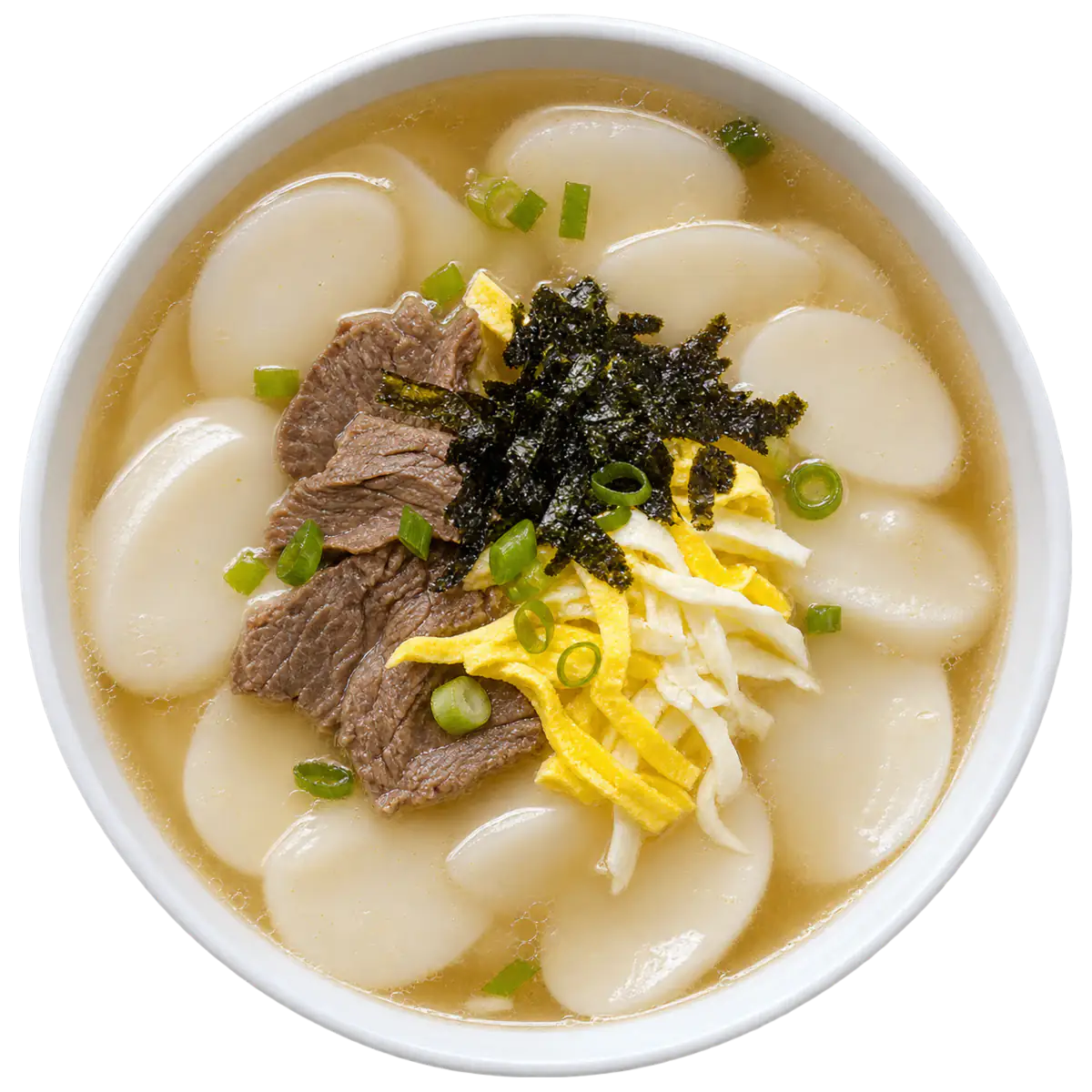
A Korean soup of sliced oval rice cakes (tteok) in a clear beef, anchovy or kelp broth, garnished with egg ribbons, seaweed and scallion, eaten on Seollal, the lunar new year.
Origin and history
Tteokguk is the dish of Korea's lunar new year. The Encyclopedia of Korean Culture says nobody knows when the custom began, but the late-Joseon almanacs Dongguk Sesigi and Yeolyang Sesigi list it as indispensable at the new-year rites and feasts, and Choe Nam-seon saw it as descending from ancient new-year festival food. It is also eaten as an everyday one-bowl meal.
Make it at home
- Makes
- 4 servings
- Total time
- 1 h
- Hands-on
- 45 min
Ingredients
- 600 g1.3 lb thinly sliced oval rice cakes (tteokguk-tteok), soaked in cold water 30 minutes, then drained
- 1.5 L6 1/4 cups water
- 10 x 10 cm4 x 4 inch dried kelp (dasima), wiped, not washed
- 250 g9 oz beef brisket or shank, for the stock; leave whole
- 4 scallions, 2 left whole for the stock, 2 sliced thin to finish
- 3 cloves garlic, 2 crushed for the stock, 1 minced for the beef seasoning
- 2 tbsp soup soy sauce (guk-ganjang), divided: 1 tbsp for the beef, 1 tbsp for the broth
- 1 tsp sesame oil
- 2 eggs, yolks and whites separated, each pinch-salted
- 1 sheet roasted seaweed (gim), toasted over a flame and crumbled or cut in thin strips
- salt and black pepper, to taste
- neutral oil, a few drops for the egg pan
Method
-
1. Put the water, brisket, kelp, the two whole scallions and the two crushed garlic cloves in a pot and bring to a boil. Take the kelp out after 5 minutes.
-
2. Lower the heat and simmer the beef for about 40 minutes, skimming the foam, until a skewer slides in easily.
-
3. Lift the beef out, let it cool, then tear it into thin shreds against the grain. Strain the stock and discard the scallions and garlic.
-
4. Toss the shredded beef with 1 tablespoon of the soup soy sauce, the minced garlic, the sesame oil and a little pepper.
-
5. Cook the yolk and the white as two thin sheets in a lightly oiled non-stick pan over low heat, about 1 minute per side. Let them cool and cut into thin strips.
-
6. Bring the strained stock back to a boil. Add the drained rice cakes and stir now and then until they float and look soft and glossy, about 5 minutes.
-
7. Season with the remaining soup soy sauce and salt until the broth tastes clean and savoury. Turn off the heat.
-
8. Ladle into bowls and top with the seasoned beef, egg strips, crumbled seaweed and sliced scallion. Serve at once.
Notes
- Tteokguk is the soup of Seollal, the lunar new year; according to folklore a bowl adds a year to your age, since Koreans gain a year at the new year. The clear, pale broth is read as a sign of purity and a clean start, and the Encyclopedia of Korean Culture notes that the white rice cake suits a day when everything begins anew.
- The stock varies by home and region: beef brisket is the classic, and before beef was common cooks used minced pheasant. Anchovy, kelp or chicken stock are also used. The encyclopedia says the broth should be seasoned a little firmly so that it suits the bland rice cakes.
- Fresh rice cakes need only a short soak; frozen or hard refrigerated ones should soak 30 minutes to an hour, or they stay chalky in the middle. Do not boil them long or they dissolve and cloud the broth.
- Regional forms exist: in Kaesong the rice cake is shaped into small waisted pieces (joraengi-tteokguk), and in Chungcheong a fresh dough of rice flour is sometimes used. Seasoned beef and egg strips are the usual toppings, sometimes with scallion skewers.
- Make-ahead: the stock and the garnishes keep two days in the fridge; cook the rice cakes only when serving.
Adapted from Encyclopedia of Korean Culture (Academy of Korean Studies), entry on tteokguk, 123 Kimchi, Tteokguk, and The Takeout, South Korea's New Year's tteokguk explained.
At the festivals
No festival we list has printed it on a menu yet.