
🇮🇳 India, 🇱🇰 Sri Lanka, and 🇬🇧 United Kingdom · Madras Presidency and Ceylon, as developed in Anglo-Indian kitchens
Mulligatawny
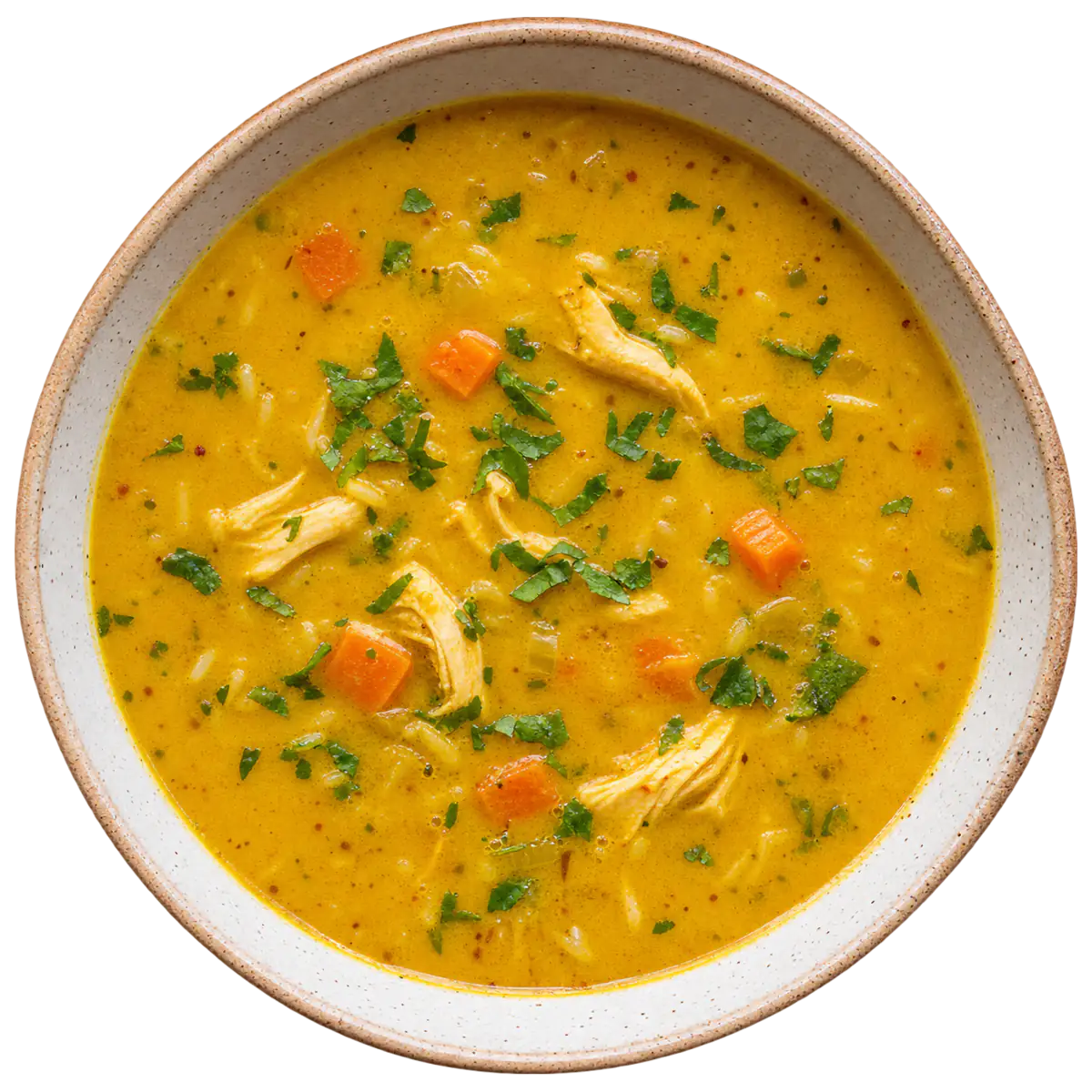
An Anglo-Indian curried soup, descended from South Indian pepper water, of chicken or mutton stock with lentils, spices and rice, often finished with coconut milk or cream and lemon.
Origin and history
Mulligatawny is an Anglo-Indian soup from the Madras Presidency, named from the Tamil milagu thanni, pepper water. According to the accounts of the cuisine, Indian cooks serving East India Company officials in the 18th century adapted the South Indian broth into the soup course their employers expected. The word is recorded in English from the late 1700s, and the soup became fashionable in Britain in the 19th century.
Make it at home
- Makes
- 6 servings
- Total time
- 1 h 20 min
- Hands-on
- 30 min
Ingredients
- 500 g1.1 lb chicken thighs or drumsticks, bone in, skinned (mutton or lamb on the bone is the older alternative)
- 1.5 litres6 cups water or light chicken stock
- 100 g1/2 cup red lentils (masoor dal) or split toor dal, rinsed
- 2 onions, thinly sliced
- 1 tbsp oil or ghee
- 4 cloves garlic, crushed
- 2 tsp black pepper, freshly ground
- 1 tsp ground cumin
- 1 tsp ground coriander
- 1/2 tsp turmeric
- 1 tsp chilli powder, adjust to taste
- 2 cloves, whole
- 1 small piece cinnamon stick
- 2 green cardamom pods, lightly crushed
- 100 g1/2 cup long-grain rice, rinsed, boiled separately for serving
- 240 ml1 cup coconut milk, or 100 ml (1/2 cup) cream
- 1 lemon, juiced
- salt, fresh mint or coriander leaves, to taste, to garnish
Method
-
1. Heat the oil or ghee in a large pot over medium heat and cook the onions for about 8 minutes, until soft and golden.
-
2. Add the garlic, cloves, cinnamon and cardamom and stir for 1 minute, then the pepper, cumin, coriander, turmeric and chilli powder for 30 seconds.
-
3. Add the chicken and turn it in the spices for 2 minutes, then pour in the water or stock and bring to a boil.
-
4. Reduce to a gentle simmer (about 90 C / 195 F), cover partly and cook for 30 minutes, skimming any foam.
-
5. Add the rinsed lentils and simmer 25 to 30 minutes more, until the lentils are soft and the soup has thickened.
-
6. Lift out the chicken, remove the bones and shred the meat. Take out the cinnamon and cardamom pods.
-
7. Return the shredded chicken to the pot, stir in the coconut milk and simmer for 5 minutes; do not boil hard.
-
8. Season with salt and lemon juice, spoon a little cooked rice into each bowl, ladle in the soup, and top with herbs.
Notes
- Mulligatawny is the Anglo-Indian soup-course form of South Indian pepper water (milagu thanni, see the rasam page): the thin peppery broth acquired meat stock, lentils, rice and later cream or coconut milk to suit a British soup course.
- Anglo-Indian cookery authors stress that the old pepper water of the Anglo-Indian table is closer to rasam than to the thick modern mulligatawny; their own mulligatawny is a long-simmered meat-and-coconut soup, closer to the base here.
- Sources disagree on whether the Raj-era soup is Indian or Sri Lankan in origin; Ceylon versions lean on coconut milk, which this recipe offers as the default.
- Mutton or lamb gives the more traditional flavour; simmer it 30 to 40 minutes longer. Cream replaces coconut milk in the later British versions.
- Without red lentils, any split pulse works; add a diced carrot for the vegetable body some recipes include.
- It keeps for 3 days in the fridge and thickens, so thin it with water or stock when reheating.
Adapted from Mulligatawny Soup, Bridget White (Anglo-Indian cookery author), Mulligatawny, Cuisine India Society, and Mulligatawny: the Soup of an Empire, Live History India.
At the festivals
Served at 1 festival in France.
Earlier editions
-
February 21, 2026
🇫🇷 Ollioules, France
10th Fête de la Soupe