
🇮🇳 India and 🇱🇰 Sri Lanka · Tamil Nadu, Andhra Pradesh, Karnataka, Kerala; Tamil Sri Lanka
RasamSouth Indian pepper soup
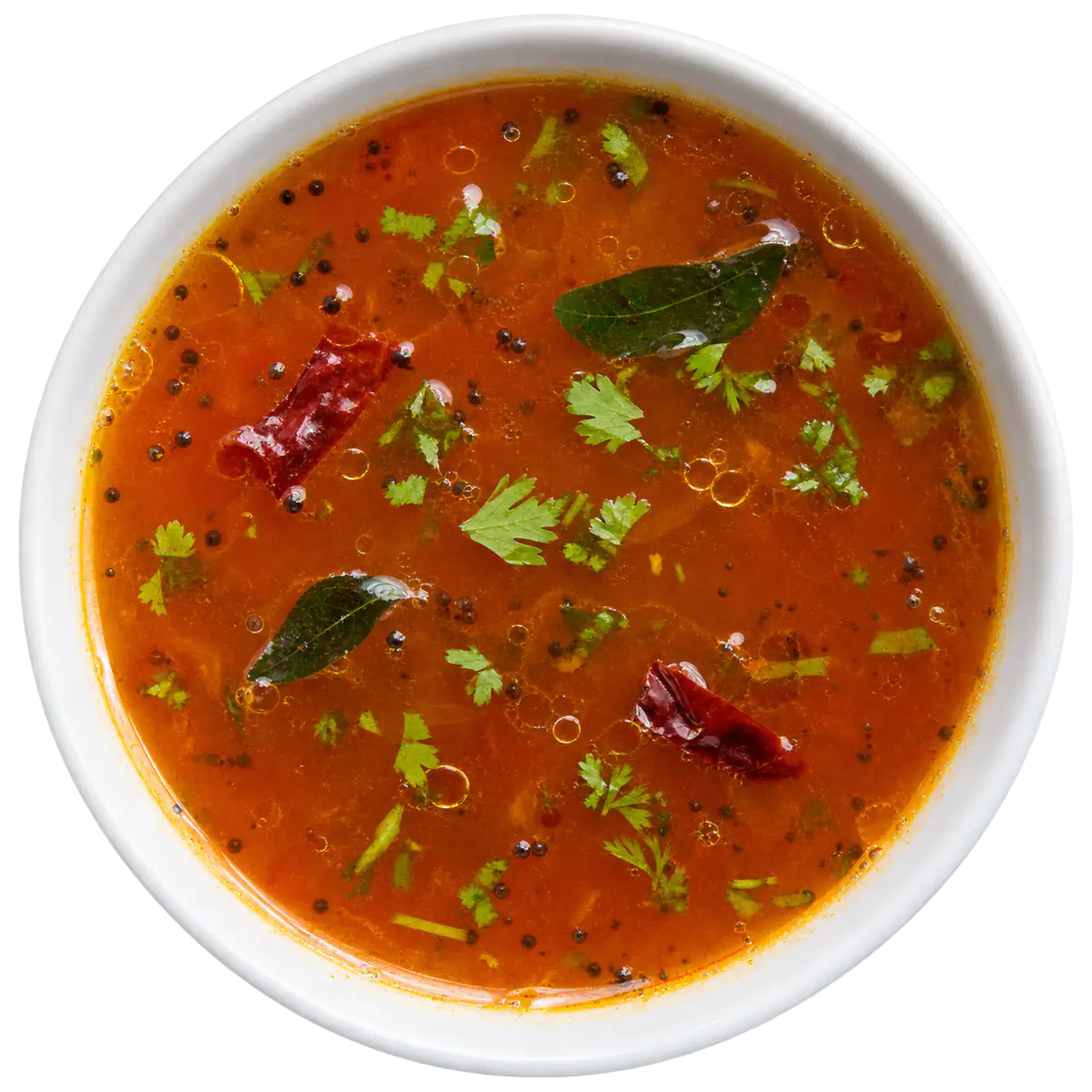
A thin, sour and peppery South Indian broth of tamarind (or tomato), black pepper, cumin, garlic and curry leaves, often with a little cooked toor dal water, finished with a tempering of mustard seeds and chilli in ghee or oil.
Origin and history
Rasam is a South Indian broth of tamarind and pepper that is eaten across Tamil Nadu, Andhra Pradesh, Karnataka and Kerala; its Kannada name is saaru and its Telugu name charu. One account places its rise in 16th-century Madurai, though that is not firmly documented. Its Tamil forebear, milagu thanni (pepper water), is the source of the English word mulligatawny, recorded in the late 1700s.
Make it at home
- Makes
- 4 servings
- Total time
- 50 min
- Hands-on
- 25 min
Ingredients
- 50 g1/4 cup split toor dal (arhar dal, split pigeon peas), cooked until falling apart, then mashed, with its cooking water kept
- 25 g1 oz dried tamarind, soaked in 250 ml (1 cup) warm water and squeezed to give about 1 cup of juice
- 2 ripe tomatoes, quartered
- 1/4 tsp turmeric
- 1 tsp jaggery, optional; rounds off the sourness
- salt, to taste
- 750 ml3 cups water, plus the dal cooking water
- 2 tsp whole black peppercorns, for the fresh spice powder
- 1 tsp cumin seeds, for the fresh spice powder
- 1 tbsp coriander seeds, for the fresh spice powder
- 1/4 tsp fenugreek (methi) seeds, for the fresh spice powder
- 1 tsp split toor dal, dry-roasted, for the spice powder
- 1 tbsp ghee, for the tempering (coconut oil in Karnataka and Kerala)
- 1/2 tsp mustard seeds, for the tempering
- 1 pinch asafoetida (hing), for the tempering
- 1 sprig curry leaves, for the tempering
- 6 sprigs fresh coriander leaves, chopped, to finish
Method
-
1. Cook the toor dal in 250 ml (1 cup) of water until it is completely soft, about 20 minutes in a pot or 3 to 4 whistles in a pressure cooker. Mash it and keep it with its water.
-
2. Dry-roast the 1 tsp of toor dal in a small pan over medium heat until golden, then add the peppercorns, cumin, coriander and fenugreek seeds and roast for about 1 minute until they crackle and smell strongly.
-
3. Cool the roasted spices, then grind them to a coarse powder.
-
4. In a deep pot combine the water, tamarind juice, tomatoes, turmeric, jaggery and salt. Boil for 4 to 5 minutes, until the raw smell of the tamarind is gone and the tomatoes have collapsed; crush them with the back of a spoon.
-
5. Stir in the mashed dal with its water and the ground spice powder. Heat gently until the surface starts to froth (just before it boils) and then turn off the heat. Do not boil hard, or the spices lose their fragrance.
-
6. Heat the ghee in a small pan over medium heat. Add the mustard seeds; when they pop add the asafoetida and curry leaves for a few seconds.
-
7. Pour the sizzling tempering into the rasam, stir in the coriander leaves, cover for 5 minutes to let the aroma settle, and serve hot in cups or over rice.
Notes
- Rasam is thin by design: it should pour like tea, not coat the spoon. Strain out the tomato skins if you want it fully clear.
- Regional forms differ mainly by one flavour. Tamil milagu rasam (pepper water, milagu thanni) leans on pepper and cumin and in some households skips the dal water; Andhra miriyala charu and Karnataka saaru use the same method with local powders (Udupi saaru powder with chilli, coconut oil in the tempering); lemon, pineapple and tomato rasams change only the sour or fruity element.
- Ready-made rasam powder (1 to 2 tsp) can replace the fresh powder; add it as in step 5.
- In a South Indian meal rasam is poured over rice and eaten with a vegetable side and papad; it is also sipped on its own as a soup, especially for a cold.
- Rasam is the ancestor of the Anglo-Indian mulligatawny (which has its own page); the recipe here is the clear broth, with no meat, rice or cream.
Adapted from Milagu Rasam (Miriyala Charu), Archana's Kitchen, Tomato Rasam (saaru) in Kannada, Hebbar's Kitchen, and Rasam, Rama's recipe collection (Georgia Tech faculty pages).
At the festivals
No festival we list has printed it on a menu yet.