
🇺🇸 United States
Oyster stew
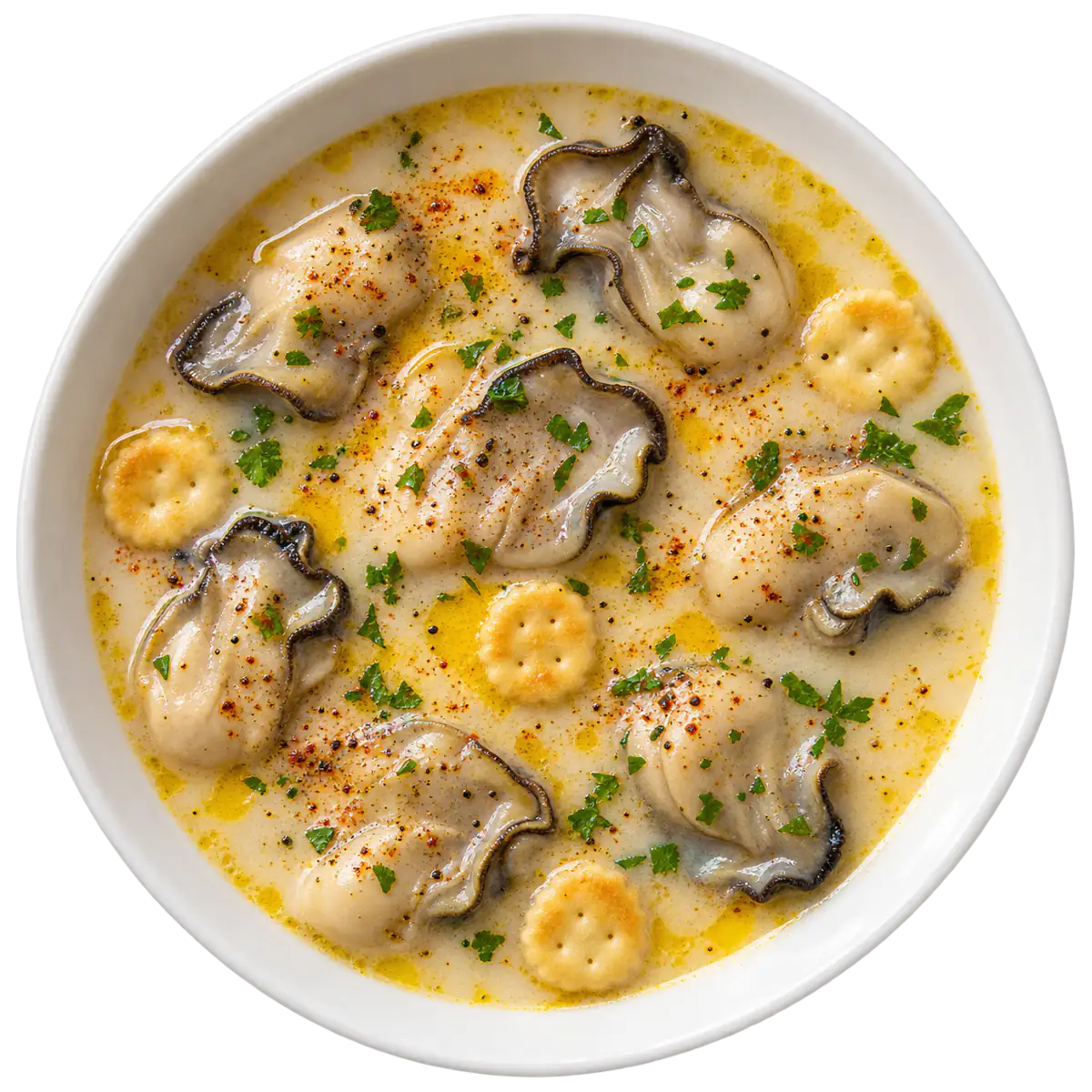
A simple American soup of oysters and their liquor poached in hot milk (or milk and cream) with butter, salt and pepper, taken off the heat when the oysters' edges curl.
Origin and history
Oyster stew is a milk soup of oysters and butter. Oysters were abundant and widely eaten in the United States from the 1700s through the 1800s. According to the National Park Service, Irish immigrants who avoided meat on Christmas Eve replaced the traditional fish soup or stew with oysters, and the stew became a Christmas tradition for many families, Irish or not. Fannie Farmer's Boston Cooking-School Cook Book gives the classic method: oysters cooked in their liquor until the edges curl, then milk, butter and seasoning.
Make it at home
- Makes
- 4 servings
- Total time
- 20 min
- Hands-on
- 15 min
Ingredients
- 475 ml1 pint shelled oysters, with all their liquor; about 24 to 30 oysters
- 950 ml4 cups whole milk, scalded
- 60 g1/4 cup (4 tbsp) butter
- 1 tsp salt, to taste; the oyster liquor is already salty
- 1 pinch1/8 tsp ground black pepper
- oyster crackers, to serve
Method
-
1. Tip the oysters into a colander set over a bowl, keeping every drop of liquor, and pick out any shell fragments.
-
2. Scald the milk in a saucepan: heat it until steam rises and small bubbles form at the edge, without boiling.
-
3. Strain the oyster liquor through a fine sieve or cheesecloth into a wide pot and bring it just to a simmer.
-
4. Add the oysters and cook gently for 1-2 minutes, until they plump up and their frilly edges begin to curl.
-
5. Lift the oysters out with a slotted spoon into a warm tureen or large bowl and add the butter, salt and pepper.
-
6. Pour the liquor back over them, then add the hot milk and stir once.
-
7. Ladle into warm bowls and serve at once with oyster crackers.
Notes
- Fannie Farmer's version uses roughly one measure of oysters to one of milk; the ratio here is scaled down so the soup is milkier and cheaper. For a richer bowl, use 1 quart of oysters with the same milk.
- There is no thickener, no potato and no salt pork: that is what separates oyster stew from oyster chowder. The soup is thin and milky.
- Take the oysters out as soon as the edges curl; boiling toughens them and can curdle the milk. Season at the end, as the liquor carries salt.
- A National Park Service household recipe for Christmas Eve uses canned oysters, milk and butter in much larger quantities (a gallon of milk to four cans of oysters), so canned oysters are an accepted choice.
- Make it just before eating; milk soups do not reheat well.
Adapted from Fannie Farmer, The Boston Cooking-School Cook Book and National Park Service, Oyster Stew.
At the festivals
No festival we list has printed it on a menu yet.