
🇵🇾 Paraguay · Riverine areas / north
Pira caldoParaguayan fish soup
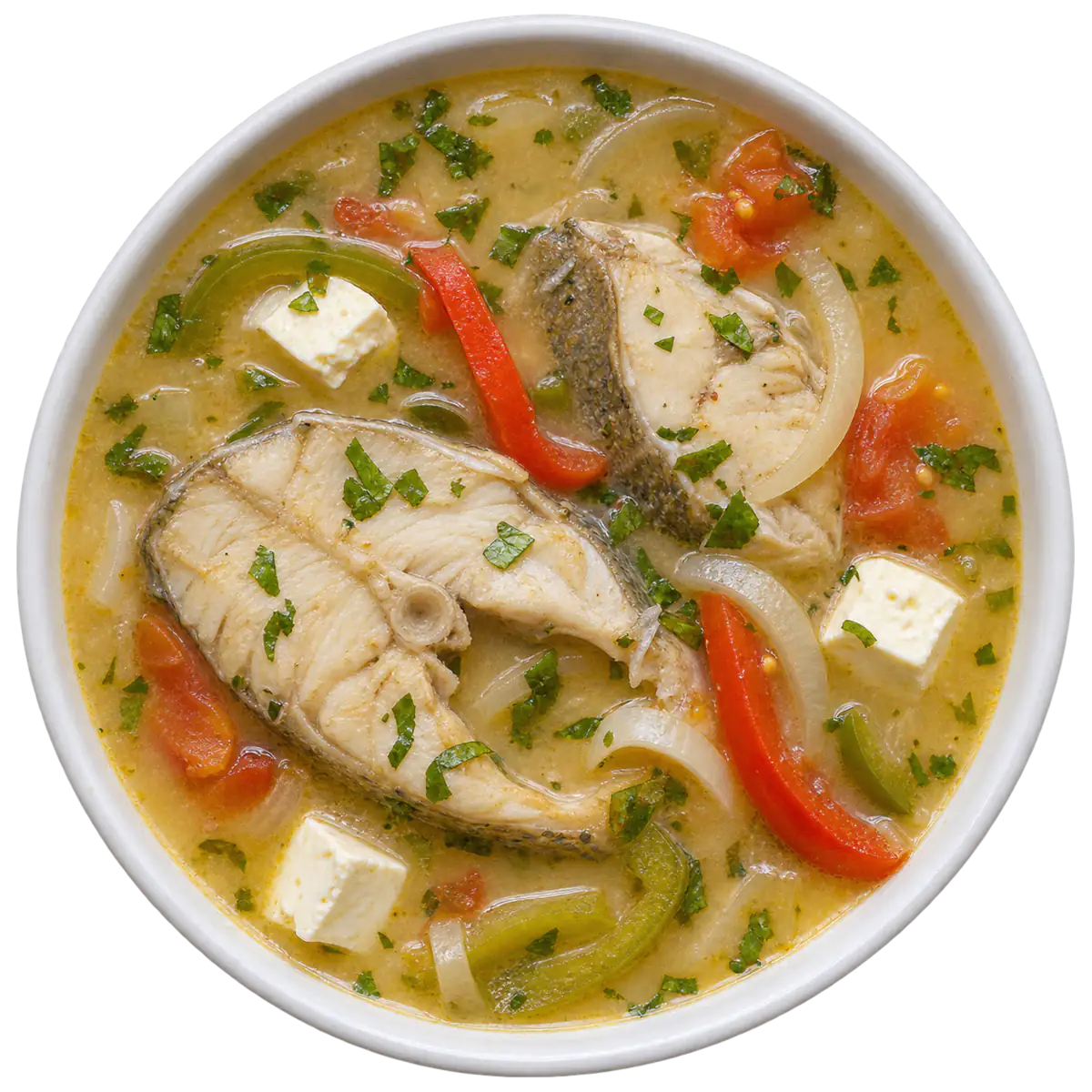
A Paraguayan soup of river fish (surubí, mandi'y, tare'y) cooked with onion, tomato, pepper and fat, thickened by cooking down; the name joins Guaraní pira (fish) and Spanish caldo.
Origin and history
Pira caldo (or piracaldo) is the river-fish soup of Paraguay; its name joins the Guaraní pira, 'fish', with the Spanish caldo, 'broth'. It is made with fish from the Paraguay and Paraná rivers, above all surubí, cooked with onion, locote and tomato, and today usually finished with milk and queso Paraguay. Paraguayan papers list it among the typical dishes of Holy Week, when fish replaces meat.
Make it at home
- Makes
- 4-6 servings
- Total time
- 1 h
- Hands-on
- 35 min
Ingredients
- 800 g1.8 lb surubí (river catfish) or other firm freshwater fish: mandi'i, tare'y, dorado, pacú, cleaned, boned, cut in large pieces; keep head and bones for stock. Outside Paraguay, any firm white catfish
- 1.2 l5 cups water, hot, or a light stock made from the fish head and bones
- 2 tbsp pork lard or beef fat (grasa), or vegetable oil
- 2 onions, finely chopped
- 1 locote (bell pepper), red or green, seeded, diced
- 3 garlic cloves, crushed
- 3 ripe tomatoes, peeled, seeded, chopped
- 1 bay leaf
- 1 small hot chilli, chopped, to taste; optional
- 400 ml1 2/3 cups whole milk
- 150 g5 oz queso Paraguay (fresh cow's-milk cheese), crumbled or diced; or queso fresco or a mild farmer's cheese
- salt and black pepper, to taste
- fresh oregano, chopped, a small handful
- kuratu (cilantro) or parsley, chopped, a small handful
Method
-
1. If you have the fish head and bones, rinse them, cover with the water, simmer for 20 minutes and strain; otherwise just heat the water.
-
2. Salt the fish pieces lightly and set them aside.
-
3. Melt the lard in a wide, heavy pot over medium heat, add the onions and locote and cook for 6 to 8 minutes, until soft and starting to colour.
-
4. Add the garlic and cook for 30 seconds, without letting it brown.
-
5. Add the tomatoes, bay leaf, chilli if using, salt and pepper, and cook for 8 to 10 minutes, stirring now and then, until the tomatoes have broken down into a thick, jammy base.
-
6. Pour in the hot stock or water, scrape the bottom of the pot and simmer for 10 minutes.
-
7. Slide in the fish, lower the heat and poach for 6 to 8 minutes, shaking the pot gently rather than stirring, until the flesh is opaque and flakes when pressed.
-
8. Keep the heat low and pour in the milk a little at a time, warming it through for 2 to 3 minutes without letting it boil hard, so it does not curdle.
-
9. Add the cheese and leave it for 1 to 2 minutes; it will soften but need not melt completely.
-
10. Turn off the heat, add the oregano and kuratu, taste for salt (the cheese is salty), cover and rest for 5 minutes.
-
11. Serve very hot, with pieces of fish and cheese in each bowl.
Notes
- Fish: Paraguayans prize surubí, a large river catfish with firm flesh and few bones. Smaller river fish such as mandi'i and tare'y, or boga, dorado and pacú from the Paraguay and Paraná rivers, are also used.
- Dairy: the version with milk and queso Paraguay is the most common today. Some cooks make it without dairy: vegetables fried in beef or pork fat, then water and fish. Others use cream instead of milk, or add white wine, diced potatoes, carrot, celery or leek.
- Queso Paraguay is a fresh, slightly salty cow's-milk cheese that softens without fully melting. Queso fresco is the nearest substitute; a mild feta can be used in small amounts, since it is saltier.
- Fat: frying the vegetables in pork or beef fat gives the traditional flavour; oil gives a lighter broth.
- Serving: it is eaten above all in Holy Week (Semana Santa), when meat is avoided, alongside chipa, chipa guasu and sopa paraguaya.
- Make ahead: the tomato base can be made a day ahead; add the fish, milk and cheese only when reheating, so the fish stays whole.
Adapted from Última Hora (Asunción), ¿Qué comemos en Semana Santa?, recipe by Sarita Garófalo, Recetas Paraguay, Piracaldo, and Comidas Paraguayas, Pira caldo paraguayo.
At the festivals
Served at 1 festival in Paraguay.
Earlier editions
-
August 02, 2026
🇵🇾 San Antonio, Paraguay
VI Festival Nacional del Pirá Caldo
On the menu as Piracaldo
By Competing cooks and More than 30 exhibitors
-
August 03, 2025
🇵🇾 San Antonio, Paraguay
V Festival Nacional del Pirá Caldo
On the menu as Caldo de surubí, Caldo de mandi'í, and Caldo de piraña
-
August 04, 2024
🇵🇾 San Antonio, Paraguay
IV Festival Nacional del Pirá Caldo
On the menu as Caldo de pescado tradicional
By 25 exhibitors and Herminia Sanabria, Pira Gourmet El Gato