
🇲🇽 Mexico · Jalisco (most associated); also Michoacan, Zacatecas, Sinaloa
Pozole rojoRed pozole
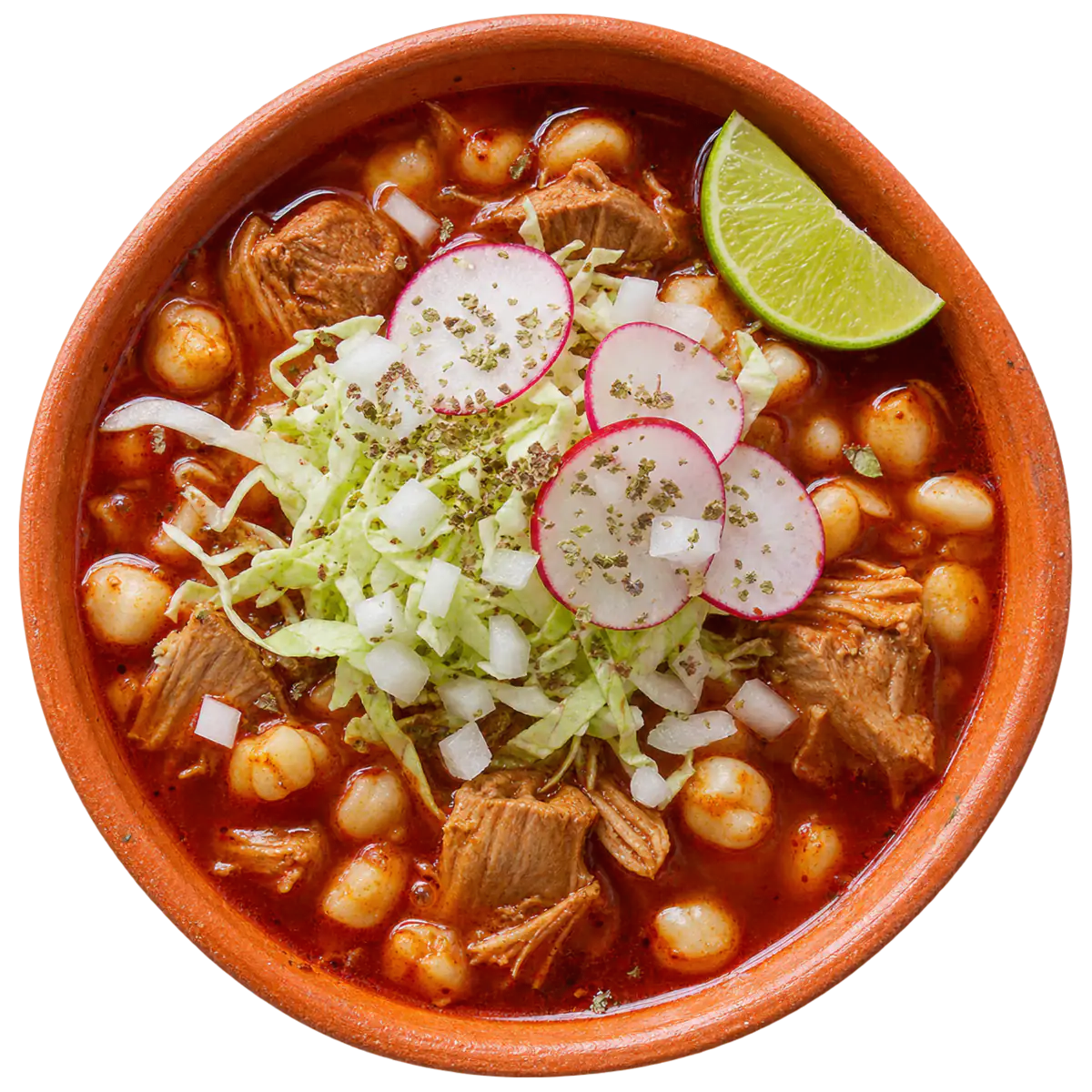
Pozole seasoned with a red sauce of dried chiles such as guajillo and ancho, which colors the broth.
Origin and history
Red pozole grew up in western Mexico, above all in Jalisco and the Bajío, when cooks began seasoning the pork-and-hominy broth with dried chiles such as guajillo and ancho. It is the style most associated with Jalisco, and is also eaten in Sinaloa, Michoacán and Zacatecas. It is one of the most served dishes in September around Mexican Independence Day.
Make it at home
- Makes
- 8 servings
- Total time
- 3 h
- Hands-on
- 50 min
Ingredients
- 1 kg2.2 lb pork backbone (espinazo) or pork leg, in pieces
- 500 g1.1 lb pork head meat or pork ribs, in pieces; optional but traditional in Jalisco
- 4 l17 cups water, plus more as needed
- 1 white onion, halved
- 6 cloves garlic, 4 whole for the broth, 2 for the sauce
- 1 tbsp coarse salt, plus more to taste
- 1 kg2.2 lb (about 6 cups) cooked cacahuazintle hominy, drained and rinsed, or 500 g / 1.1 lb dried, cooked until opened (see the pozole blanco page)
- 4 (about 30 g)4 (about 1 oz) dried guajillo chiles, stems, seeds and veins removed
- 3 (about 40 g)3 (about 1.5 oz) dried ancho chiles, stems, seeds and veins removed
- 1/4 white onion, for the sauce
- 1 tsp dried Mexican oregano, for the sauce
- 1/4 head green cabbage or lettuce, finely shredded, to serve
- 12 radishes, sliced, to serve
- 1 white onion, finely chopped, to serve
- dried oregano, lime wedges, ground chile de árbol and tostadas, to serve
Method
-
1. Put the pork in a large pot with the water, bring to a boil and skim off the foam for the first 10 minutes.
-
2. Add the halved onion, 4 garlic cloves and the salt. Lower the heat, partly cover and simmer for about 2 hours, until the meat comes away from the bones easily.
-
3. Meanwhile, toast the chiles a few seconds per side in a dry frying pan over medium heat, just until they smell fragrant and soften; do not let them blacken or the broth turns bitter.
-
4. Put the chiles in a bowl, cover with 500 ml (2 cups) of very hot water and soak for 20 minutes.
-
5. Blend the chiles with their soaking water, the 2 remaining garlic cloves, the quarter onion and the oregano until completely smooth.
-
6. Lift the meat out of the broth, discard the onion and garlic and skim off most of the fat. Shred the meat and discard the bones.
-
7. Pour the chile purée through a sieve into the broth, pressing on the solids, and bring to a boil. Simmer for 15 minutes, until the broth is a deep brick red.
-
8. Add the hominy and the meat and simmer gently for 30 minutes so the corn takes on the colour. Thin with hot water if needed and season well with salt.
-
9. Serve in deep bowls with the cabbage, radishes, onion, oregano, lime, chile and tostadas on the table.
Notes
- How it differs from the parent: the same hominy and pork base, but the broth is coloured and flavoured with a strained purée of dried red chiles. Guajillo gives colour and a bright, slightly tart heat; ancho gives depth and sweetness. Some cooks use ancho alone, others add a few chiles de árbol for more heat.
- Jalisco style, the one most associated with red pozole, uses pork head and backbone; in Michoacán it is spicier, and Sinaloa and Colima are known for shrimp and seafood pozoles. Chicken is a common lighter choice: simmer a chicken in pieces for 40 minutes instead of the pork.
- Tostadas are often spread with cream; lettuce or cabbage, radish, onion and oregano are the standard garnishes.
- Make-ahead: like all pozoles it improves after a day in the fridge; cool it quickly in shallow containers and reheat gently.
- The other colours: pozole blanco (no sauce) and pozole verde (pumpkin seeds and tomatillo) have their own pages.
Adapted from Pozole rojo: historia, receta e importancia en la cocina mexicana, México Desconocido and Rick Bayless, Red Pozole.
At the festivals
Served at 3 festivals in Mexico.
Earlier editions
-
October 17, 2025 – October 19, 2025
🇲🇽 Xochitepec, Mexico
XVII Feria del Pozole
-
September 13, 2024 – September 15, 2024
🇲🇽 San Juan del Río, Mexico
Festival del Pozole y Chile en Nogada
On the menu as Pozole estilo jaliscience
By 35 pozole exhibitors
- November 17, 2023 – November 19, 2023
-
May 07, 2017 – May 14, 2017
🇲🇽 Chilpancingo, Mexico
12º Festival Nacional del Pozole y el Mezcal