
🇯🇵 Japan · Hakodate, Hokkaido
Shio ramenSalt ramen
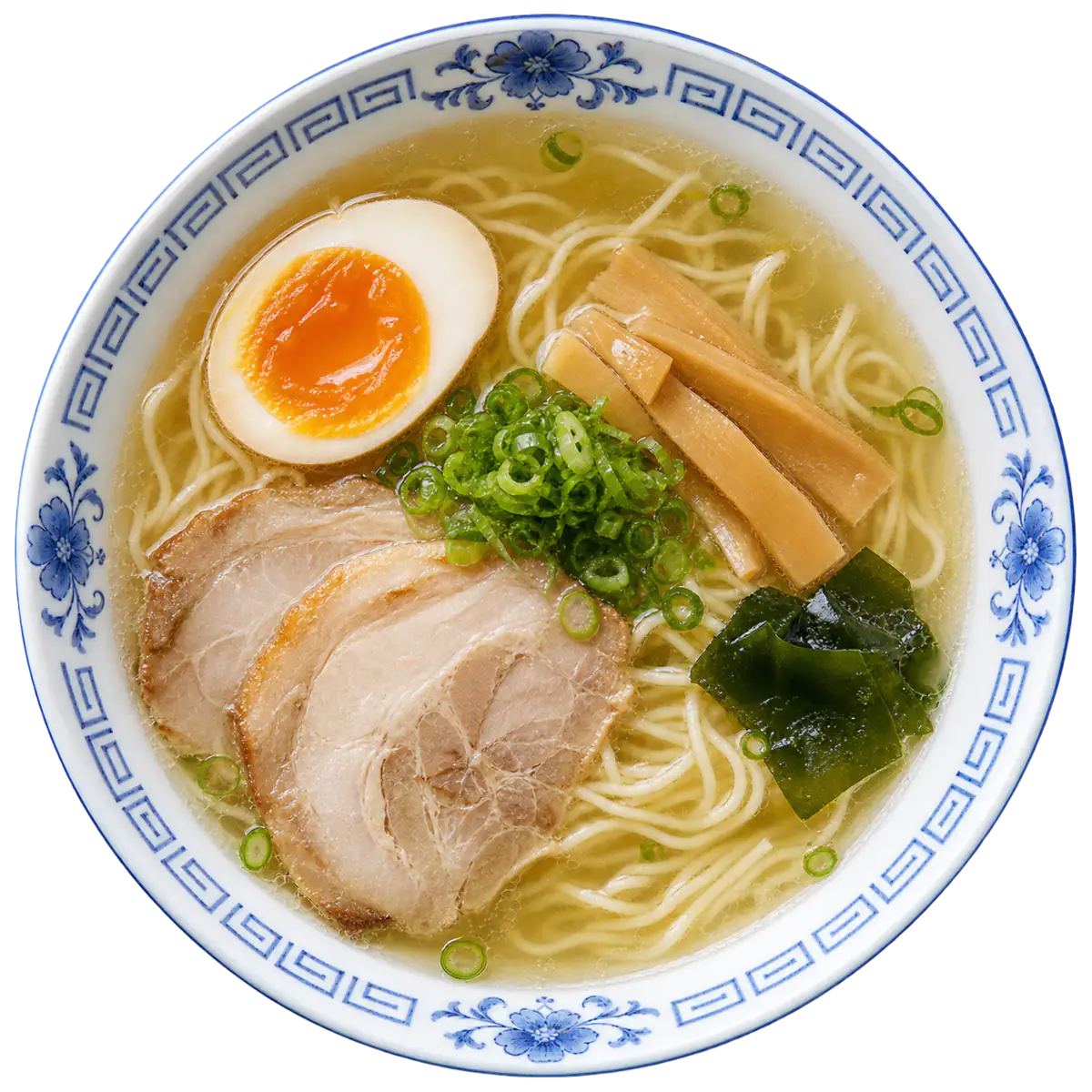
Ramen seasoned with a salt tare, giving a pale, clear, light broth that lets the stock (chicken, pork, seafood) show.
Origin and history
Shio ramen is the ramen of Hakodate, the Hokkaido port where the restaurant Yōwaken advertised 'Nankin soba' in the Hakodate Shimbun in 1884, one of Japan's earliest notices of Chinese-style noodles. The city's clear salt broth with thin straight noodles is counted among Hokkaido's three great ramen, beside Sapporo miso and Asahikawa shoyu, and Hakodate today has some 150 ramen shops.
Make it at home
- Makes
- 4 servings
- Total time
- 4 h 30 min
- Hands-on
- 1 h
Ingredients
- 3.5 l3.7 qt cold water
- 20 g0.7 oz kombu (dried kelp), for the broth
- 15 g0.5 oz niboshi (dried sardines or anchovies), heads and dark innards pulled off
- 2 dried shiitake mushrooms
- 1 kg2.2 lb chicken carcasses, backs or wings (tori-gara), rinsed of blood
- 500 g1.1 lb pork bones (neck or leg), cracked
- 20 g0.7 oz fresh ginger, sliced
- 1 naga negi (Japanese long onion) or 3 thick scallions, green tops for the broth and oil, white part for the bowls
- 40 g2 1/2 tbsp fine sea salt, for the tare; weigh it, salts differ in volume
- 60 ml1/4 cup sake
- 30 ml2 tbsp mirin
- 1 tsp light soy sauce (usukuchi), a few drops for depth; the tare stays pale
- 60 ml1/4 cup neutral oil or chicken fat, for the negi aroma oil
- 1 garlic clove, minced
- 4 portions (about 480 g)4 portions (about 17 oz) fresh ramen noodles, thin to medium, straight
- 8–12 slices chashu (braised pork, see the ramen recipe), thinly sliced
- 80 gabout 1/2 cup menma (seasoned bamboo shoots)
- 8 small dried wheat-gluten rounds (fu), Hakodate topping; soaked 5 minutes and squeezed
Method
-
1. The night before, put the kombu, niboshi and shiitake in the cold water in your stockpot and leave to soak (in the fridge in hot weather).
-
2. Take out 200 ml (3/4 cup + 1 tbsp) of this soaking water and one small piece of the kombu for the tare and set them aside.
-
3. Blanch the chicken and pork bones in a separate pot of boiling water for 5 minutes, drain and rinse them clean.
-
4. Set the stockpot over medium heat and, just before it boils, lift out the kombu and shiitake.
-
5. Add the blanched bones, ginger and the negi green tops, bring to a bare simmer, about 90 °C (195 °F), and skim all foam.
-
6. Simmer very gently, uncovered, for 3 1/2 hours without letting it bubble hard, so the broth stays clear enough to see the bottom of the bowl.
-
7. For the tare, warm the reserved soaking water with its kombu, the sake and the mirin to just below a simmer for 3 minutes, take off the heat, stir in the salt until dissolved, add the soy sauce and remove the kombu.
-
8. For the aroma oil, cook the oil with the remaining negi greens, chopped, and the garlic over medium-low heat for 10 minutes until the negi is golden; strain.
-
9. Strain the broth through a cloth-lined sieve; you should have about 1.8 litres (7 1/2 cups). Keep it very hot.
-
10. Finely slice the white part of the negi and bring a large pot of unsalted water to a boil.
-
11. In each warmed bowl put 2 tablespoons of tare and 1 teaspoon of aroma oil, pour in about 400 ml (1 2/3 cups) of broth, taste and add tare a teaspoon at a time if it needs it.
-
12. Boil the noodles for the time on the packet, drain them thoroughly and lay them in the soup.
-
13. Top with chashu, menma, fu and sliced negi and serve straight away.
Notes
- Total time: 4 h 30 min (plus overnight soaking).
- Shio ramen differs from the other variants only in its tare: salt instead of soy or miso, so the soup stays pale and clear and the flavour of the stock (chicken, pork, kombu and seafood) comes through. Because nothing hides it, the broth must be simmered gently and skimmed well.
- Hakodate style: a transparent golden salt broth, thin straight smooth noodles and toppings such as chashu, menma, negi and fu. Other shops use only chicken and seafood, or add dried scallops to the stock.
- Without niboshi or shiitake, use a little katsuobushi steeped in the hot broth for 10 minutes at the end; the broth will be smokier.
- The tare keeps a month in the fridge; broth keeps 3 days chilled or a month frozen.
- The other variants on this site: shoyu (soy tare), miso and tonkotsu (milky pork-bone broth).
Adapted from Just One Cookbook (Namiko Hirasawa Chen), Shio Ramen and Hokkaido Tourism Organization, Hakodate Ramen.
At the festivals
Served at 2 festivals in Canada and Japan.
Earlier editions
-
October 12, 2026 – October 25, 2026
🇨🇦 Montreal, Canada
Ramen Ramen Fes
On the menu as Asari Shio Ramen
By Biiru and Musubi Izakaya (Le Central)
- October 23, 2025