
🇧🇴 Bolivia · Chuquisaca (Sucre)
Cazuela de maníChuquisaca peanut soup
Chuquisaca's older, thicker peanut soup, called by Sucre historians the mother of the peanut soups: beef ribs (formerly lamb) in a broth thickened with raw peanut blended with water, with chuño, chickpeas, rice and potato, coloured yellow with palillo; a traditional Sunday lunch finished with parsley and a toasted dried ají colorado.
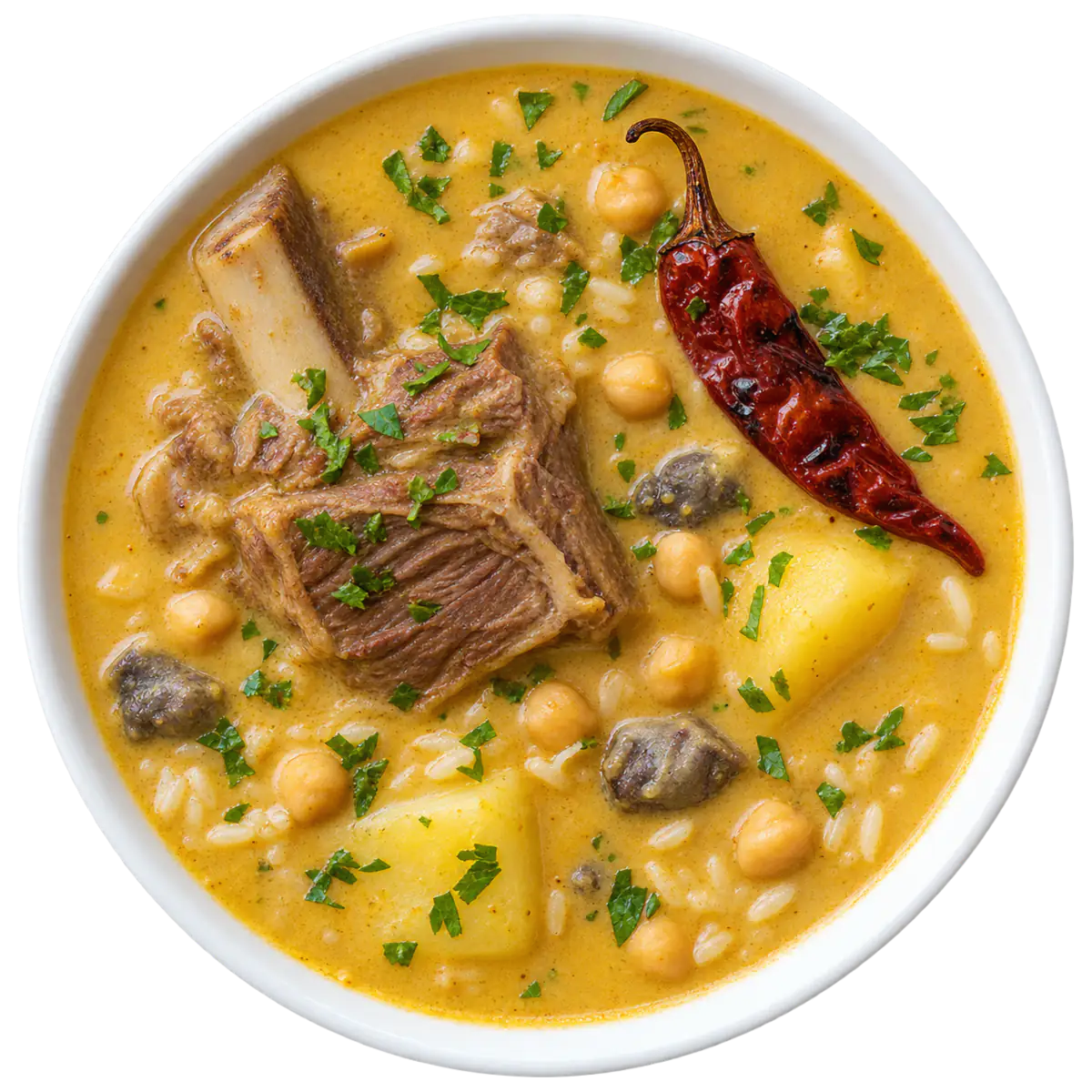
Origin and history
The cazuela de maní is Chuquisaca's own peanut soup, long a fixture of the Sunday lunch in Sucre. Local historians and chefs call it the 'mother' of Bolivia's peanut soups, which elsewhere took lighter forms with macaroni, rice or yuca. It is a mestizo recipe several generations old, of no exactly known origin; it was first made with lamb from the back, later with beef ribs. Some Sucre chefs argue it, not the sopa de maní, should be the national dish.
Make it at home
- Makes
- 6 servings
- Total time
- 2 h 30 min
- Hands-on
- 50 min
Ingredients
- 800 g1.75 lb beef ribs (costilla de res), cut into pieces two fingers wide; lamb is the older choice
- 3 l3 1/4 qt water
- 100 g1/2 cup dried chickpeas (garbanzos), soaked overnight, drained
- 100 g3.5 oz chuño (Andean freeze-dried potato), soaked overnight, rubbed clean and broken into pieces
- 250 g1 2/3 cups raw peanuts (maní), skinned and unsalted
- 500 ml2 cups water, for blending the peanuts
- 3 tbsp vegetable oil
- 2 onions, finely diced
- 2 garlic cloves, crushed
- 2 green or yellow ají (fresh chilli), seeded, chopped
- 1/2 bunch flat-leaf parsley, chopped; half for the pot, half to serve
- 1 tsp dried oregano
- 2 carrots, cut in sticks
- 1/4 small white cabbage (repollo), shredded; optional, as in the older recipe
- 2 tsp palillo (ground Andean yellow root), or 1/2 tsp ground turmeric
- 100 g1/2 cup rice, rinsed
- 6 (about 700 g)6 (about 1.5 lb) potatoes (papa imilla or other floury potatoes), peeled, quartered
- salt, to taste
- 6 dried ají colorado pods (red chilli), to garnish; one per bowl
Method
-
1. Put the ribs and the soaked chickpeas in a large pot with the 3 l (3 1/4 qt) of water, bring to the boil and skim off the foam.
-
2. Lower the heat and simmer, partly covered, for 45 minutes.
-
3. Meanwhile heat the oil in a frying pan and cook the onion and garlic over medium heat for 6 to 8 minutes, until soft.
-
4. Add the chopped ají, half the parsley and the oregano and cook for 2 minutes more.
-
5. Stir this sofrito into the broth, then add the chuño, the carrot sticks and the cabbage if using.
-
6. Blend the raw peanuts with the 500 ml (2 cups) of water for 2 to 3 minutes, until smooth and milky.
-
7. Pour the peanut milk into the pot slowly, stirring with a wooden spoon so it does not curdle or stick.
-
8. Simmer for 30 to 40 minutes, stirring and scraping the bottom often, until the chickpeas and chuño are tender; the peanut catches easily and tends to boil over, so keep the lid ajar.
-
9. Stir in the palillo, which turns the soup yellow, then add the rice and the potatoes and season with salt.
-
10. Simmer for 20 to 25 minutes, until the potatoes and rice are soft; the soup should be thick and hearty but still a soup, not a cream, so add hot water if it gets too stiff.
-
11. While it finishes, toast the dried ají pods in a dry frying pan over medium heat for 1 to 2 minutes, turning, until they puff, darken and smell smoky (k'asparado).
-
12. Serve very hot, each bowl with a piece of rib, a scattering of parsley and a toasted ají on top.
Notes
- How it differs from the parent: the sopa de maní page gives the lighter soup eaten across Bolivia, with macaroni or rice, peas and fried potatoes on top; the Chuquisaca recipes are finished only with parsley and a toasted red chilli. Chuquisaca's cazuela is thicker and older, and carries chickpeas, chuño and palillo, which colours it yellow.
- Soak the chickpeas and the chuño in water the night before. Change the chuño water once or twice: it removes some of the earthy smell.
- Palillo is a dried, ground Andean root used for its yellow colour and mild taste. Ground turmeric is the closest substitute; use less, as it is stronger and a little bitter.
- Without chuño, add two more potatoes; the soup loses chuño's chewy bite and slightly fermented flavour, which is part of the cazuela's character.
- Recipes vary from house to house: some boil ground peanut with the meat from the start, some add a little cumin, some add wheat or cabbage.
- In Sucre it is the soup of the traditional Sunday lunch. It reheats well, but thickens a lot overnight: loosen it with hot water.
Adapted from Marta 'Tuchi' Virreira, Cazuela de maní, Bravo Chef, Correo del Sur (Sucre) and Correo del Sur (Sucre), La cazuela, la madre de las sopas de maní.
At the festivals
No festival we list has printed it on a menu yet.