
🇧🇴 Bolivia · (nationwide); its older form, the cazuela de maní, is from Chuquisaca
Sopa de maníBolivian peanut soup
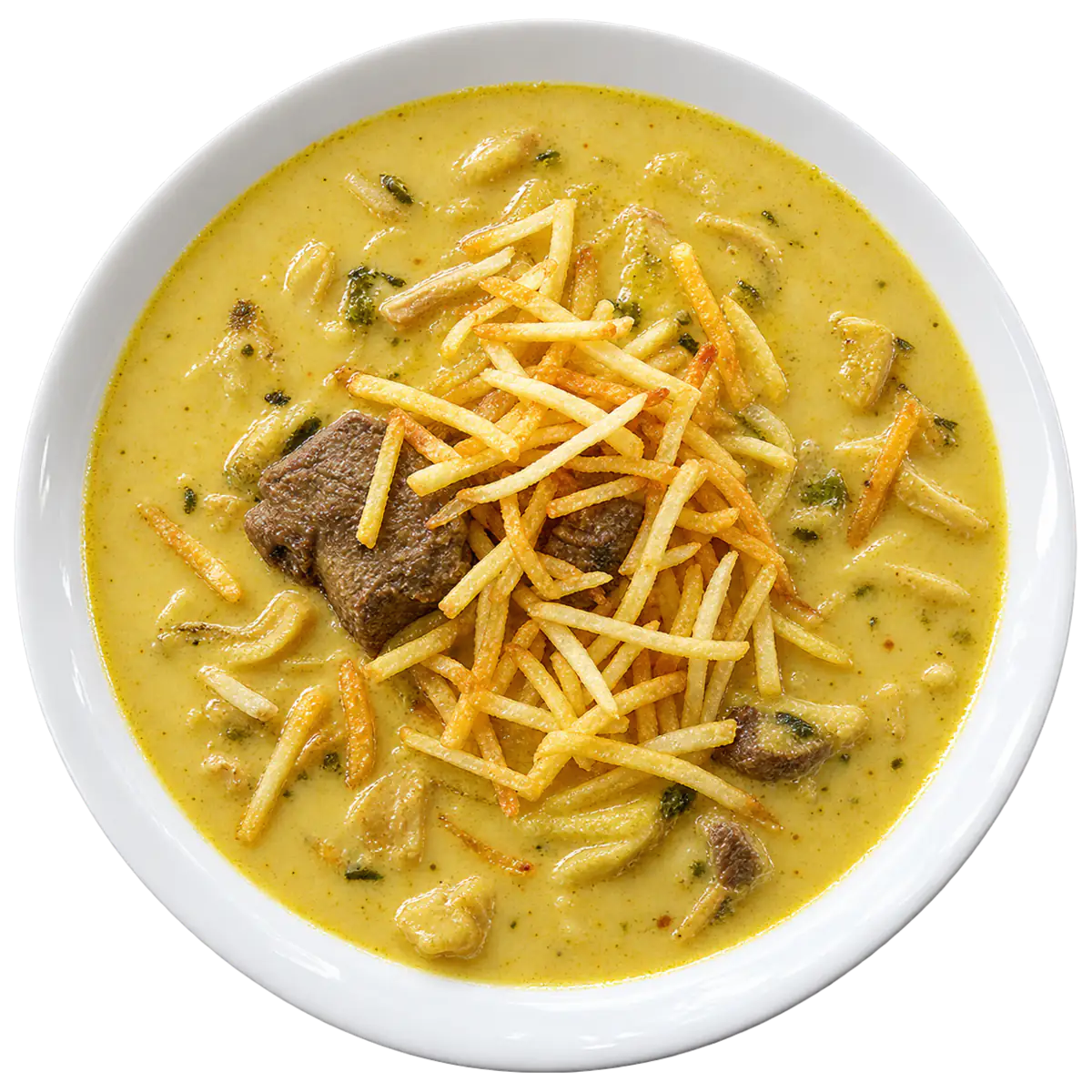
A Bolivian soup thickened with ground peanuts, with beef or chicken, potato, and rice or pasta, typically topped with fried potato sticks.
Origin and history
Southern Bolivia and north-western Argentina are where the peanut was domesticated, some 4,000 years ago, and sopa de maní is eaten across Bolivia. Sucre historians and chefs regard Chuquisaca's thicker cazuela de maní as the mother of the peanut soups, a mestizo recipe several generations old; other departments developed their own forms with macaroni, rice or yuca. It won wider fame in 2014, when a cook of Bolivian parents won MasterChef Argentina with it.
Make it at home
- Makes
- 6 servings
- Total time
- 2 h
- Hands-on
- 45 min
Ingredients
- 800 g1.75 lb beef on the bone: costilla (short ribs) or osobuco (cross-cut shank), cut into 6 pieces
- 2.5 l10 1/2 cups water
- 200 g1 1/3 cups raw peanuts (maní crudo), skinned and unsalted, soaked in water for 4 hours if you have time
- 500 ml2 cups water, for blending the peanuts
- 2 tbsp vegetable oil
- 1 onion, finely chopped
- 1 carrot, diced small
- 1/2 red bell pepper (pimentón), diced small
- 3 garlic cloves, crushed
- 1 tsp ground cumin
- 1 tsp dried oregano
- 3 (about 450 g)3 (about 1 lb) potatoes, for the soup, peeled, diced
- 60 g1/3 cup rice, or 70 g (2/3 cup) short macaroni
- 100 g2/3 cup green peas (arvejas), fresh or frozen
- salt and black pepper, to taste
- 3 (about 450 g)3 (about 1 lb) potatoes, for the topping, peeled, cut into thin matchsticks
- vegetable oil, for deep-frying
- 3 tbsp chopped flat-leaf parsley
- llajua (Bolivian chilli and tomato sauce), to serve
Method
-
1. Put the beef and the 2.5 l (10 1/2 cups) of water in a large pot, bring to the boil and skim off the foam.
-
2. Cover and simmer for about 1 hour, until the meat is tender.
-
3. Meanwhile drain the peanuts and blend them with the 500 ml (2 cups) of water for 2 to 3 minutes, until you have a smooth, milky liquid with no grit; strain it if any pieces remain.
-
4. Heat the oil in a frying pan over medium heat and cook the onion, carrot, bell pepper and garlic for 6 to 8 minutes until soft, then stir in the cumin and oregano.
-
5. Add the vegetables to the broth, then pour in the peanut milk, stirring constantly.
-
6. Bring back to a simmer over low heat with the lid ajar and cook for 20 minutes, stirring and scraping the bottom often: peanut catches easily and tends to boil over.
-
7. Add the diced potatoes and the rice or macaroni and simmer for 15 minutes, until both are tender.
-
8. Add the peas, cook for 5 minutes more and season with salt and pepper; the soup should be creamy but still pour from the ladle, so add a little hot water if needed.
-
9. While the soup finishes, heat the frying oil to 175°C (350°F) and fry the potato matchsticks in batches until golden and crisp; drain on paper and salt them.
-
10. Serve each bowl with a piece of meat, top it with a handful of fried potatoes and some parsley just before eating so they stay crisp, and pass the llajua at the table.
Notes
- Peanuts: raw peanuts give the soup its pale colour and gentle flavour; roasted peanuts or peanut butter make a darker, heavier soup with a different taste.
- Regional forms (as described by Bolivian chefs): in La Paz the soup is made with manga de fraile macaroni; elsewhere a little rice is added; in parts of Sucre it carries cabbage, chuño (freeze-dried potato) and chickpeas and is coloured yellow with palillo, an Andean turmeric; in the Chaco it is made with little but peanut.
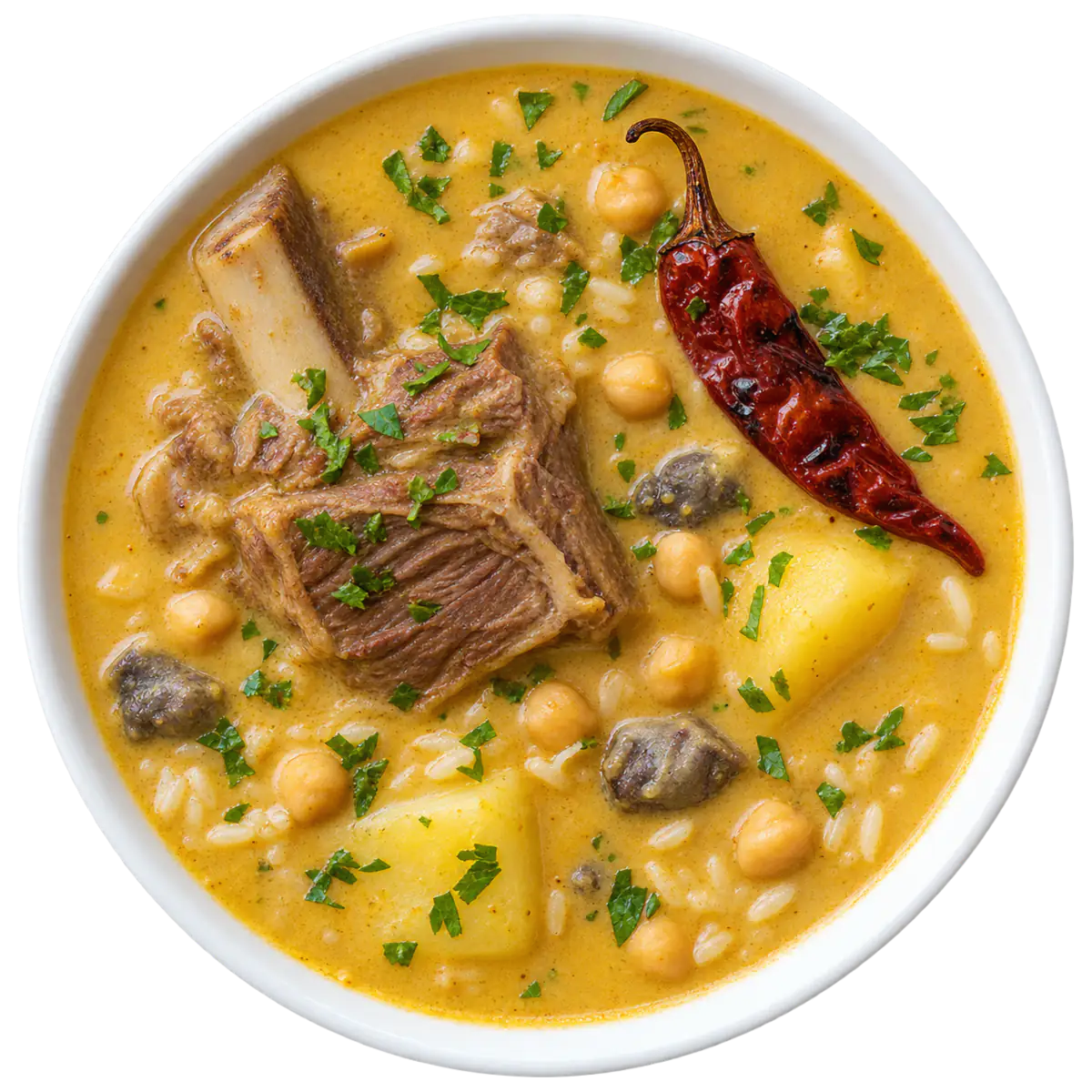
- Cazuela de maní: Chuquisaca's older and thicker form, described by Sucre historians as the 'mother' of the peanut soups. It is cooked with beef ribs, chuño, chickpeas, rice and palillo, is a traditional Sunday lunch, and is often topped with a toasted dried ají colorado pod.
- Other meats: chicken or lamb are also used; the method does not change, but chicken needs only about 30 minutes before the peanut goes in.
- Keep the fried potatoes apart until the last moment; some cooks serve them on a side plate so each diner adds them as they eat.
Adapted from Correo del Sur, La cazuela, la madre de las sopas de maní, Buenos Aires City Government, Recetas de las colectividades: Sopa de maní boliviana, and Los Tiempos (Cochabamba), menu by chef Emilio Garnica.
Variants
At the festivals
Served at 1 festival in Bolivia.
Earlier editions
-
August 04, 2024
🇧🇴 Cochabamba, Bolivia
10ª Feria de los Picantes y Sopa de Maní