
🇵🇹 Portugal · Marinha Grande, Leiria
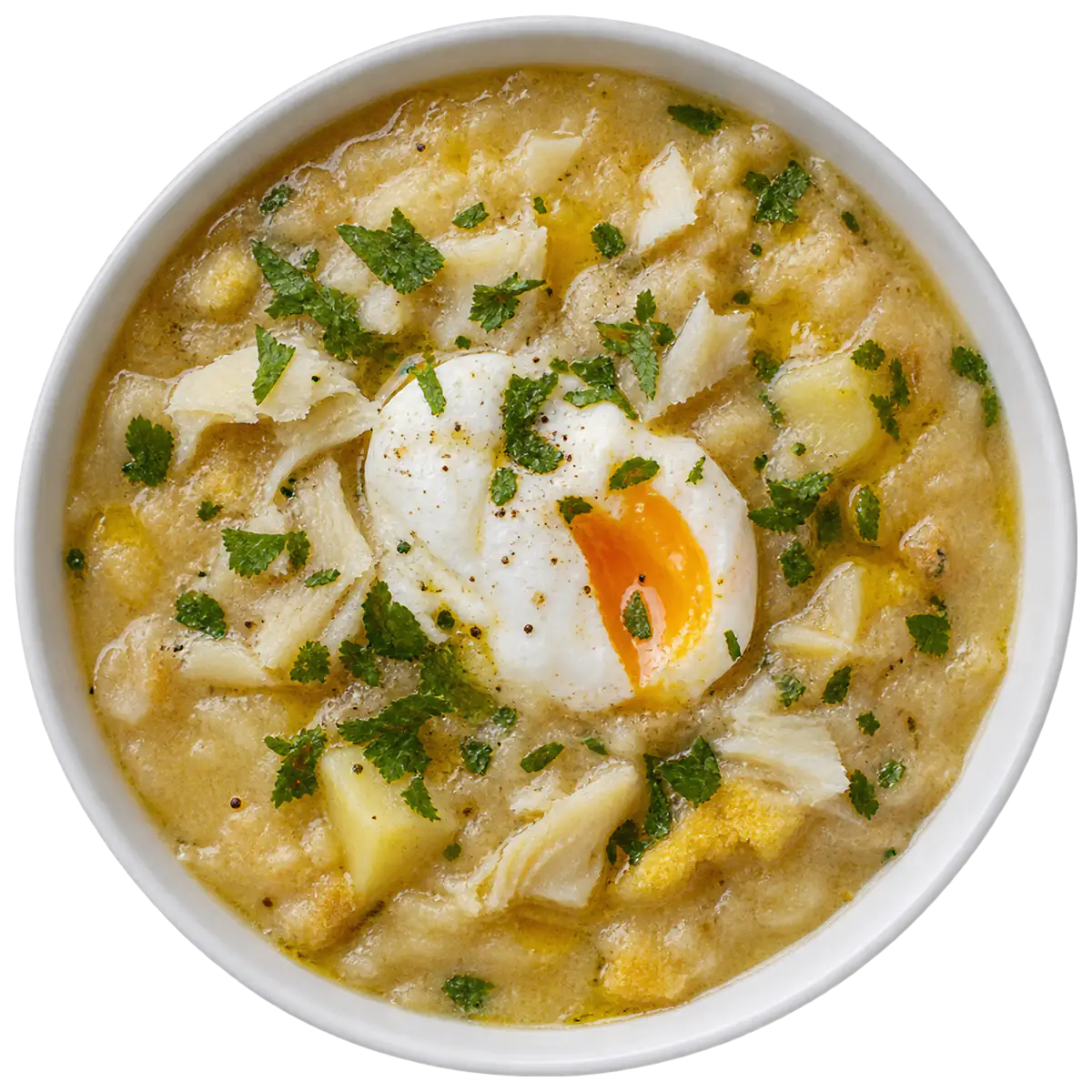
Sopa do vidreiroPortuguese salt cod soup
A cheap, filling soup from Marinha Grande, eaten by glassworkers, made with salt cod, bread, broa (corn bread), eggs and potatoes.
Origin and history
A soup of Marinha Grande, near Leiria, the centre of Portugal's glass industry, which RTP calls the town's oldest food tradition. Cheap salt cod, hard bread, potatoes and eggs gave the glassworkers a hot, filling meal for their heavy work; wives and daughters carried it to the factories, wrapped to keep it warm. A Confraria da Sopa do Vidreiro now keeps the recipe and teaches it in local schools.
Make it at home
- Makes
- 4 servings
- Total time
- 45 min
- Hands-on
- 20 min
Ingredients
- 4 pieces, about 600 g4 pieces, about 1 1/4 lb salt cod (bacalhau) steaks, desalted in cold water for 24-48 h, water changed several times
- 1.5 l6 1/3 cups water
- 500 g1.1 lb potatoes, peeled, in thick rounds
- 4 eggs
- 1/2 loaf, about 250 g1/2 loaf, about 9 oz broa (Portuguese corn bread), a few days old, hard
- 1/2 loaf, about 250 g1/2 loaf, about 9 oz pão saloio or other dense wheat country bread, a few days old, hard
- 4-6 garlic cloves, finely chopped or thinly sliced; see notes
- 120 ml1/2 cup extra virgin olive oil
- 1 small bunch fresh mint (hortelã), or parsley, a sprig per bowl
- salt, usually none needed
Method
-
1. Put the desalted cod in a pot with the water, bring it to a gentle simmer and cook for 8-10 minutes, until the flesh flakes when pressed.
-
2. Lift the cod out with a slotted spoon and keep the cooking water in the pot: it is the broth of the soup.
-
3. Add the potato rounds to the cod water and simmer for 15-20 minutes, until a knife slips through them.
-
4. Meanwhile, remove the skin and bones from the cod and break it into large flakes.
-
5. Break both breads into rough pieces and divide them among deep bowls or earthenware púcaras (or put them in one tureen).
-
6. Scatter the garlic over the bread and drizzle it with half the olive oil.
-
7. Lay the cod flakes on the bread, then the drained potato rounds on top of the cod.
-
8. Lower the heat under the broth until it barely moves, crack in the eggs and poach them for 3-4 minutes, until the whites are set and the yolks still soft. Set one egg on each bowl.
-
9. Taste the broth: the cod normally salts it enough. Bring it back to the boil.
-
10. Add a sprig of mint to each bowl, pour over enough boiling broth to soak the bread with some left in the bowl, finish with the rest of the olive oil and cover for a minute or two before eating.
Notes
- Total time: 45 min, plus 24-48 h soaking the cod.
- The order matters, both for cooking (cod, then potatoes, then eggs, all in the same water) and for layering (bread, garlic and oil, cod, potato, egg, broth).
- Garlic is disputed: the Marinha Grande confraria and most local cooks put it in, while some accounts say the glassblowers left it out because of the smell on the shared blowpipes. Leave it out for that version.
- Hard broa and hard wheat bread go in together; with wheat bread alone the soup loses the dense, slightly sweet corn crumb.
- Mint is the usual herb; parsley or coriander are accepted substitutes.
- The cheapest cod and its trimmings were what workers' families used, often flaked so the poor cuts did not show. Any good salt cod works; pre-soaked frozen bacalhau saves the soaking time.
- It was carried to the factories in covered pots, wrapped in newspaper or a cloth to stay hot, and eaten in the meal break. Serve it at once; a glass of red wine is the local companion.
- Related: the Alentejo's açorda and other Portuguese bread-and-cod soups are built the same way, bread soaked with a hot garlic broth.
Adapted from Confraria da Sopa do Vidreiro, demonstration at Agrupamento de Escolas Marinha Grande Poente, Ruralea, "Sopa do vidreiro", and Iguaria, "Sopa do Vidreiro".
At the festivals
Served at 1 festival in Portugal.
Earlier editions
-
November 09, 2024
🇵🇹 Leiria, Portugal
Festival de Sopas do Casal dos Claros
By local restaurants, former festeiros and friends of the organisation