
🇳🇵 Nepal, 🇮🇳 India, and 🇨🇳 China · Tibetan communities; Chinese influence
GyathukTibetan Chinese-style noodle soup
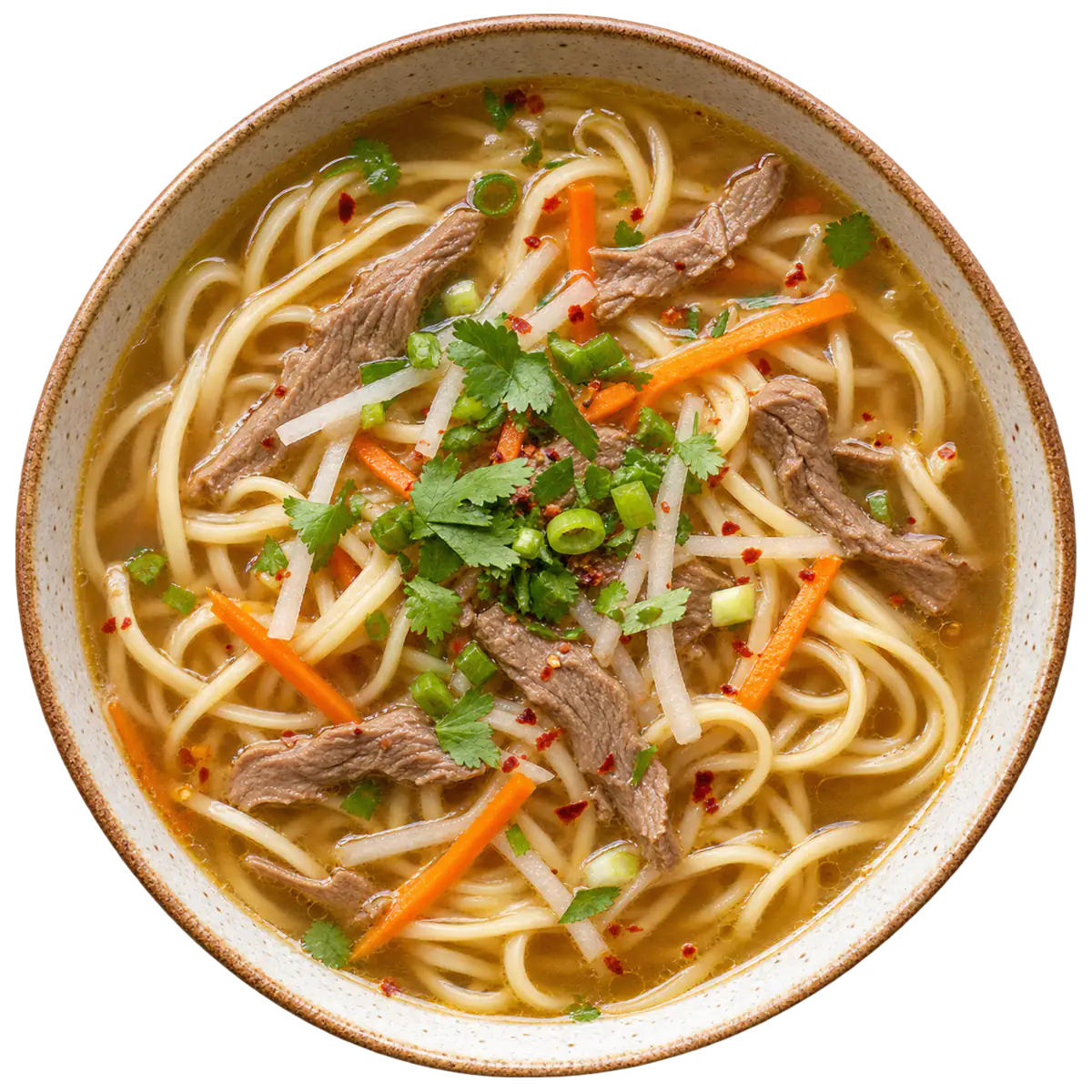
Thukpa made with long, round or flat Chinese-style wheat noodles cooked separately and served in a meat broth, often with sliced chicken or pork and vegetables.
Origin and history
Gyathuk is the thukpa of Tibetan communities made with Chinese-style factory noodles, which is what its name says: gya is Chinese. Unlike the hand-pulled thenthuk, it depends on factory-made noodles, which were not available in the villages.
Make it at home
- Makes
- 4 servings
- Total time
- 1 h 30 min
- Hands-on
- 35 min
Ingredients
- 800 g1.8 lb beef or mutton bones with some meat, for the broth
- 2 litres8 cups water
- 1 onion, halved
- 4 cloves garlic, crushed
- 3 cm1 1/4 inch fresh ginger, sliced
- 250 g9 oz long wheat noodles, spaghetti-like or flat ribbon, factory-made, dried or fresh
- 200 g7 oz boneless beef, mutton or chicken, cut in thin strips
- 1 small white radish (mooli) or daikon, cut in thin strips
- 2 carrots, cut in thin strips
- 2 tbsp oil
- 2 spring onions, sliced
- salt, pepper, soy sauce, coriander, chilli paste, to taste, to finish
Method
-
1. Cover the bones with the water, add the onion, garlic and ginger, and bring to a boil. Skim, then simmer gently for 1 hour to 1 hour 30 minutes (90 C / 195 F) until the broth is clear and savoury. Strain and season with salt.
-
2. Boil the noodles in plenty of unsalted water until just tender (3 to 5 minutes for dried), drain and divide among 4 deep bowls.
-
3. Heat the oil in a wok or pan over high heat and stir-fry the meat strips for 2 minutes until they change colour; add the radish and carrot strips and stir-fry for 2 minutes more, with a little soy sauce and pepper.
-
4. Spoon the meat and vegetables over the noodles in each bowl.
-
5. Bring the broth back to a rolling boil and ladle it over the bowls.
-
6. Finish with spring onion and coriander and serve with chilli paste.
Notes
- Gya means Chinese: gyathuk uses factory-made long wheat noodles, round like spaghetti or wide and flat, which were not available in Tibetan villages. This is the one difference from the parent thukpa and from thenthuk, whose noodles are hand-pulled.
- The Kathmandu Post describes the toppings (radish, carrot, meat in thin strips) as cooked separately and covered with the broth, which makes it quicker to put together than thenthuk; it is the version made when time is short.
- Noodles are cooked separately here so the broth stays clear; the same bowl is sometimes called chow mein thukpa when the noodles are fried first.
- Yak or mutton is traditional; buffalo is used in Kathmandu, and chicken or pork are common in restaurants. For a vegetarian version, use a vegetable stock and add mushrooms and greens.
- Because the noodles keep their shape, leftovers reheat better than thenthuk: keep noodles and broth apart.
Adapted from An essential guide to thukpas, The Kathmandu Post and Comfort in a bowl: the tale of the thukpa, Outlook Traveller.
At the festivals
No festival we list has printed it on a menu yet.