
🇳🇵 Nepal, 🇮🇳 India, 🇧🇹 Bhutan, and 🇨🇳 China · eastern Tibet, spread across the Himalaya to Nepal, Ladakh, Sikkim, Darjeeling, Arunachal and Bhutan
ThukpaTibetan noodle soup
The Tibetan and Himalayan noodle soup: noodles in a hot meat or vegetable broth with vegetables and sometimes meat, seasoned with garlic, ginger and chilli.
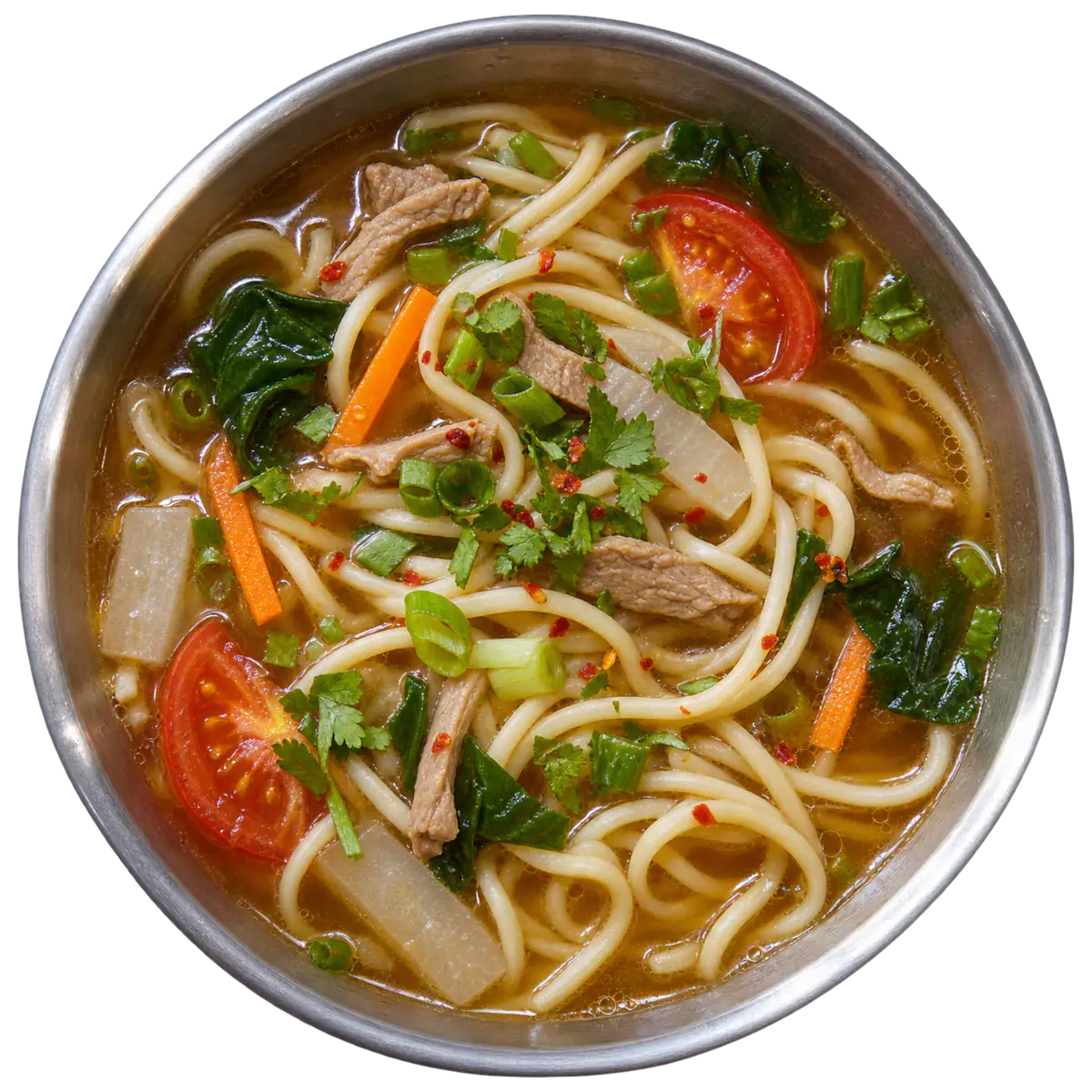
Origin and history
Thukpa is believed to come from eastern Tibet, traditionally from the Amdo region, and spread with Tibetan communities across the Himalaya into Nepal, Ladakh, Sikkim, Darjeeling and Bhutan. It became widely known in India after Tibetan refugees arrived following 1959, though food historian Pushpesh Pant notes that similar wheat-and-meat dishes already existed among Himalayan groups such as the Shauka of Uttarakhand.
Make it at home
- Makes
- 4 servings
- Total time
- 1 h 30 min
- Hands-on
- 40 min
Ingredients
- 500 g1.1 lb mutton, lamb or beef on the bone, bones kept for the broth (yak where available)
- 1.5 litres6 cups water
- 250 g9 oz wheat noodles, fresh or dried (see notes for the hand-pulled form)
- 1 onion, sliced
- 4 cloves garlic, chopped
- 2 cm1 inch fresh ginger, minced
- 2 carrots, cut in thin strips
- 1 small white radish (mooli) or daikon, sliced
- 1 tomato, chopped
- 2 handfuls spinach or other greens
- 2 tbsp oil
- 1 green chilli, slit, or chilli flakes to taste
- salt, black pepper, soy sauce, spring onion, coriander, to taste, to finish
Method
-
1. Put the meat and bones in a pot with the water and bring to a boil, skimming the foam. Simmer gently, partly covered, for about 1 hour (90 C / 195 F) until the meat is tender and the broth is rich.
-
2. Lift out the meat, cut it into thin strips or small pieces, and strain the broth.
-
3. In a large pot heat the oil and fry the onion, garlic, ginger and chilli for 2 minutes. Add the tomato, carrots and radish and fry for 2 minutes more.
-
4. Pour in the strained broth, return the meat and simmer 10 minutes until the radish is tender. Season with salt, pepper and a dash of soy sauce.
-
5. Cook the noodles in the simmering soup (or in a separate pot of boiling water for 3 to 5 minutes if they are the dried type) until just tender.
-
6. Add the spinach and cook for 1 minute until it wilts.
-
7. Ladle into deep bowls, scatter spring onion and coriander, and serve very hot with a spoonful of chilli paste on the side.
Notes
- Thukpa is a general name for Tibetan and Himalayan noodle soups; thug itself means a thick soup or porridge, and some thukpas (tsamthuk) have no noodles at all.
- The two best-known types follow the noodle: thenthuk (hand-pulled flat pieces dropped into the broth) and gyathuk (long Chinese-style noodles). Both have their own pages. The parent recipe here is the everyday home bowl: any wheat noodle in a bone broth with vegetables. Thenthuk differs by its hand-pulled noodle, gyathuk by its factory-made long noodle and its separately cooked toppings.
- Traditionally the meat is yak or mutton; chicken, buffalo (in Kathmandu) and dried fish are used elsewhere, and a vegetable thukpa leaves out the meat and bones and uses a vegetable broth.
- Regional forms: the Monpa of Arunachal Pradesh make putang thukpa with buckwheat noodles and yak meat or dried fish; at the Tibetan New Year a special guthuk (nine-ingredient) thukpa is served.
- Make the broth a day ahead; it improves overnight.
Adapted from An essential guide to thukpas, The Kathmandu Post, Comfort in a bowl: the tale of the thukpa, Outlook Traveller, and Thenthuk, Yowangdu (Tibetan food).
Variants
-
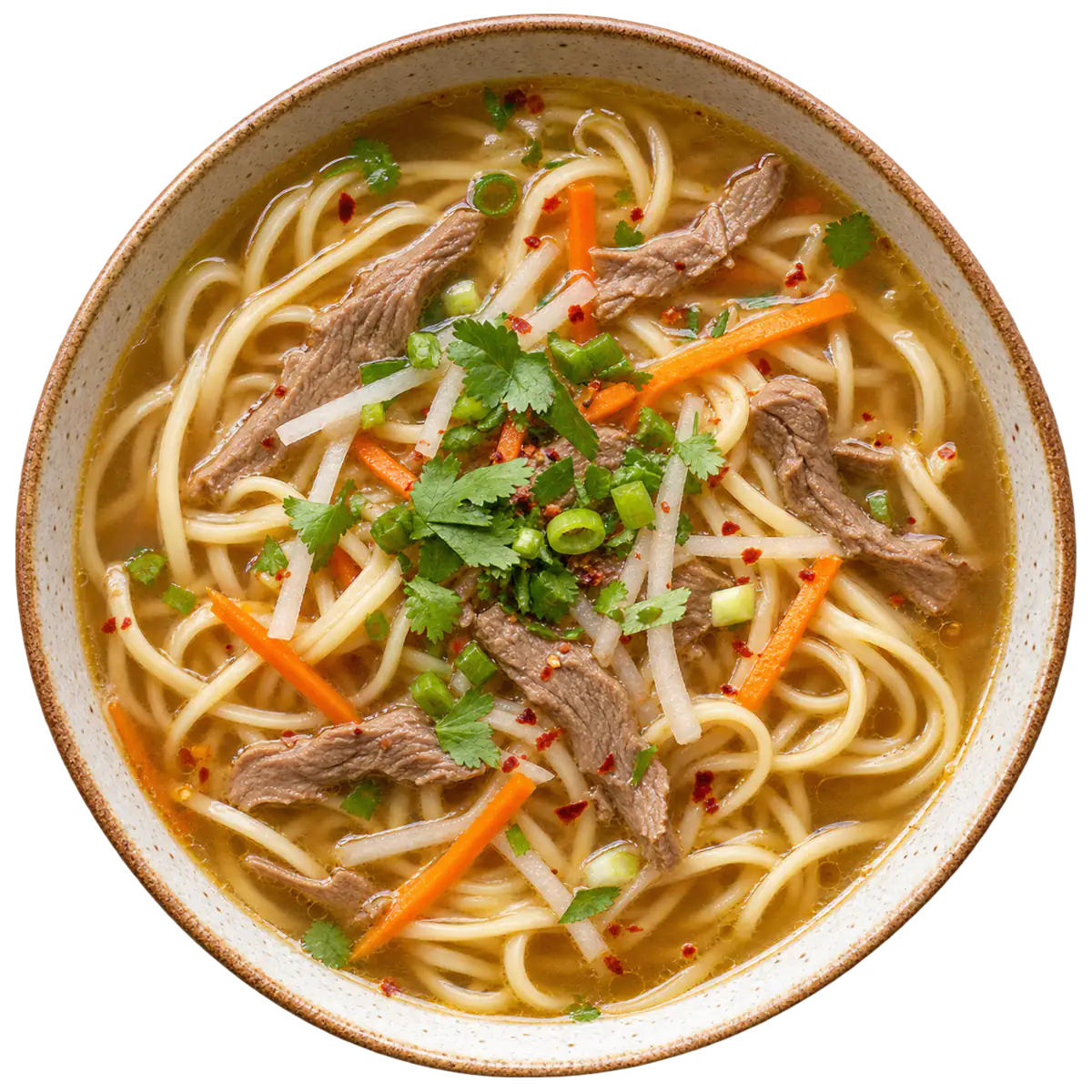 Gyathuk
Tibetan Chinese-style noodle soup
Tibetan communities; Chinese influence
Thukpa made with long, round or flat Chinese-style wheat noodles cooked separately and served in a meat broth, often with sliced chicken or pork and vegetables.
-
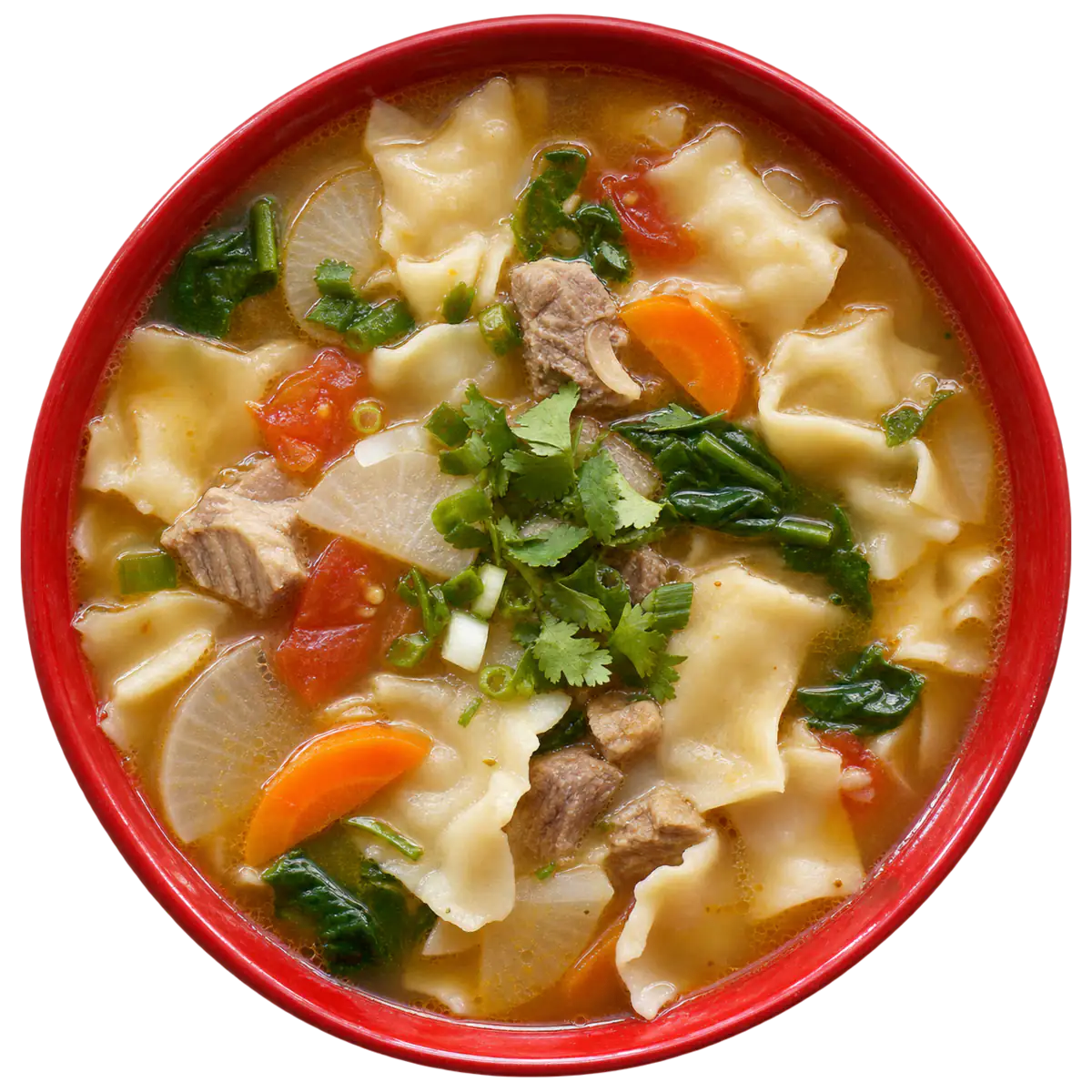 Thenthuk
Tibetan hand-pulled noodle soup
Amdo; Tibetan communities of Nepal, Ladakh and Sikkim
Thukpa with hand-pulled, flat, irregular noodles torn from a dough and dropped straight into the simmering broth.
At the festivals
No festival we list has printed it on a menu yet.