
🇳🇵 Nepal, 🇮🇳 India, and 🇨🇳 China · Amdo; Tibetan communities of Nepal, Ladakh and Sikkim
ThenthukTibetan hand-pulled noodle soup
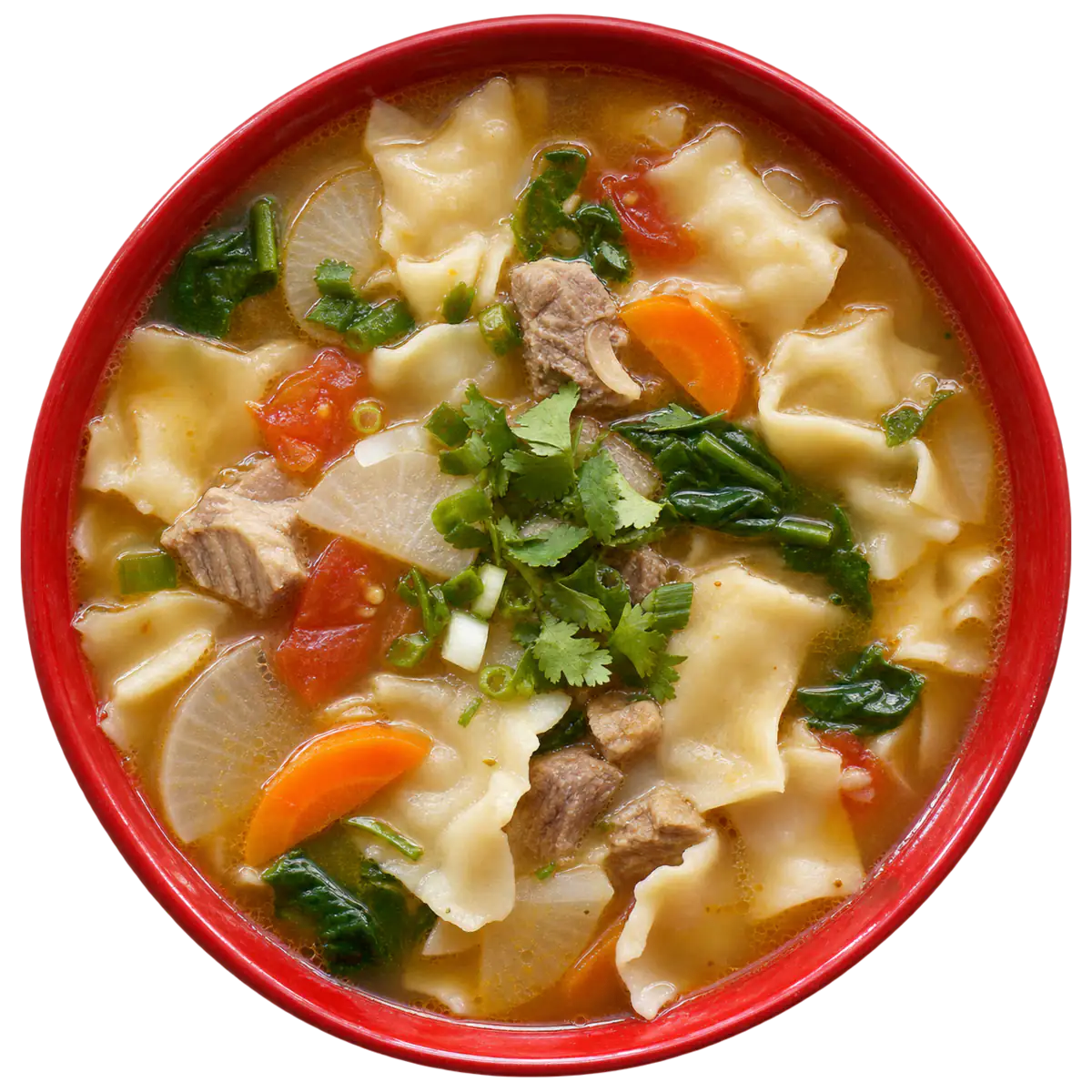
Thukpa with hand-pulled, flat, irregular noodles torn from a dough and dropped straight into the simmering broth.
Origin and history
Thenthuk is the hand-pulled thukpa of Tibetan cooking, associated with the Amdo region of eastern Tibet and eaten across Tibetan communities in Nepal, Ladakh and Sikkim. Tibetan cooks call it a winter staple for nomads and farmers. It is distinguished from gyathuk, the long-noodle form, by the pulled dough, which needs no factory-made noodles.
Make it at home
- Makes
- 4 servings
- Total time
- 1 h 30 min
- Hands-on
- 45 min
Ingredients
- 500 g1.1 lb mutton, yak or beef on the bone, bones included, for the broth
- 1.5 litres6 cups water
- 300 g2 1/2 cups plain wheat flour, for the dough
- 150 ml2/3 cup water, room temperature, added gradually to the dough
- 1 pinch salt, for the dough
- 1 tbsp oil, to coat the dough
- 1 onion, chopped
- 3 cloves garlic, chopped
- 2 cm1 inch fresh ginger, minced
- 1 tomato, chopped
- 1 small white radish (mooli) or daikon, sliced thin
- 1 carrot, sliced thin
- 2 handfuls spinach
- salt, pepper, soy sauce, spring onion, coriander, to taste, to finish
Method
-
1. Simmer the meat and bones in the water for about 1 hour (90 C / 195 F) until the meat is tender; skim the foam. Remove the meat, slice it thin, and keep the broth.
-
2. While it simmers, mix the flour, salt and water into a smooth dough and knead for 8 to 10 minutes until it is elastic.
-
3. Divide the dough into 4 pieces, roll each into a thick finger-shaped rope, brush with oil and cover. Rest for 20 to 30 minutes.
-
4. In a large pot fry the onion, garlic, ginger and tomato in a little oil for 3 minutes, then add the carrot and radish, the strained broth and the sliced meat. Bring to a boil and season with salt, pepper and soy sauce.
-
5. Take a rope of dough in one hand, press it flat between your fingers, and tear off flat pieces about the length of your thumb; stretch each piece thin as you drop it into the boiling broth. Work quickly, one rope at a time.
-
6. Simmer for 3 to 4 minutes, until the noodle pieces float and are tender but chewy, then stir in the spinach.
-
7. Ladle into bowls and top with spring onion and coriander. Serve at once, before the noodles soften.
Notes
- Then means pull and thuk means noodle: this is the one difference from the parent thukpa, which uses any wheat noodle. The dough is torn into the broth, not cooked separately, and its starch thickens the soup slightly.
- Amdo cooks are known for the speed of the pulling; thin, uneven pieces are the point, so do not aim for uniformity.
- If the dough is sticky it has too much water or rested too long; use only a light film of oil.
- A vegetarian thenthuk skips the meat and bones and uses a vegetable stock with more radish and greens. Traditional versions use yak or mutton; buffalo is used in Kathmandu.
- Make the broth ahead; shape and cook the noodles only when you are ready to serve.
Adapted from An essential guide to thukpas, The Kathmandu Post, Thenthuk (Pull Noodle Soup), Yowangdu, and Recipe for Tibetan Noodle Soup, Thenthuk, Tibetan Nuns Project.
At the festivals
No festival we list has printed it on a menu yet.