
🇹🇭 Thailand · Central Thailand
Tom yum nam khonThai creamy tom yum
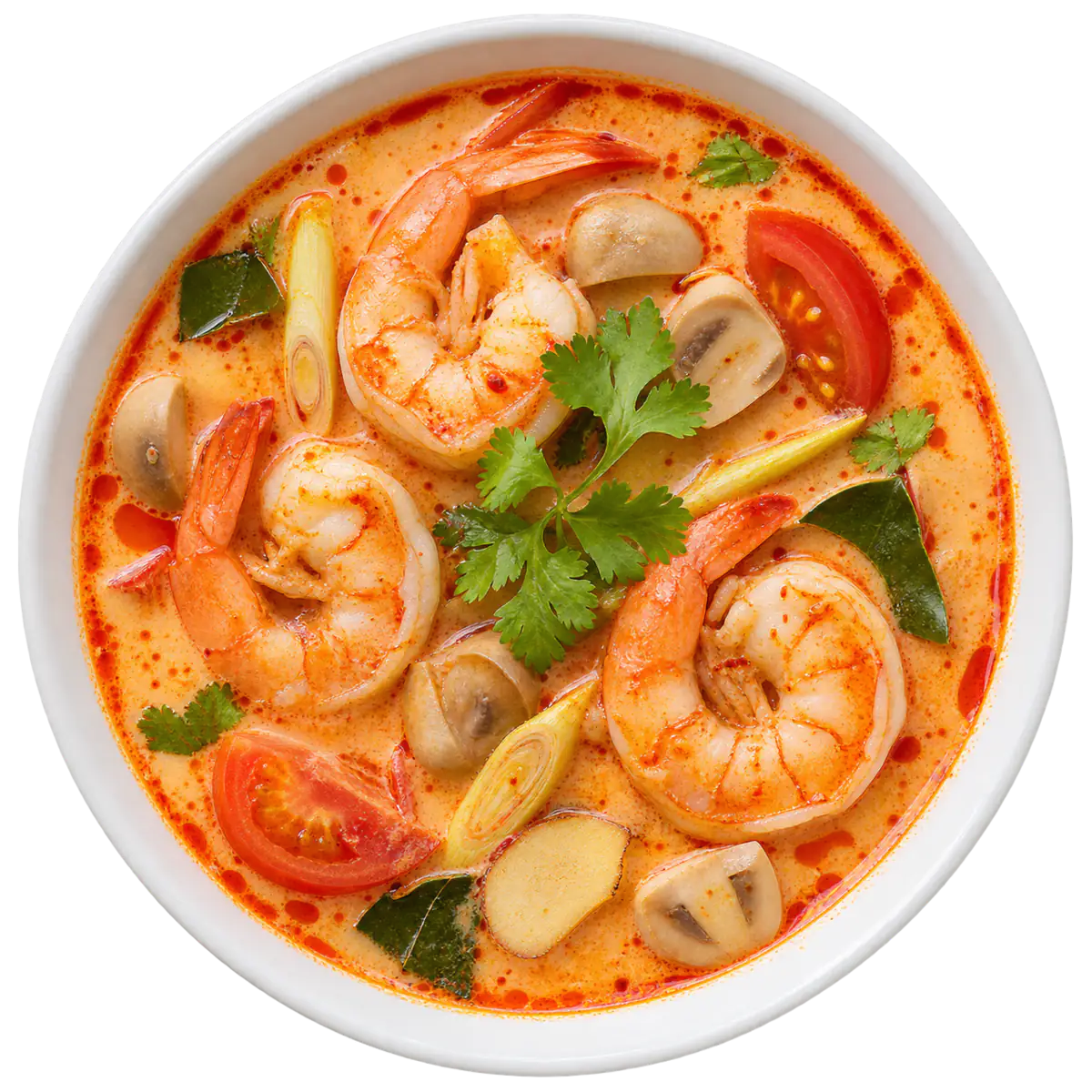
Tom yum with a creamy broth: the usual lemongrass, galangal and makrut lime base enriched with roasted chili paste (nam prik pao) and evaporated milk, which makes it milder, smoother and slightly sweeter than the clear form.
Origin and history
Thai chef Chumpol Jangprai describes the traditional tom yum as a clear soup and says the thick nam khon version came later, with chili paste, evaporated milk or coconut cream. Thai sources trace tom yum itself to central Thailand's river communities, with the earliest recorded references to similar soups from the reign of Rama V; the creamy style is regarded as a modern variant, and dates given for its popularity vary.
Make it at home
- Makes
- 4 servings
- Total time
- 40 min
- Hands-on
- 25 min
Ingredients
- 500 g1.1 lb large prawns, whole, heads and shells on
- 1 tbsp neutral oil, for the shells
- 1.2 liters5 cups water, or half water, half chicken stock
- 2 stalks lemongrass, bruised and cut in 5 cm pieces
- 5 cm2 inches galangal, thinly sliced
- 8 makrut lime leaves, torn
- 4 shallots, halved
- 4 bird's eye chilies, smashed
- 2 small tomatoes, cut in wedges
- 200 g7 oz straw or oyster mushrooms, halved
- 2 tbsp nam prik pao (Thai roasted chili paste), the oily, sweet paste, not a plain chili sauce
- 3 tbsp fish sauce, to taste
- 4 tbsp evaporated milk, or coconut milk
- 4 tbsp fresh lime juice, added off the heat
- celery leaves or coriander, to garnish
Method
-
1. Peel the prawns, keeping the tails on, and devein them. Stir-fry the heads and shells in the oil for 1 to 2 minutes until orange, add the water, simmer for 10 minutes and strain.
-
2. Return the stock to the pot with the lemongrass, galangal, shallots and tomatoes and simmer for 10 minutes until fragrant.
-
3. Stir in the nam prik pao until it dissolves and the broth turns orange-red, then add the chilies and mushrooms and cook for 3 minutes.
-
4. Add the prawns and cook for 2 to 3 minutes until just done. Season with the fish sauce and add the lime leaves.
-
5. Take the pot off the heat, stir in the evaporated milk until the broth is evenly pale and opaque, then add the lime juice.
-
6. Taste and adjust: it should be rounder and milder than the clear soup but still clearly sour and hot. Garnish and serve with jasmine rice.
Notes
- How it differs from the clear form: nam khon (creamy) adds nam prik pao and evaporated milk or coconut milk, which make the broth orange-red, opaque, smoother and slightly sweeter, and soften the sharpness of the chilies and lime.
- Thai cooks consider this the later form: chef Chumpol Jangprai says the thick version came after the clear one. Sources give different dates for its rise, so treat it as a later form rather than a particular year.
- Add the milk and lime juice off the heat to keep the soup from curdling and the lime flavour fresh.
- Some Thai recipes also add young coconut meat to the aromatics, and one Thai recipe uses canned unsweetened milk (nom khon chued) rather than coconut milk.
- If you use coconut milk, the soup is richer and sweeter than with evaporated milk; do not boil it.
- Eat it fresh; reheating makes the prawns tough.
Adapted from Thailand Foundation, Tom Yum Kung: The Symbol of Thai Culinary Spirit and Wongnai, Tom yum goong nam khon (Thai recipe).
At the festivals
No festival we list has printed it on a menu yet.