
🇷🇺 Russian Federation · Russia (river and lake fish; regional recipes from the Volga, Don, Baikal and the north)
UkhaRussian fish soup
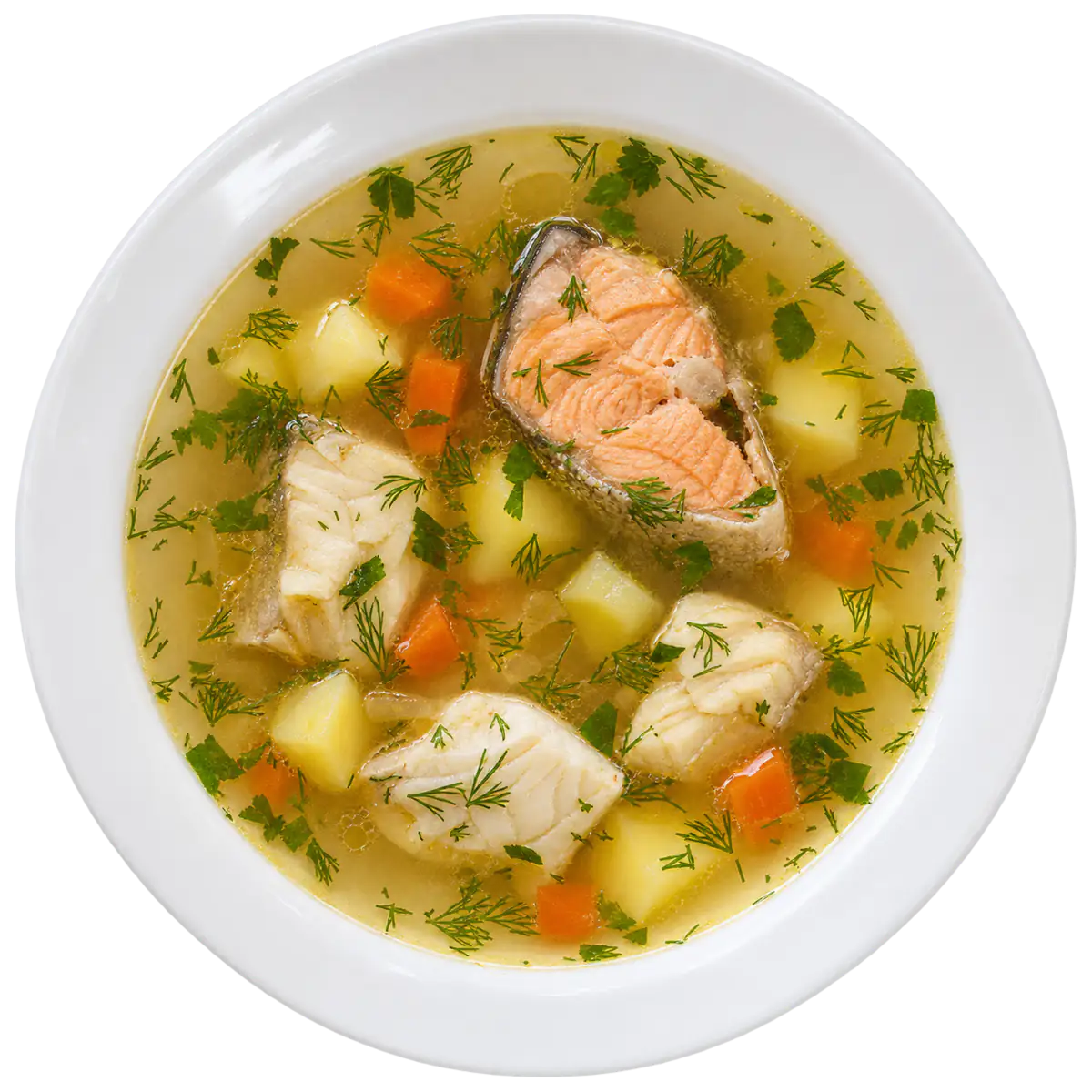
Russian fish soup: a rich broth of freshwater (or sea) fish simmered with onion, root vegetables, bay leaf and herbs, served hot, often with the fish and potatoes plated separately.
Origin and history
Ukha is Russia's fish soup, traditionally cooked over a fire from small river fish and then better fish. The word originally covered broths of fish, meat and poultry (17th-century texts mention chicken and duck ukha), and it later became tied to fish. Provinces developed versions with their local catch, and the 18th-century courtier Ivan Shuvalov is remembered for an extravagantly rich ukha cooked for three days.
Make it at home
- Makes
- 6 servings
- Total time
- 1 h 15 min
- Hands-on
- 35 min
Ingredients
- 800 g1.75 lb small whole freshwater fish for the broth, perch, ruffe, small carp or bream; cleaned and scaled; or heads and bones of larger fish
- 2.5 l2.5 qt cold water
- 1 large onion, peeled, left whole
- 1 carrot, peeled, cut in rounds
- 1 parsley root or celery stalk, cut in chunks; optional
- 500 g1.1 lb potatoes, peeled, in large chunks
- 800 g1.75 lb fish fillets or steaks, pike-perch, perch, pike, salmon or sturgeon; in large pieces
- 2 to 3 bay leaves
- 8 black peppercorns or allspice berries
- 1 bunch dill and parsley, chopped
- salt, to taste
- lemon wedges, to serve; optional
Method
-
1. Put the small whole fish (or heads and bones) in a pot with the cold water and bring slowly to a boil.
-
2. Skim well, add the whole onion, the parsley root, the peppercorns and 2 teaspoons of salt, and simmer very gently for 30 minutes; do not boil hard or the broth turns cloudy.
-
3. Strain through a fine sieve (the small fish and bones are discarded) and return the clear broth to the pot.
-
4. Add the potatoes and carrot and simmer for 12 minutes.
-
5. Add the fish fillets and bay leaves and poach at a bare simmer for 8 to 10 minutes, until just opaque.
-
6. Check the salt, switch off the heat, add the herbs and leave covered for 10 minutes.
-
7. Serve in deep bowls with the fish and potatoes on top (or lift them onto a plate and serve the broth alongside), with lemon on the side.
Notes
- Ukha was not originally a fish soup: 17th-century texts mention chicken ukha and duck ukha, and the word once covered broths from fish, meat and poultry. Kostomarov records 16th-century names for fish ukha by its spicing: black (with cloves), white (with pepper) and naked (no spices).
- The classic method is to boil small, bony fish for the broth, remove them, then cook better fish, vegetables, herbs and spices in it. Perch, ruffe, gudgeon, pike-perch, sturgeon and salmon are all used. Heads give body, but remove the gills and eyes.
- Regional forms include sterlet and onions on the middle Volga, cod or navaga cooked with milk around Arkhangelsk, omul with rice at Baikal, tomato and apple in the south, and the Cossack rooster ukha of the Don. For the southern style add 2 or 3 tomatoes, a sweet pepper and an apple with the vegetables, and lift out the apple before serving.
- There is no thickener. The fish is often served separately from the broth, and Russians traditionally serve ukha with fish pies or rasstegai. Cooks disagree about potatoes, root vegetables and lemon, so adjust to taste.
- For a crystal-clear broth, French chefs in noble Russian kitchens clarified it with egg whites and eggshells; the home version relies on a gentle simmer and careful skimming, and a perfectly clear broth is not needed in every version.
Adapted from The Moscow Times, Ukha: not your average fish soup and Jennifer Eremeeva, Russian ukha.
At the festivals
No festival we list has printed it on a menu yet.