
🇬🇷 Greece · fishing communities
KakaviaGreek fish soup
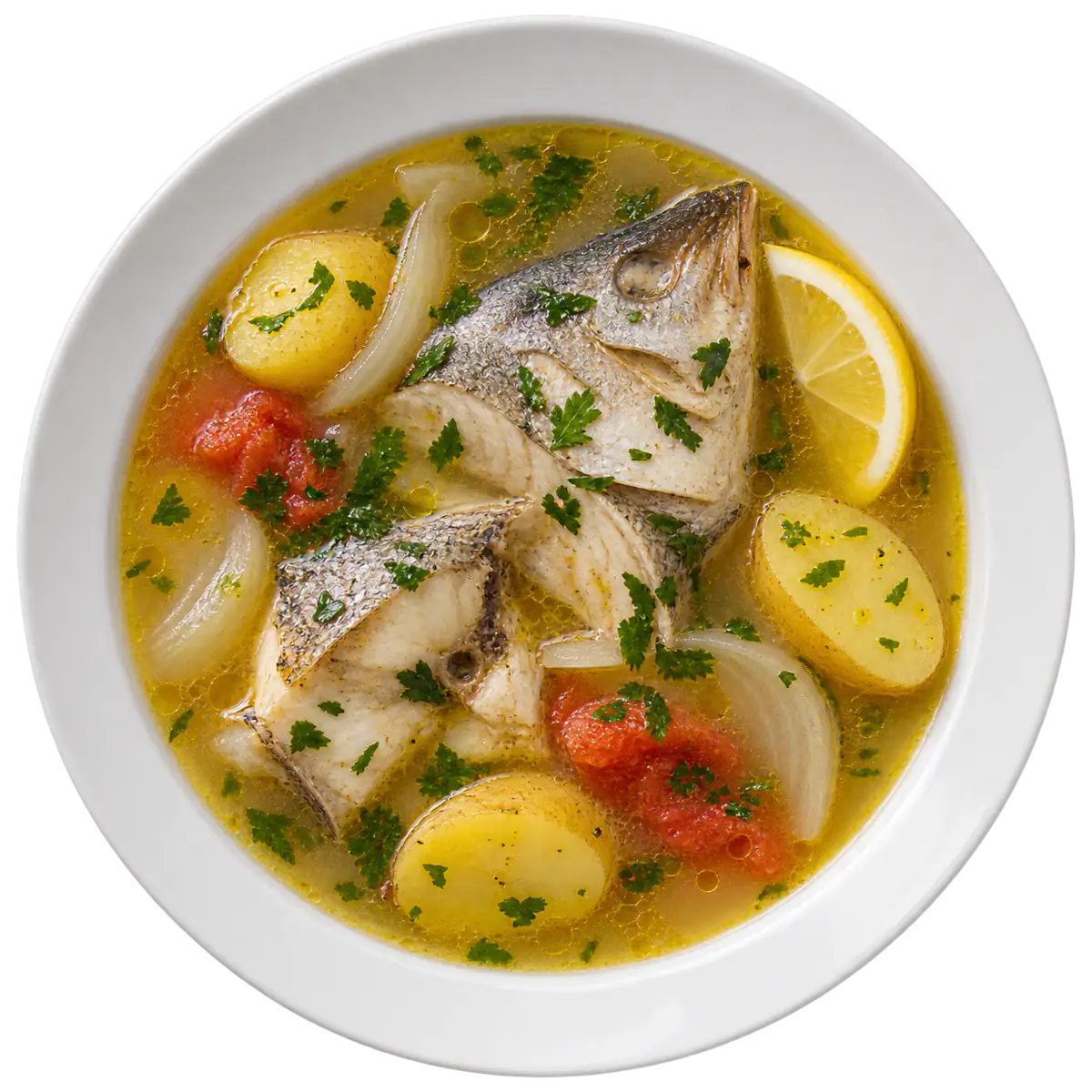
Greek fisherman's soup cooked in a pot at sea from the day's catch of whole fish layered over potatoes, onions and sometimes tomato, with plenty of olive oil and lemon.
Origin and history
Kakavia is the fishermen's soup of the Greek coast and islands, named after the kakavi, the pot it was cooked in at sea. It was the everyday food of fishermen, cooked with whatever the sea gave and with fish they could not sell, and eaten with bread rusks soaked in the broth.
Make it at home
- Makes
- 6 servings
- Total time
- 1 h 15 min
- Hands-on
- 40 min
Ingredients
- 1.5 kg3.3 lb mixed whole fish, such as scorpion fish, small grouper, sea bream, bass, red mullet; cleaned, scaled, cut in large pieces; or thick fillets
- 800 g1.75 lb potatoes, peeled, halved or quartered
- 3 medium onions, peeled, a cross cut into each or quartered
- 2 ripe tomatoes, chopped; optional
- 2 stalks celery, optional
- 2 carrots, optional; in thick rounds
- 250 ml1 cup Greek extra-virgin olive oil
- 90 ml6 tbsp fresh lemon juice, juice of about 2 lemons
- salt and freshly ground pepper, to taste
- dried bread rusks or crusty bread, to serve
Method
-
1. Put the onions and potatoes in a wide pot and add the carrots and celery if you use them. Season each layer lightly with salt and pepper.
-
2. Add water to come about halfway up the vegetables, cover and simmer for 15 minutes, until half-cooked.
-
3. Arrange the fish on the vegetables, the largest pieces first and the smallest on top, with the tomatoes.
-
4. Add just enough water to reach the underside of the fish.
-
5. Bring to a boil and cook with the lid ajar over medium-high heat for 20 to 30 minutes, until the fish is cooked and the potatoes are tender.
-
6. Whisk the olive oil with the lemon juice and pour it in.
-
7. Shake the pot by its handles (do not stir, so the fish stays whole) and boil for 2 more minutes, until the broth turns slightly creamy.
-
8. Lift the fish, potatoes and onions onto a platter. Pour the broth into bowls over rusks and leave for a few minutes to soften.
Notes
- Kakavia takes its name from the kakavi, the pot in which fishermen cooked it at sea, and was made with the fish they could not sell. A mix of rockfish and other fish gives the broth its flavour; on Paros it is served with the fish and vegetables on a platter and the broth in bowls over twice-baked bread rusks (paximadia).
- Shaking the pot by its handles instead of stirring keeps the fish whole; after two minutes the oil and lemon turn the broth slightly thickened and creamy.
- Some recipes also add shrimp, crab or a small lobster; others keep to fish, onion, potato and oil. Tomato, celery and carrot are island additions; the oldest form has no herbs. On Paros a little seawater goes into the pot.
- Hard-to-find fish: use any firm white fish, fillets or steaks, and shorten the cooking time. The result is milder than with whole rockfish.
- Psarosoupa is a different Greek fish soup, finished with avgolemono.
Adapted from Diane Kochilas, Kakavia (Greek fish soup), Argiro Barbarigou, Greek fisherman's soup (kakavia), and Friends of Paros, Kakavia tou kyri (Greek).
At the festivals
Served at 1 festival in Greece.
Earlier editions
-
August 17, 2025
🇬🇷 Sitia, Greece
Sitia Kakavia Feast
On the menu as Κακαβιά
By Ντίνα Νικολάου (overseeing); Δήμος Σητείας