
🇮🇹 Italy · Chestnut-growing mountain areas (Apennines and Alps)
Zuppa di castagneItalian chestnut soup
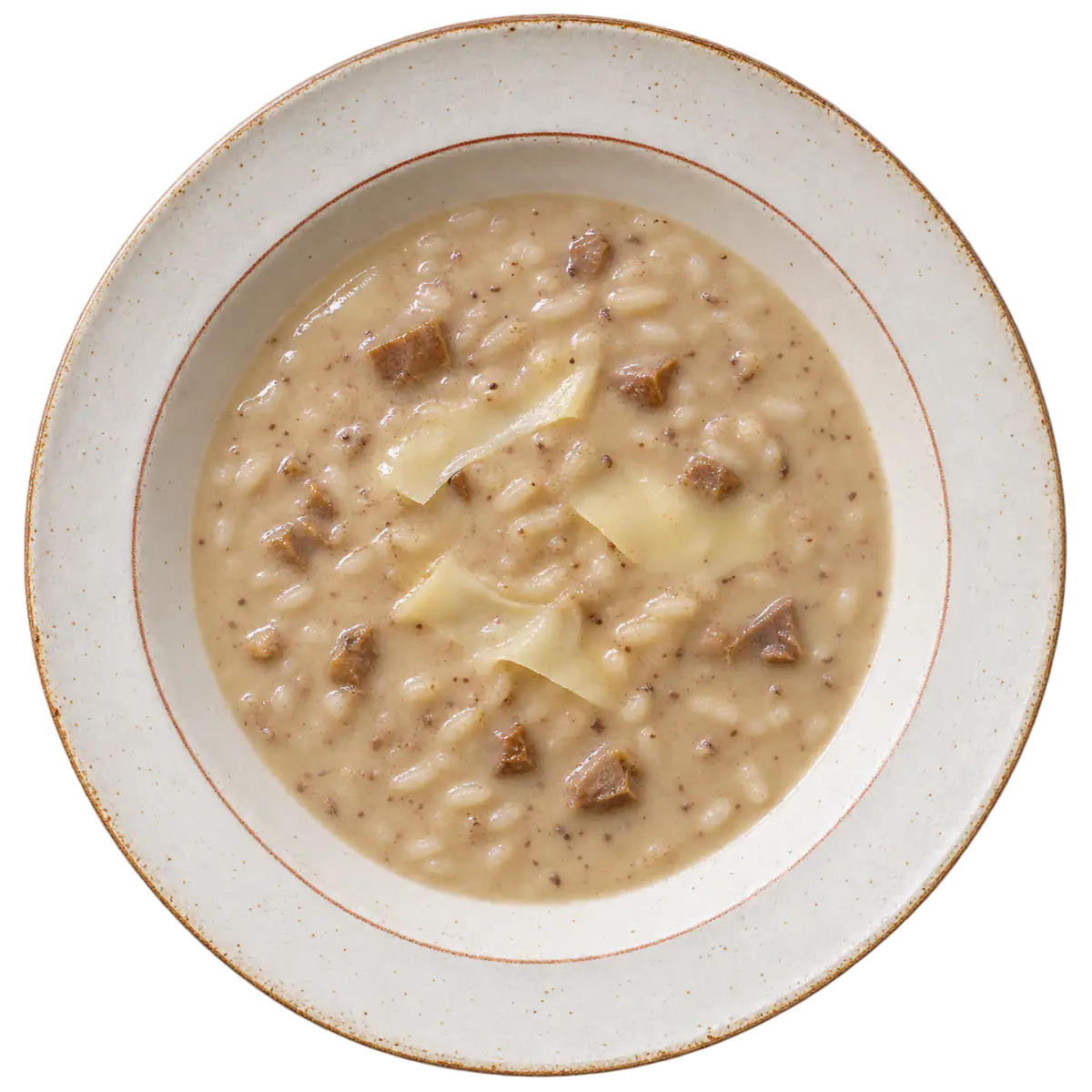
An Italian soup of boiled chestnuts or marroni in milk or meat broth, in the traditional form with dried chestnuts, milk, rice, honey and cloves, in the savoury form with broth, onion or mushrooms, often blended in part and served with croutons.
Origin and history
Gazzetta del Gusto says chestnuts were a staple for mountain communities, eaten dried, whole or ground into flour, and in the Dora valleys of northern Piedmont a durable winter food often served with milk, cheese, honey and rice; it adds that the milk-and-chestnut minestra traditionally marked the start of winter in homes. Dailyfood calls chestnuts the 'pane dei poveri' (bread of the poor) of peasant cooking, and Calendario Valtellinese describes the Valchiavenna rice-and-chestnut soup as an old peasant recipe handed down through generations and eaten in the cold months.
Make it at home
- Makes
- 4 servings
- Total time
- 2 h 30 min
- Hands-on
- 20 min
Ingredients
- 150 g1 cup dried chestnuts (castagne secche), peeled, soaked the day before in boiling water, then drained
- 500 ml2 cups whole milk
- 150 ml2/3 cup water, the source says only 'a little water'; add more as the pot dries
- 30 g2 tbsp butter
- 150 g3/4 cup rice, a round-grain variety such as Originario or Vialone Nano
- 150 g5.3 oz mild semi-fat cheese, sliced thin; a mountain cheese for a more rustic soup
- salt, a pinch
Method
-
1. The day before, cover the dried chestnuts with boiling water and let them soak until softened.
-
2. Drain the chestnuts and put them in a pot with the milk, the water, the butter and a pinch of salt.
-
3. Cook over low heat for about 2 hours, without a hard boil, until the chestnuts are soft and starting to break down; add a little hot water if the pot gets too dry.
-
4. Stir in the rice and cook for 15 to 18 minutes, until tender and the soup is thick and creamy.
-
5. Ladle into bowls and top with the thin slices of cheese, which melt into the soup.
-
6. Serve hot, with dark bread or a slice of grilled polenta.
Notes
- Quantities follow the Valchiavenna recipe from Calendario Valtellinese (4 servings: 150 g dried chestnuts, 0.5 l milk, 150 g rice, 30 g butter, 150 g semi-fat cheese), which says only 'a little water'; the 150 ml here is our estimate. It suggests a mountain cheese for a more rustic flavour and serves the soup with dark bread or grilled polenta.
- Dailyfood's Piedmontese version uses 200 g fresh peeled chestnuts, simmered for at least 2 1/2 hours in at least 2 liters of salted water, then rice (150 g, round-grain such as Originario or Vialone Nano), with 500 ml milk and 25 g butter added halfway through and a hard boil avoided so the milk does not stick. It says dried chestnuts need an overnight soak and frozen ones can go in without soaking.
- Gazzetta del Gusto prints a sweeter milk version: 200 g dried chestnuts boiled in water, moved to 2 liters of hot milk with rice and 2 cloves, and 2 tablespoons of chestnut or acacia honey stirred in off the heat.
- A savoury broth version exists: the Marroni di Combai IGP producers' recipe simmers 1 kg of roasted marroni and fresh or dried porcini in 3 liters of broth with a soffritto for at least two hours, blends part of it for thickness and serves it with bread croutons. It is a separate way of making the soup, not covered by this recipe.
- Keeps 1 to 2 days in the fridge (Dailyfood); add a splash of milk or water when reheating.
Adapted from Calendario Valtellinese, Minestra di riso e castagne (Valchiavenna), Dailyfood, Minestra piemontese di riso, latte e castagne, and Gazzetta del Gusto, Castagno: storia e tradizioni.
At the festivals
No festival we list has printed it on a menu yet.