
🇱🇧 Lebanon · Levant
Adas bi hamodLebanese lemon lentil soup
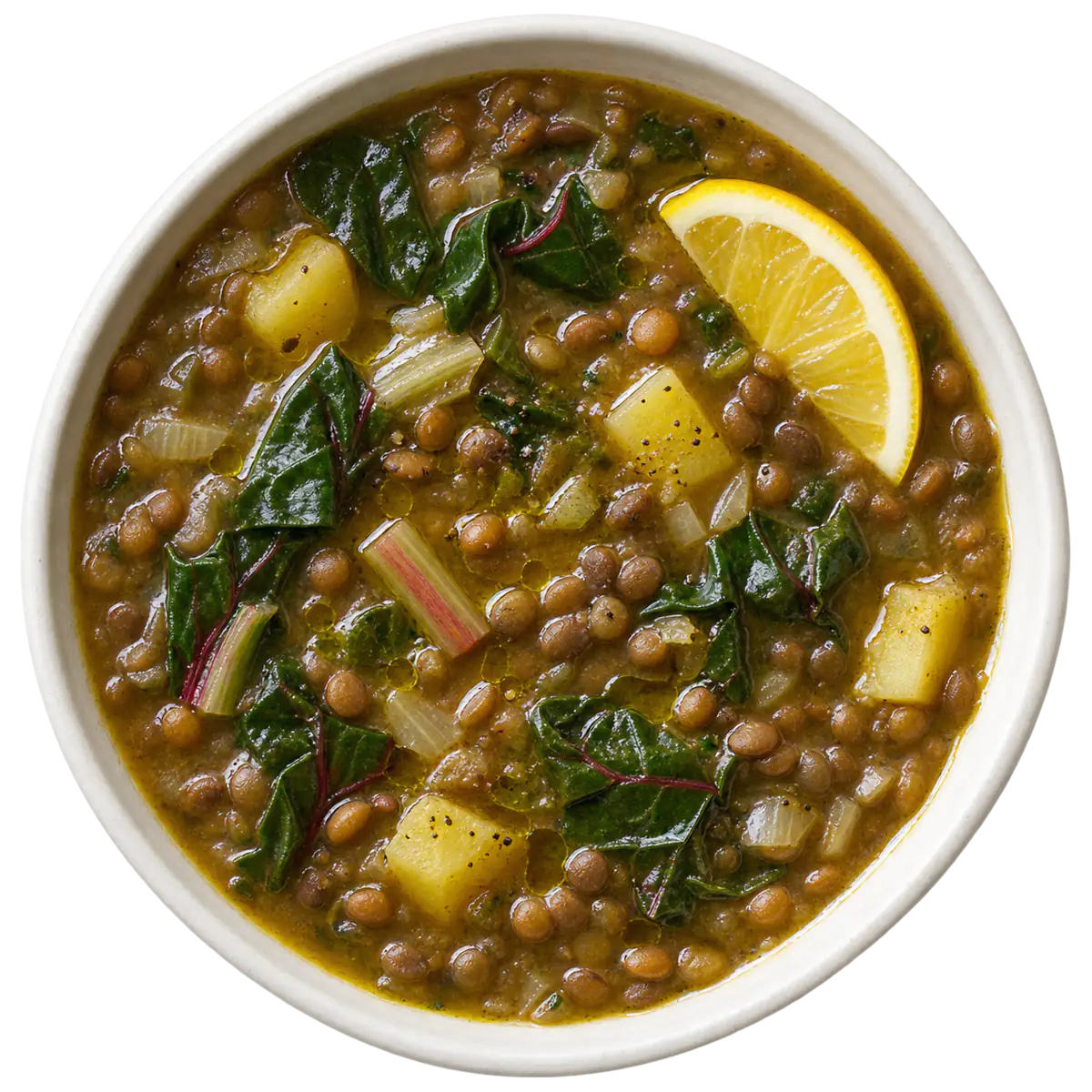
Levantine lentil soup of brown or green lentils with chard (or spinach), onion and potato, sharpened with plenty of lemon juice; 'bi hamod' means 'with sourness/lemon'.
Origin and history
Adas bi hamod ('lentils with sourness') is a Lebanese home soup of brown lentils and chard, sharpened with lemon and flavoured with onion, garlic and coriander fried in olive oil. Lebanese cooks describe it as a winter comfort dish handed down from mothers and grandmothers, made in many family and regional versions across Lebanon and the wider Levant.
Make it at home
- Makes
- 5–6 servings
- Total time
- 1 h 10 min
- Hands-on
- 25 min
Ingredients
- 200 g1 cup brown or green lentils ('adas), picked over for stones and rinsed
- 1.75–2 L7–8 cups water, plus more as needed
- 2 medium potatoes, peeled, cut in 2 cm (3/4 in) cubes
- 1 large bunch (about 500 g)1 large bunch (about 1 lb) Swiss chard (silq), leaves and tender ribs, washed and chopped
- 120 ml1/2 cup olive oil, plus more to serve
- 2 onions, thinly sliced or finely chopped
- 4–5 cloves garlic, crushed with a pinch of salt
- 1 bunch (about 60 g)1 bunch (about 2 cups chopped) fresh coriander (kuzbara), finely chopped
- 80–120 ml (juice of 2–3 lemons)1/3–1/2 cup fresh lemon juice
- 1 tsp (optional) ground cumin
- 1 1/2 tsp salt, plus black pepper, to taste
- Lebanese flatbread, toasted or fried, and lemon wedges, to serve
Method
-
1. Put the lentils and the water in a large pot, bring to the boil, then cover and simmer for about 20 minutes, until the lentils are tender but still whole.
-
2. Add the potatoes and simmer for 10 minutes.
-
3. Add the chard and simmer for another 10 minutes, until the potatoes are soft and the chard ribs are tender.
-
4. Meanwhile heat the olive oil in a frying pan and cook the onions over medium heat for about 10 minutes, stirring, until soft and lightly golden.
-
5. Add the garlic and cook for 1 minute, then stir in the coriander and take the pan off the heat after about a minute, before the coriander darkens.
-
6. Tip the onion, garlic and coriander with all their oil into the soup, add the salt, pepper and cumin (if using) and simmer gently for 10–15 minutes so the flavours blend; add hot water if it gets too thick.
-
7. Stir in the lemon juice, simmer 2 minutes more, then taste: it should be clearly lemony; add more juice and salt to your liking.
-
8. Serve hot or warm with a drizzle of olive oil, lemon wedges and toasted bread to break into the bowl.
Notes
- 'Bi hamod' means 'with sourness': the lemon should lead, not just brighten. Add it at the end so it stays fresh.
- Families differ. Many cook it without potato (or add carrot), some use spinach or collard greens when chard is out of season, and some leave out garlic or coriander. A thicker version is made by stirring a spoon of flour dissolved in water in with the lemon, and some add dried mint.
- Brown lentils keep their shape and give the classic texture; red lentils cook much faster and turn to a purée, which gives a different, smoother soup.
- It is a meatless olive-oil dish, vegan as it stands; serve it with bread, olives and radishes for a full meal.
- The lentils keep absorbing liquid: thin leftovers with water when reheating and refresh with a squeeze of lemon. It keeps 4 days in the refrigerator.
Adapted from Hadia's Lebanese Cuisine: Sour lentil soup (adas bhamod), Simply Lebanese: Lemon lentil soup (adas bil hamod), and SBS Food, Tom Sarafian: Lebanese lentils and lemon (adas bi hamoud).
At the festivals
Served at 1 festival in Belgium.
Earlier editions
-
November 16, 2024
🇧🇪 Chênée, Belgium
Fête de la Soupe de Chênée
On the menu as Soupe de lentilles et épinards au citron (Liban)
By Les Balkans