
🇲🇦 Morocco · especially the north
BissaraMoroccan fava bean soup
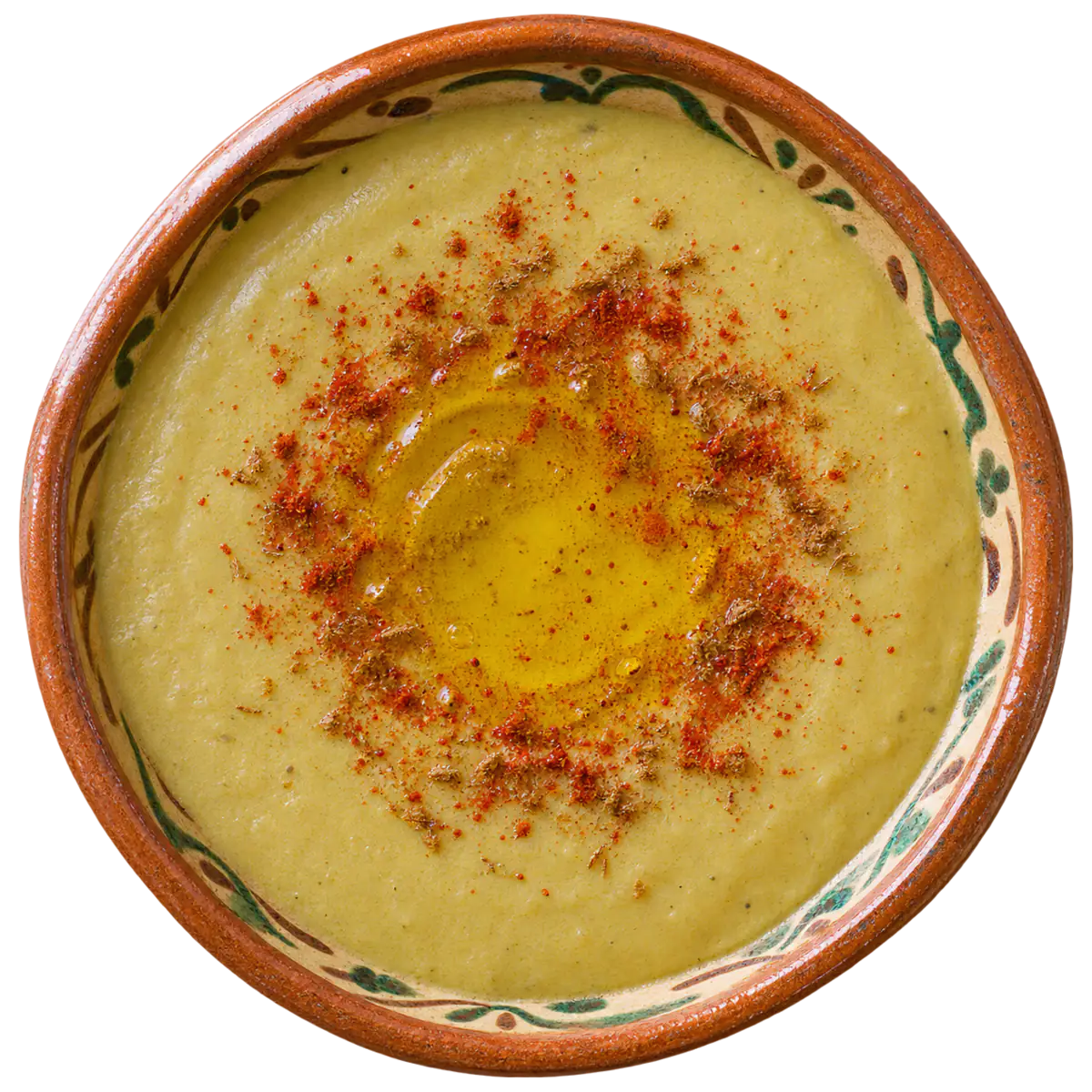
Moroccan soup of dried split fava beans puréed with garlic, cumin and olive oil, served hot in a bowl with a pool of oil, paprika and cumin, traditionally for breakfast with bread.
Origin and history
Bissara is a traditional dish of Moroccan households, especially in the north and the mountain districts, eaten in cold months because it warms and fills. Moroccan press and food writing describe it as a staple of working-class tables, and the name and the dish, dried fava puréed with garlic and cumin, are consistent across Moroccan sources.
Make it at home
- Makes
- 4 to 6 servings
- Total time
- 1 h 30 min
- Hands-on
- 20 min
Ingredients
- 400 g2 cups dried split, peeled fava beans (fèves sèches, foul mkasser), soaked overnight in plenty of water
- 4 garlic cloves, peeled
- 1.5 l6 1/3 cups cold water
- 1 tsp ground cumin, plus more to serve
- 1 tsp sweet paprika, plus more to serve
- 1 tsp salt
- 4 tbsp olive oil, plus more to serve
- 1/2 lemon, optional, juice
- hot chilli or cayenne, bread, to serve
Method
-
1. Drain the soaked fava beans and rinse; if any skins remain, rub them off.
-
2. Put the beans and garlic in a large pot with 1.5 litres of cold water and bring to a boil.
-
3. Reduce the heat, partly cover and simmer for 40 to 60 minutes, skimming the foam, until the beans fall apart when pressed.
-
4. Purée the beans and garlic with their cooking liquid with an immersion blender or by crushing with a wooden spoon until smooth.
-
5. Stir in the salt, the cumin, the paprika and 2 tablespoons of the olive oil and simmer for 10 minutes more, stirring, until the soup is as thick as thin porridge. Add hot water to loosen it.
-
6. Ladle into bowls, make a well in the centre and pour in the remaining oil; scatter with cumin, paprika and chilli.
-
7. Serve hot with bread for dipping, with lemon if you like.
Notes
- In Morocco, bissara (bessara, b'ssara) is a winter breakfast and street-stall dish, especially in the north, and is more common in working-class households. It is served hot with olive oil, cumin and hot spice on top, with wheat or barley bread.
- Regional variants: in the Atlas, argan oil replaces olive oil; in the north, turnip or cabbage may be cooked with the beans; bissara made with dried peas is called bissara jelbana.
- Some recipes add a tomato, carrot or pumpkin with the beans.
- Egypt's bissara is a different dish: a thick green dip of fava and herbs. The soup here is the Moroccan one.
- Dried peeled fava beans can be replaced by split dried peas; the flavour changes but the technique is the same. Do not use canned beans: the soup needs the starch released by long cooking.
Adapted from Moroccan Cuisine: A Recipe for Bissara, Morocco World News, Moroccan Bessara, Pulses.org, and البيصارة المغربية, Hespress.
At the festivals
No festival we list has printed it on a menu yet.