
🇲🇾 Malaysia and 🇸🇬 Singapore · Hokkien Chinese kitchens of Penang and Singapore, from Xiamen
Prawn meeMalaysian prawn noodle soup
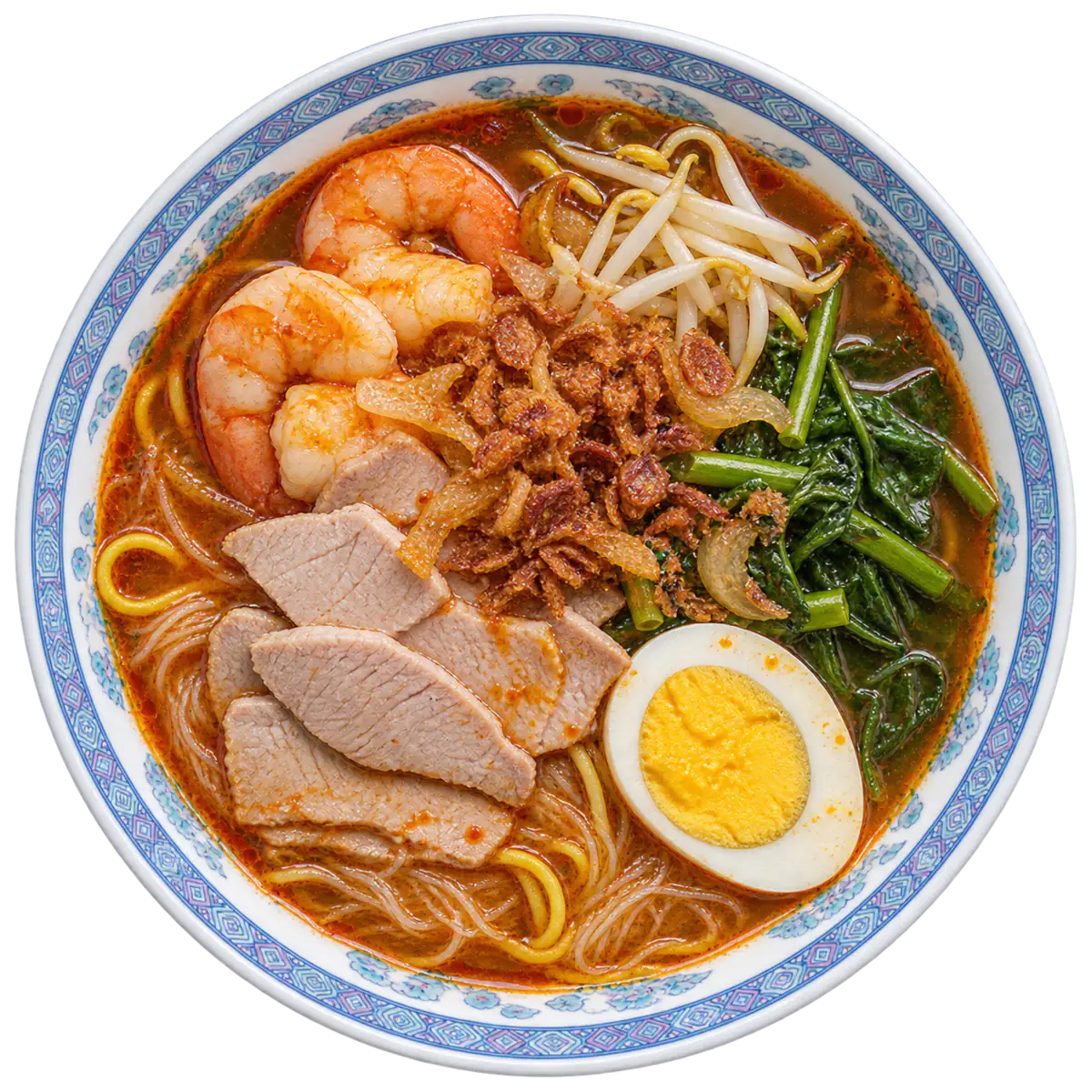
A Hokkien noodle soup of yellow noodles and rice noodles in a deep, reddish broth built on fried and crushed prawn heads and shells, with pork bones, topped with prawns, pork and bean sprouts.
Origin and history
Prawn mee is a Hokkien dish that came from Xiamen in Fujian with migrants to Singapore and Penang. A Singapore history records it on sale before the Second World War, and the Blanco Court stall dates its start to 1928. Pork rib broth became popular in the 1940s, and a dry version with chilli powder and lard sauce was developed in Singapore in the 1960s.
Make it at home
- Makes
- 5 servings
- Total time
- 3 h
- Hands-on
- 1 h 15 min
Ingredients
- 500 g1.1 lb pork ribs or pork bones
- 300 g10.5 oz chicken wings or drumsticks, optional but common for body
- 2 litres8 cups water
- 5 cm2 in fresh ginger, crushed
- 5 cloves garlic, crushed, for the stock
- 1/4 tsp white peppercorns
- 1 kg2.2 lb prawn heads and shells, from about 700 g / 1.5 lb head-on prawns
- 500 g1.1 lb medium prawns, peeled and deveined, shells kept for the stock
- 200 g7 oz lean pork loin
- 4 tbsp neutral oil, divided
- 12 dried red chillies, deseeded, soaked until soft
- 50 g1.75 oz dried shrimp, soaked and drained
- 10 shallots
- 4 cloves garlic, for the paste
- 1 tbsp sugar, rock sugar if you have it
- salt, to taste
- 300 g10.5 oz fresh yellow noodles
- 150 g5 oz rice vermicelli, fresh, or 100 g dried
- 200 g7 oz water spinach (kangkong), cut in 5 cm / 2 in lengths
- 150 g5 oz bean sprouts
- 2 hard-boiled eggs, halved
- fried shallots and chilli paste, to finish
Method
-
1. Blanch the pork ribs and chicken in boiling water for 5 minutes, drain and rinse. Return them to a clean pot with the water, ginger, crushed garlic and peppercorns.
-
2. Simmer gently for 2 hours, skimming, then strain, keeping the ribs.
-
3. Heat 1 tablespoon of oil in a wok over high heat and fry the prawn heads and shells for about 5 minutes, pressing them, until they turn deep orange and smell toasty.
-
4. Crush the shells in the wok with a pestle or the back of a ladle, then tip them into the stock and simmer for 45 minutes. Strain through a fine sieve, pressing out the liquid.
-
5. Blend the soaked chillies, dried shrimp, shallots and garlic to a paste and fry it in 3 tablespoons of oil for 10 to 12 minutes over medium heat, until dark and fragrant. Stir half into the broth and simmer 15 minutes; keep half as chilli paste for the table.
-
6. Season the broth with sugar and salt. Poach the pork loin in it for 20 minutes, until just cooked, then slice thinly.
-
7. Poach the prawns in the simmering broth for 1 to 2 minutes, until just pink, and set aside.
-
8. Blanch the noodles, vermicelli, water spinach and bean sprouts in boiling water and divide among bowls.
-
9. Top with prawns, pork slices, a few ribs and egg. Bring the broth to a rolling boil, ladle it over, and add fried shallots and chilli paste.
Notes
- The defining step is frying the prawn heads and shells in oil, then crushing them: oil draws the red-orange colour out of the shells better than water does. Crush them into small pieces rather than a puree and strain well.
- Penang prawn mee (also called Hokkien mee there) is a red, chilli-forward soup with pork ribs, kangkong and egg. Singapore versions often blend a prawn broth with a separate pork broth made from ribs, pork skin and tail, finished with lard, and a dry version tosses the noodles in a chilli-lard sauce with the soup served alongside.
- Xiamen cooks, the dish's source, simmer the shells with pork bones and sometimes dried anchovies, and top the noodles with prawns and pork offal or fishballs; the toppings here follow the Penang and Singapore bowls.
- Substitutions: dried egg noodles replace fresh yellow noodles (cook 3 to 4 minutes). Spinach replaces kangkong. Whole small shrimp can stand in for shells.
- Make ahead: the broth keeps 3 days refrigerated or freezes well; cook prawns and noodles fresh.
Adapted from Johor Kaki, Origin and history of Singapore prawn noodle, Food Canon, What makes Penang Hokkien prawn mee, and My Cooking Hut, Penang Hokkien Mee.
At the festivals
No festival we list has printed it on a menu yet.