
🇲🇳 Mongolia
Banshtai shölMongolian dumpling soup
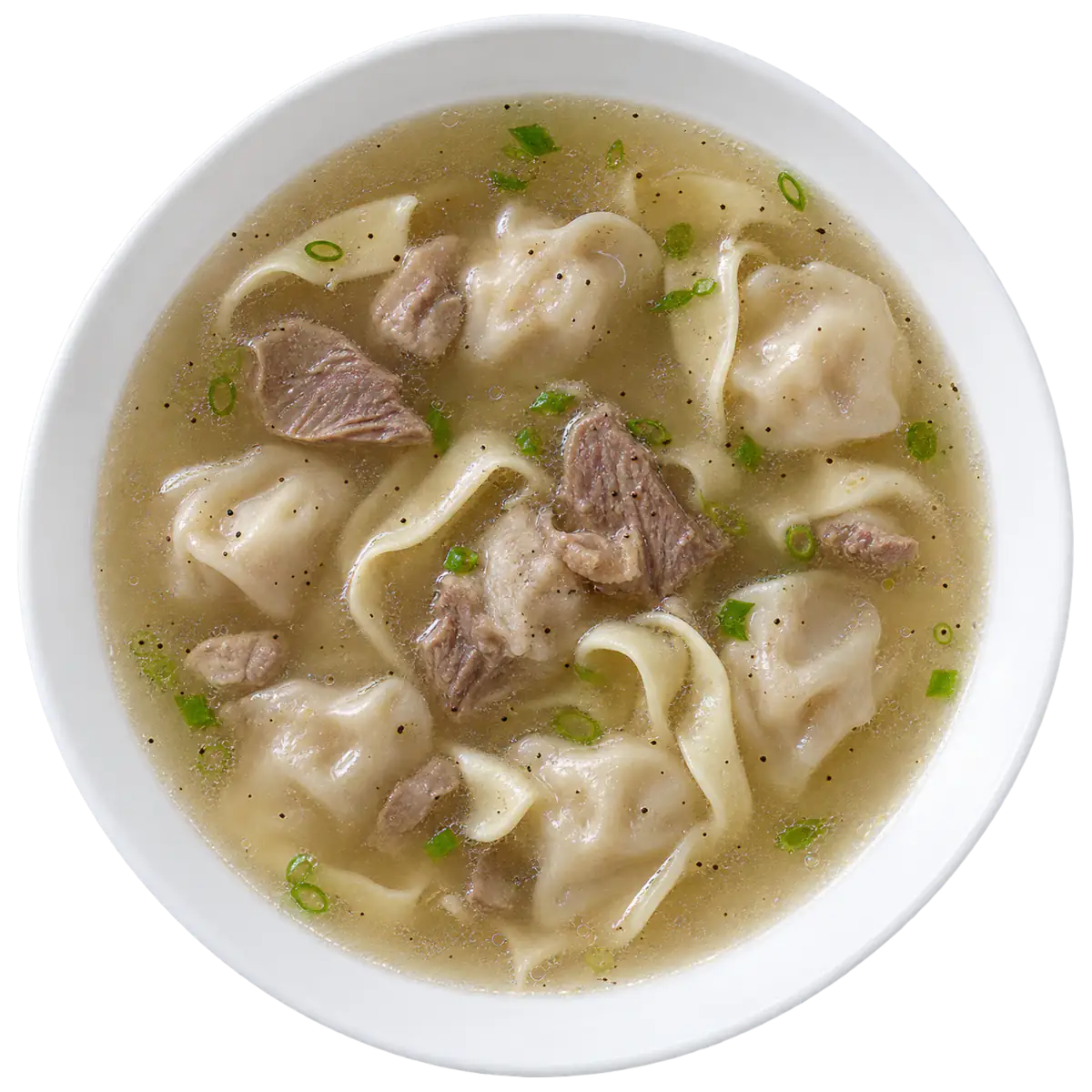
A Mongolian meat broth of lamb and beef bones holding small meat dumplings (bansh) and fresh noodles, flavoured with wild onion (mangir) and eaten with the meat.
Origin and history
Sources are few and give no date. The Russian magazine Vokrugsveta calls banshtai shol a nomad's soup: a lamb and beef bone broth simmered for hours, with small bansh dumplings and fresh noodles, flavoured with wild onion, and explains the name: shol is the broth, guriltai is shol with homemade noodles, and adding bansh gives banshtai shol. Mongolia's national news agency Montsame lists broth with meat dumplings among the soups a host serves as a first course on special occasions such as Tsagaan Sar.
Make it at home
- Makes
- 4 servings
- Total time
- 5 h 30 min
- Hands-on
- 1 h
Ingredients
- 4 L4 qt cold water, for the broth; the chef's recipe uses 10 L with 5 kg of bones and meat, scaled here by about 40% to a household pot; keep the bones covered, topping up with hot water if needed
- 1.2 kg2.6 lb beef bones
- 400 g14 oz beef ribs
- 400 g14 oz fatty lamb shoulder on the bone
- 600 g21 oz lamb on the bone, extra, cooked in the soup
- 200 g7 oz raw beef, finely chopped
- 12 g1/2 oz wild onion (mangir), cleaned, dried and ground with salt, ramps, garlic chives or finely chopped scallion greens stand in; taste will differ
- 100 g3.5 oz (3/4 cup) flour, for the bansh dough
- 60 ml1/4 cup water, for the bansh dough
- 120 g4 oz minced mutton or beef, for the bansh filling; fatty meat is better
- 1/3 onion, minced, for the filling
- 1 garlic clove, minced, for the filling
- 1 to 2 tbsp water, worked into the filling
- 150 g5 oz (1 cup) flour, for fresh noodles
- 100 mlscant 1/2 cup water, for the noodle dough
- salt, ground black pepper and caraway, to taste; the dough has no salt, so season the filling well
Method
-
1. Cover the beef bones, ribs and lamb shoulder with the 4 L (4 qt) cold water, bring to a boil and skim the foam steadily.
-
2. After 1 1/2 hours take out the lamb shoulder; 40 minutes later take out the ribs. Lower the heat to the minimum and simmer 2 1/2 hours more, then strain; you need about 2 L (2 qt) of broth.
-
3. Make the bansh: mix 100 g flour with 60 ml water into a pliable dough and rest it 15 minutes. Mix the minced meat, onion, garlic, water, salt, pepper and caraway into a smooth, well-seasoned filling.
-
4. Cut the dough into 3 cm pieces, flatten and roll each into a circle about 7 cm across. Put about 1 teaspoon of filling on each, fold in half and seal the edge, making 16 bansh in all.
-
5. Mix 150 g flour and 100 ml water into a dough, rest, roll it thin and cut into strips about 5 mm wide. Cut the cooked lamb and ribs from the bones into pieces.
-
6. Return 2 L of the strained broth to the heat. When it boils, add salt and the chopped raw beef.
-
7. After 7 minutes add the wild onion and the cooked lamb, cut in pieces.
-
8. Bring back to a boil, add the 16 bansh, stir and cook 5 minutes.
-
9. Add the fresh noodles and cook 2 minutes more. Ladle into bowls so each has lamb, beef, dumplings and noodles, and season with black pepper.
Notes
- The Russian magazine Vokrugsveta, with a recipe from a Mongolian restaurant's head chef, says to eat the broth with the noodles first and the meat, cut out of the soup, afterwards; its portions come to about half a liter of soup each. This recipe follows its proportions for the soup itself, with the broth batch scaled down (about 40%) and the dumplings and noodles made from the Mongolfood.info dough proportions.
- Mangir, the wild onion, is gathered in June and July, cleaned, washed, dried, chopped and ground with salt, which removes its bitterness, and is kept in jars or buckets. Without it, use garlic chives or ramps; the flavour is not the same.
- Banshtai shol is guriltai shol with dumplings added; the parent-style guriltai shol is a quicker, simpler noodle soup, while this soup is built on a long-simmered lamb and beef bone broth, with bansh as its defining element. Bansh are also eaten on their own, boiled, as a meal.
- Make-ahead: the broth keeps 3 days refrigerated and freezes well; make the dumplings and noodles fresh.
Adapted from Vokrugsveta: banshtai shol (recipe of Darya Bicheool, head chef, Selenge restaurant), Mongolfood.info: Bansh (dough and filling), Mongolfood.info: Tsuivan and Tasalsan guril (noodle dough proportions), and Montsame (Mongolian National News Agency): Mongolian soups at Tsagaan Sar.
At the festivals
No festival we list has printed it on a menu yet.