
🇲🇳 Mongolia · a nomad's everyday soup of meat and noodles
Guriltai shölMongolian noodle soup
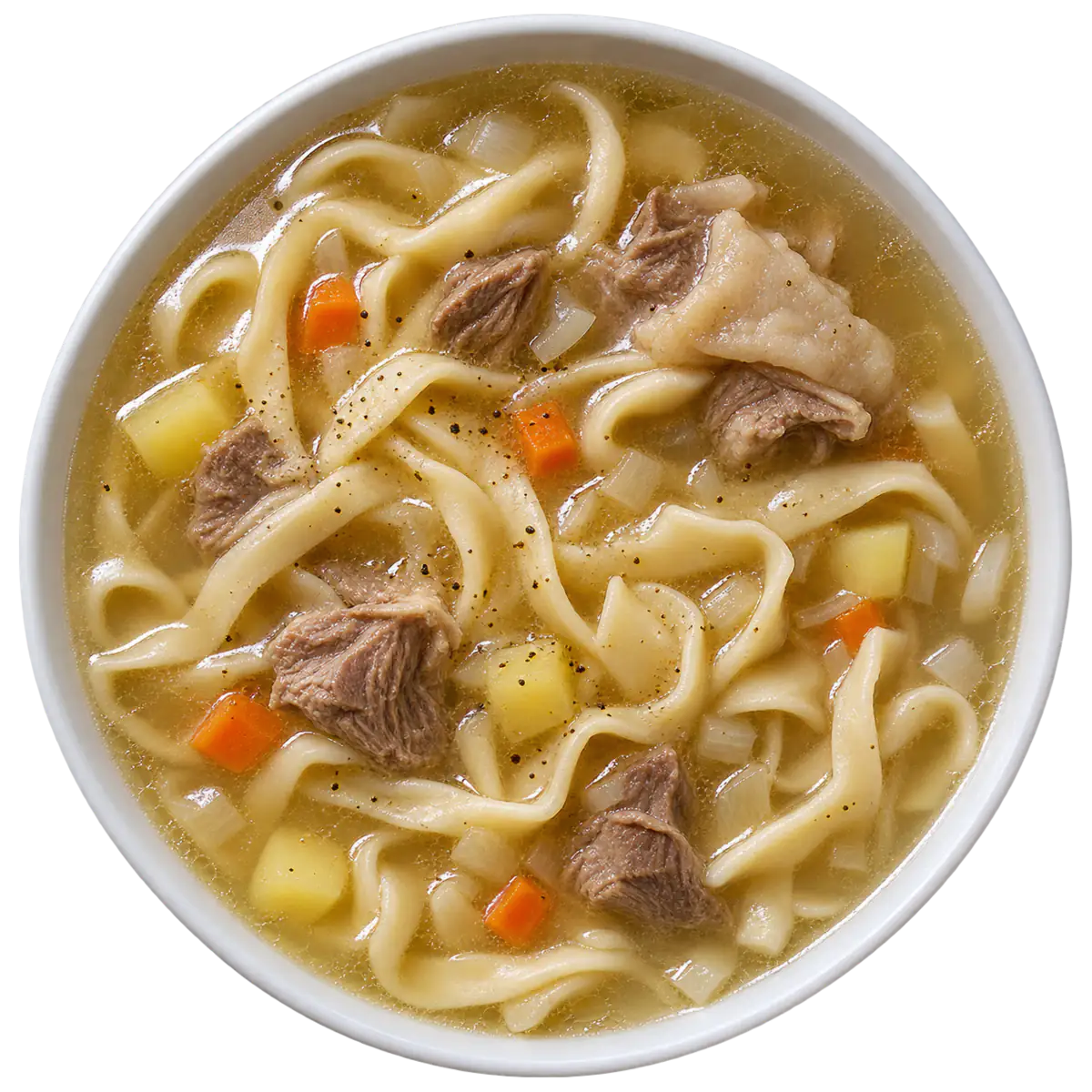
A Mongolian soup of boiled mutton or beef (or dried meat, borts) with onion, vegetables and flour noodles, either fried noodles (tasalsan guril) or fresh homemade noodles, in a meat broth seasoned simply, with salt and pepper and other spices to taste.
Origin and history
Sources agree on the form (meat, noodles, onion and a few vegetables in a plain broth) but give no date or origin. The Russian magazine Vokrugsveta, quoting a chef in Mongolia, explains the naming: shol is the concentrated meat broth, guriltai means with noodles. The national news agency Montsame lists noodle soup among the soups a host serves as a first course on special occasions, especially at Tsagaan Sar.
Make it at home
- Makes
- 4 servings
- Total time
- 1 h 45 min
- Hands-on
- 45 min
Ingredients
- 300 g10.5 oz (2 1/3 cups) flour plain wheat flour, for the fried noodles (tasalsan guril), plus oil for frying; or use 300 g ready-made fried or dried noodles
- 200 ml3/4 cup plus 1 tbsp water, for the dough
- 200 g7 oz mutton, lamb or beef, cut in small strips; fatty meat gives a better broth. Or borts (dried meat), soaked at least 10 minutes
- 1 onion, cut in strips
- 150 g5 oz vegetables, such as carrot, potato, turnip or cabbage, cut small; slow-cooking ones first
- a little (about 1 tbsp) oil, for frying the onion, vegetables and meat; the source gives no amount
- 1.5 L1 1/2 qt water, enough to cover the noodles; the source gives no amount, so adjust to your pot
- salt and black pepper, to taste; the simple seasoning of the broth
Method
-
1. Make the noodles: mix the flour and 200 ml (3/4 cup) water into a pliable dough and rest it 15 minutes.
-
2. Divide the dough in two or three, roll each piece out thin, and cut into pieces that fit your frying pan.
-
3. Fry each sheet lightly in a little oil on both sides, lighter or darker as you like, until dry; stack the sheets and cut them into strips about 7 cm (3 in) long.
-
4. Soften the onion in the oil in a large pot. Add the vegetables, slow-cooking ones first, and fry them.
-
5. Add the meat and fry it too. Add salt and pepper and keep frying; this stage largely sets the aroma of the soup.
-
6. Pour in the 1.5 L (1 1/2 qt) water and bring to a boil. If you use mutton, simmer about 1 hour, skimming, until it is tender (one mutton recipe simmers whole pieces 1 to 2 hours); beef strips need less.
-
7. Add the fried noodles and boil about 5 minutes, until they are soft but still have a little bite.
-
8. Taste, correct the salt and pepper, and serve hot.
Notes
- Only the meat and the noodles are constants; the vegetables and amounts vary freely from cook to cook. A Mongolian food site suggests finishing with curds or cream, or tomato purée, and notes that tomato is not common in Mongolian cooking.
- The name logic: shol is a concentrated bone-and-meat broth, often enriched with borts (dried chopped meat); adding homemade noodles (guril) makes it guriltai shol, and adding dumplings (bansh) as well gives banshtai shol, which has its own page here.
- A home shortcut is egg noodles or any sturdy noodle in place of fried noodles. One mutton version adds ground cumin and a few mutton bones for a richer broth; the base here is the simple salt-and-pepper seasoning, with other spices to taste.
- At Tsagaan Sar and other feasts a host may open the meal with a soup of this kind.
Adapted from Mongolfood.info: Guriltai shul, Mongolfood.info: Tasalsan guril (fried noodles), Vokrugsveta: banshtai shol and the shol naming, and Montsame (Mongolian National News Agency): Mongolian soups at Tsagaan Sar.
At the festivals
No festival we list has printed it on a menu yet.