
🇰🇷 South Korea · Korea, especially the north (Pyongan Province) as a New Year dish
Mandu-gukKorean dumpling soup
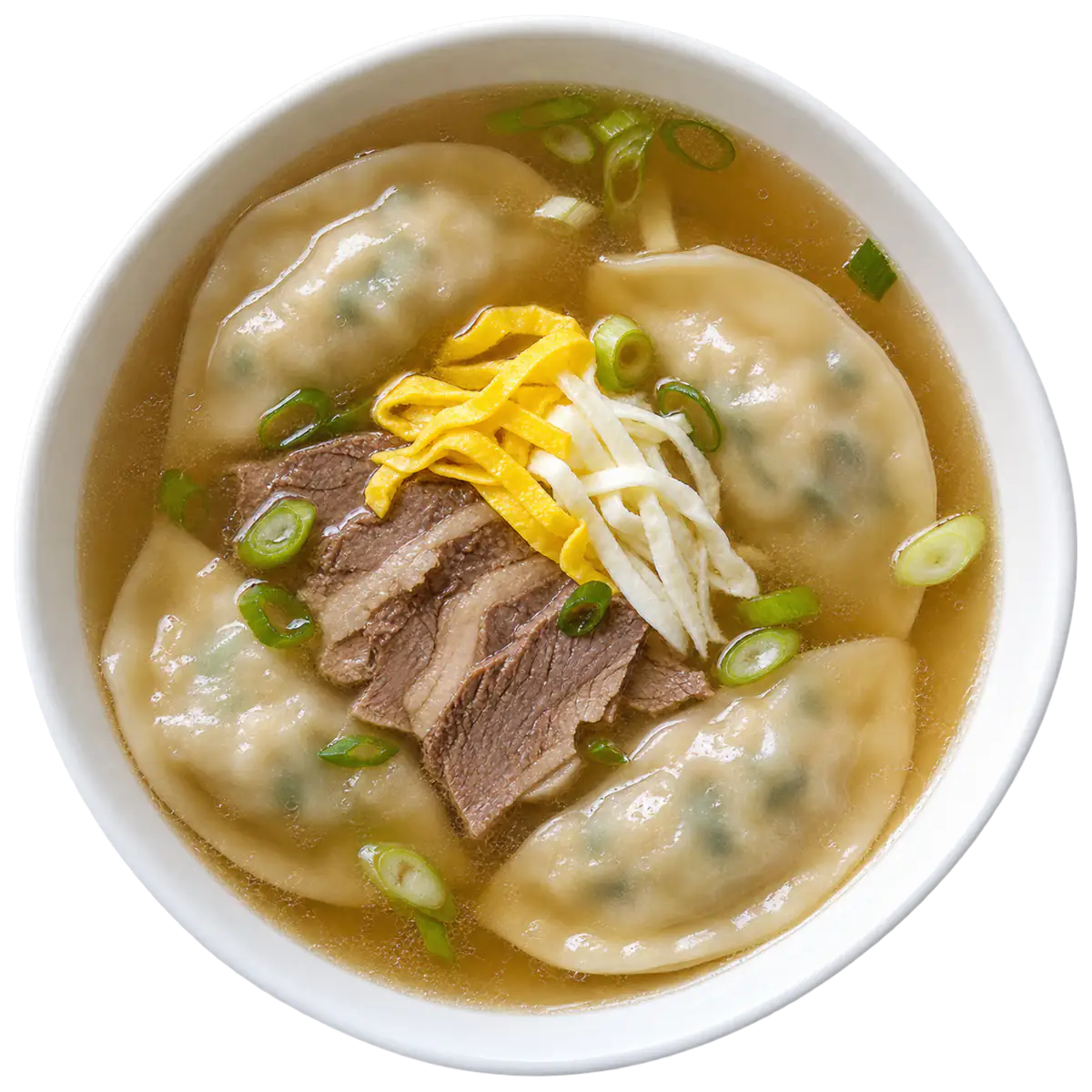
Meat-and-vegetable dumplings boiled in a clear beef brisket broth and served with egg strips and a vinegar-soy dip.
Origin and history
The Encyclopedia of Korean Culture defines mandu-guk as dumplings simmered in broth, and records that it was called byeongsi at court; the Joseon cookbook Eumsik dimibang has a similar dish, seoryutang, of small round dumplings in clear broth. It is a Lunar New Year dish especially in the north, around Pyeongan Province, where wheat is grown. The date when the name mandutguk became common is unknown.
Make it at home
- Makes
- 4 servings
- Total time
- 2 h 15 min
- Hands-on
- 1 h
Ingredients
- 250 g9 oz beef brisket (yangjimeori), in one piece, for the broth; sliced afterward for the topping
- 1.6 L1 2/3 qt water, for the broth
- 1/2 Korean radish or 1 small onion, optional, for sweetness in the broth
- 2 tbsp guk-ganjang (Korean soup soy sauce), for the broth, plus salt to taste
- 100 g3.5 oz ground beef, dumpling filling
- 100 g3.5 oz ground pork, fatty cut preferred; dumpling filling
- 175 g6 oz soybean sprouts, blanched, chopped and squeezed gently
- 1 small block (about 100 g)3.5 oz firm tofu, weighted to drain, then crushed
- 1 leaf napa cabbage, blanched and chopped; keeps the filling soft
- 1/3 stalk scallion, finely chopped
- 1.5 tsp minced garlic
- 1/4 tbsp salt, plus 1/4 tsp black pepper and a little sesame oil, for the filling
- 1 egg, binds the filling
- 26 round dumpling wrappers, 6 to 7 cm (about 2.5 in) across, wheat flour and water; store-bought or home-made cold-water dough
- 2 eggs, for the garnish: fried into thin sheets (jidan) and cut in strips
- 1 tbsp scallions, sliced, for the top
- 3 tbsp soy sauce, for the dipping sauce (choganjang)
- 1 1/2 tbsp rice vinegar, for the dipping sauce; adjust to taste
Method
-
1. Soak the brisket in cold water 30 minutes, then boil it in the water for 5 minutes and rinse it. Return it to the pot with fresh 1.6 L (1 2/3 qt) water and the radish.
-
2. Simmer gently for about 1 hour 15 minutes, skimming fat and foam, until a chopstick slides through the meat. Lift out the meat, strain the broth and season it with the soup soy sauce and salt. Slice the brisket thinly.
-
3. Blanch the bean sprouts and the cabbage, chop them and squeeze out the water gently. Wrap the tofu in a cloth, press it dry and crush it.
-
4. Mix the ground beef and pork with the sprouts, cabbage, tofu, scallion, garlic, salt, pepper, sesame oil and the egg. If the filling is too loose, add a pinch of gochugaru; if too wet to shape, a little more egg.
-
5. Brush the edge of a wrapper with water, put about 1 tablespoon of filling in the middle, fold in half to a half-moon and press the edge shut without pleating. Repeat.
-
6. Fry the beaten garnish eggs into thin sheets, then cut them into strips.
-
7. Bring the broth to a boil, drop in the dumplings and simmer until they float, then 2 to 3 minutes more so the filling is cooked through.
-
8. Ladle the soup and dumplings into bowls and top with sliced brisket, egg strips and scallion.
-
9. Stir the soy sauce and vinegar together and serve it alongside for dipping.
Notes
- The traditional broth is brisket beef; the Encyclopedia of Korean Culture also notes the wrappers are a cold-water wheat dough rolled to rounds of about 6 to 7 cm, folded unpleated into half-moons. Many home cooks use anchovy broth and ready-made dumplings, with about 4 cups of broth and 6 dumplings per person.
- It is above all a Lunar New Year dish in the north, around Pyeongan Province. Dumplings made with well-fermented kimchi are also frozen and cooked in broth at other times; this recipe uses a bean sprout and tofu filling instead.
- Adding sliced rice cakes (tteok) turns it into tteok-manduguk, kept here as an alias and not a separate dish.
- Make-ahead: steam the extra dumplings 10 minutes, cool, freeze flat on a tray, then bag; boil from frozen in the hot broth.
- At court the dish was called byeongsi, and the Joseon cookbook Eumsik dimibang describes a similar dish, seoryutang (small round dumplings in clear broth).
Adapted from Encyclopedia of Korean Culture (Academy of Korean Studies): Mandu-guk, Korea Tourism Organization (VisitKorea): Mandu-guk, and 10000recipe: dumpling filling (beef, pork, sprouts, tofu).
At the festivals
No festival we list has printed it on a menu yet.