
🇮🇹 Italy · Livorno, Tuscany (a Viareggio version is also made on the Tuscan coast)
CacciuccoTuscan fish stew
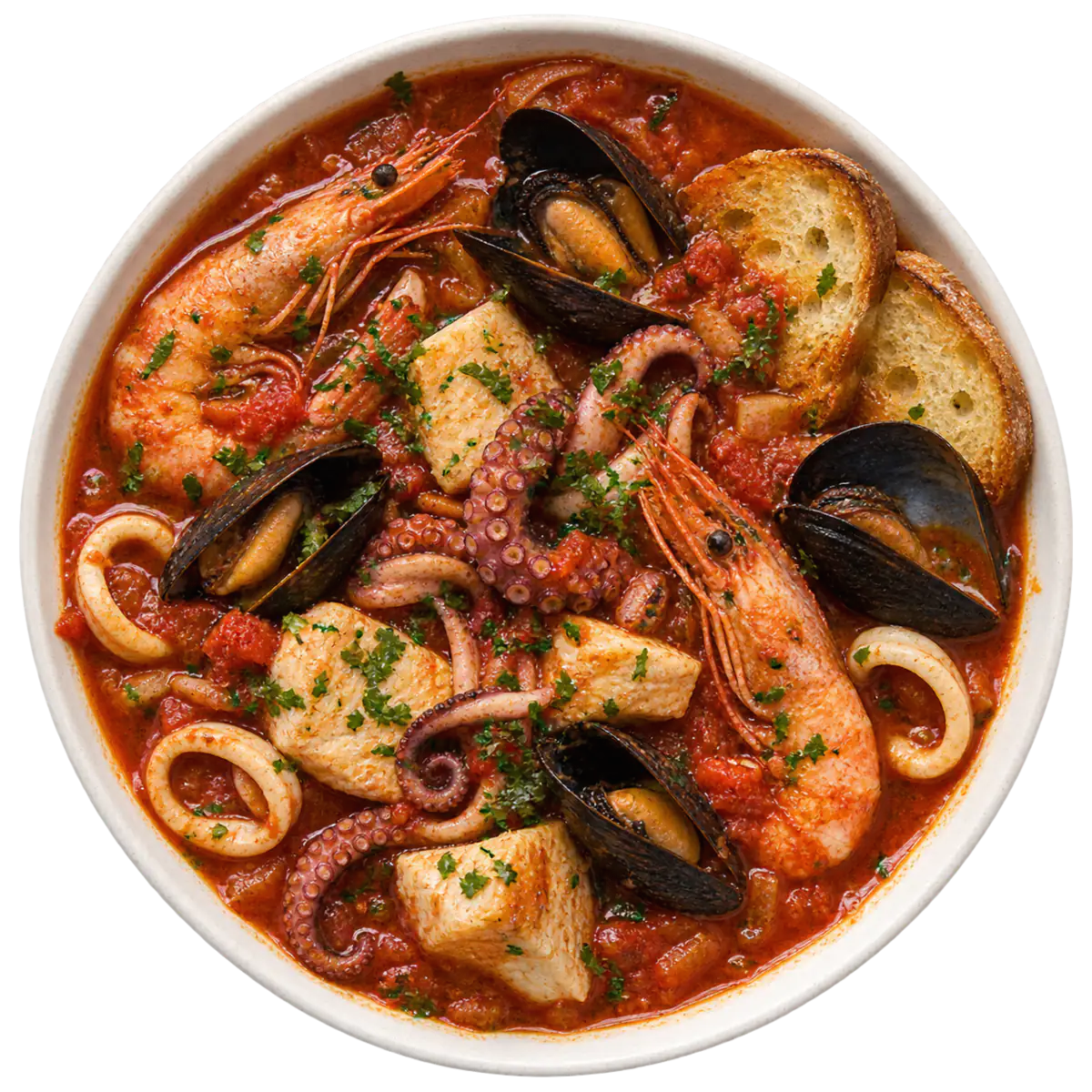
Livorno's fish soup of several kinds of fish, cephalopods, shellfish and crustaceans cooked in a tomato, red wine, garlic, sage and chilli base and ladled over garlic-rubbed toasted bread.
Origin and history
Cacciucco is the fish soup of Livorno on the Tuscan coast. Its origin is not documented: the stories told about it (a lighthouse keeper, a poor family making soup from scraps, a Turkish fisherman from Smyrna) are legends, and the name is often tied to a Turkish word for 'small', for the small fish used, though the etymology is uncertain. Pellegrino Artusi gave a recipe for it in the late 19th century.
Make it at home
- Makes
- 6 servings
- Total time
- 2 h
- Hands-on
- 1 h
Ingredients
- 800 g1.8 lb octopus, cleaned, cut in pieces
- 400 g14 oz cuttlefish or squid, cleaned, cut in rings or strips
- 800 g1.8 lb rockfish for soup (scorpionfish, gurnard, weever or similar), scaled and gutted; heads and bones go into the broth
- 500 g1.1 lb firm fish in steaks (monkfish, smooth-hound shark or conger), cut in thick pieces
- 300 g10.5 oz prawns or mantis shrimp (canocchie), left in the shell
- 300 g10.5 oz mussels, scrubbed and debearded
- 1 onion, finely chopped
- 1 carrot, for the broth, left whole
- 1 celery stalk, for the broth
- 5 garlic cloves, 4 crushed, 1 whole for rubbing the bread
- 2 dried chilli peppers, or to taste
- 6 leaves sage
- 80 ml1/3 cup extra virgin olive oil, plus more to finish
- 250 ml1 cup Tuscan red wine
- 600 g1.3 lb ripe tomatoes or tomato passata, peeled if fresh
- 2 tbsp tomato paste
- 6 thick slices stale country bread (Tuscan if possible)
- salt and freshly ground black pepper, to taste
- 2 tbsp chopped flat-leaf parsley, optional
Method
-
1. Ask the fishmonger to clean the fish and keep the heads, bones and shells. Put them in a pot with the carrot, celery, a pinch of salt and 1.5 litres (6 cups) of water, simmer for 40 minutes, then strain twice through a fine sieve.
-
2. In a wide, heavy pot, warm the olive oil and fry the onion, the 4 crushed garlic cloves, the sage and the chillies for 3 to 4 minutes until fragrant.
-
3. Add the octopus and cuttlefish, stir for a few minutes, then pour in the wine and let it bubble until the sharp smell is gone.
-
4. Stir in the tomatoes and the tomato paste dissolved in a ladle of fish broth. Season with salt.
-
5. Add a cup of hot broth, partly cover and simmer very gently for 40 to 50 minutes, until the octopus is nearly tender. Top up with broth if it dries out.
-
6. Add the firm fish steaks and cook for 10 minutes, then the rockfish and cook 5 minutes more.
-
7. Add the prawns and mantis shrimp with another cup of broth, simmer 5 minutes, then add the mussels and cook until they open, about 5 minutes. Discard any that stay shut.
-
8. The cacciucco should be brothy rather than thick. Taste, add pepper, salt and the parsley, and turn off the heat.
-
9. Toast the bread in a 180 °C (350 °F) oven for a few minutes, then rub each slice with the whole garlic clove.
-
10. Put a slice of bread in each warm bowl, spoon the octopus and cuttlefish over it, then the fish, then the shellfish, and finish with broth, a trickle of olive oil and pepper.
Notes
- Tradition asks for at least five kinds of fish and shellfish, one for each C in the name, and a mix of cephalopods, shellfish, soup fish and firm fish. Use whatever is freshest; the exact species matter less than the variety.
- Livorno's cacciucco cooks the octopus and cuttlefish first because they take longest, then adds the fish by order of firmness. Do not stir hard once the fish go in; shake the pot instead.
- Red wine and a tomato base are the Livorno signature. The Viareggio version is described as lighter, with less garlic, no soffritto and fish already filleted and boned; it is treated here as a regional style.
- Serve with red Tuscan wine such as Chianti, as is the custom locally.
- It tastes better the next day, but add the bread only at the table.
Adapted from Visit Italy, Come cucinare il cacciucco alla livornese and Dissapore, Cacciucco: la ricetta perfetta (following the livornese disciplinare).
At the festivals
No festival we list has printed it on a menu yet.