
🇵🇰 Pakistan, 🇮🇳 India, and 🇧🇩 Bangladesh · South Asia (Lahore, Hyderabad, Lucknow)
PayaSouth Asian trotter soup
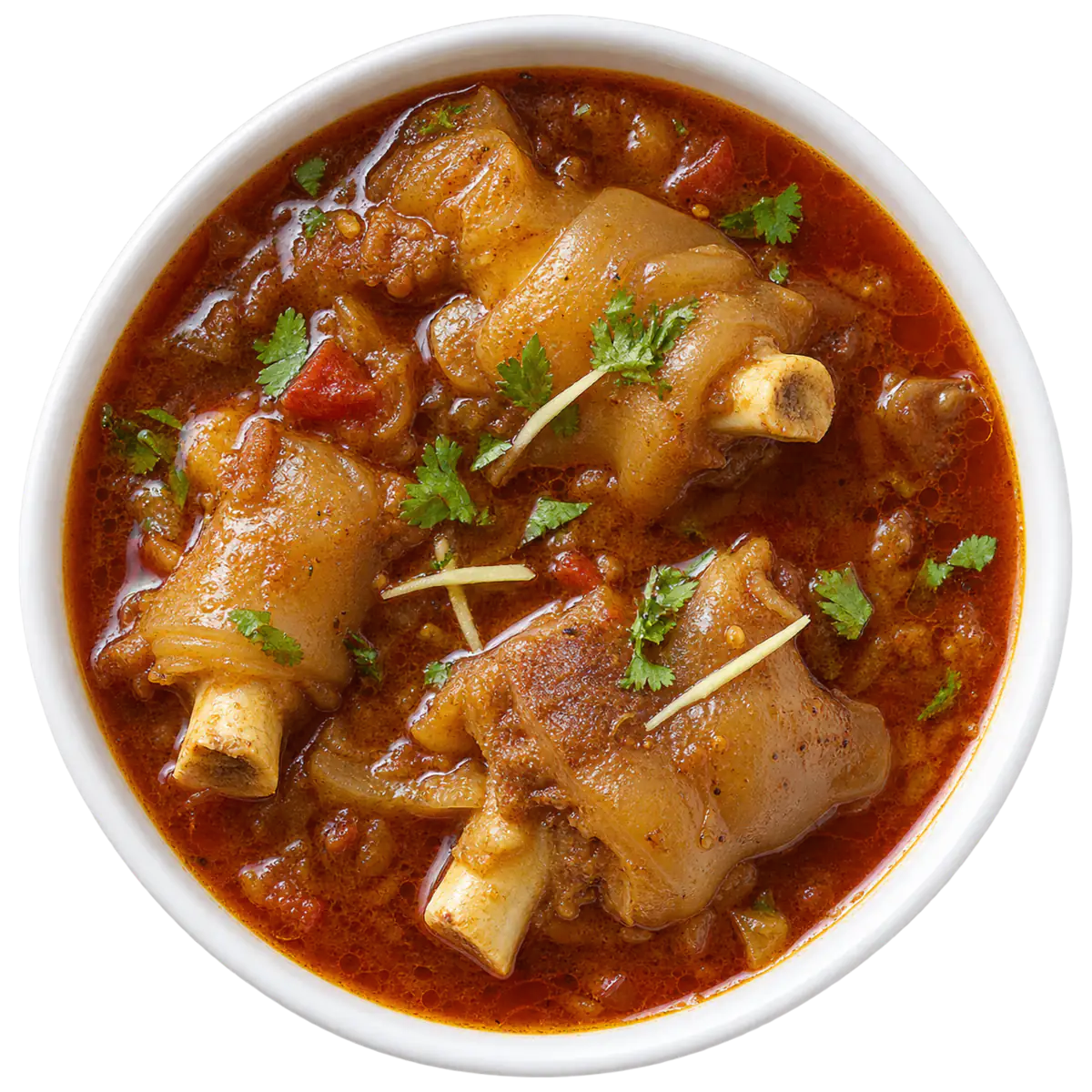
South Asian dish of goat, sheep, buffalo or beef trotters cooked slowly with onion, tomato, garlic and spices until the broth turns gelatinous; eaten as a thick soup-stew, often at breakfast. 'Siri paya' adds the head.
Origin and history
Paya ('feet' in Urdu and Hindi) is a dish of slow-cooked goat, sheep or cattle trotters known across Pakistan, northern India and Bangladesh. Traditionally the trotters were stewed overnight over embers. In Lahore it is a breakfast institution: the Phajja shop near the Taxali Gate, run by the same family for generations, is credited with making paye, once a discarded cut, a city favourite. Hyderabad and Lucknow have their own forms.
Make it at home
- Makes
- 4–6 servings
- Total time
- 6 h
- Hands-on
- 1 h
Ingredients
- 8 goat or lamb trotters (paye), front ones if possible, singed, scraped clean and cut in two or three by the butcher
- 3 L3 qt water, plus more as needed
- 1 + 2 onions, 1 halved for the stock; 2 thinly sliced for the masala
- 1 head garlic, half the cloves whole for the stock, half crushed to a paste
- 50 g2 oz (a 3-in piece) fresh ginger, half sliced for the stock, half crushed to a paste
- 2 tsp ground turmeric
- whole spices for the stock: 2 bay leaves, 1 cinnamon stick, 4 green and 2 black cardamom, 6 cloves
- 2 tsp salt, plus more to taste
- 120 ml1/2 cup ghee or neutral oil
- 2 tomatoes, chopped, or 3 tbsp plain yogurt
- 1 tbsp Kashmiri or other red chilli powder, adjust to taste
- 2 tsp ground coriander
- 1 tsp garam masala
- 1/2 tsp ground nutmeg and mace
- to serve: fresh coriander, slivered ginger, green chillies, lemon wedges, crisp fried onion
- naan, kulcha or roti
Method
-
1. Wash the trotters well, scrape away any remaining hair, then blanch them in boiling water for 5 minutes, drain and rinse.
-
2. Put the trotters in a large heavy pot with the 3 L (3 qt) of water, the halved onion, the whole garlic cloves, the sliced ginger, the turmeric, the whole spices and the salt.
-
3. Bring to the boil, skim the grey foam, then cover and keep at the barest simmer for 4–5 hours (or overnight on the lowest heat), topping up with hot water so the trotters stay covered, until the meat and skin slip off the bones and the stock is sticky between your fingers. In a pressure cooker, allow about 1 hour under pressure.
-
4. Lift out the trotters and strain the stock; discard the whole spices and onion. You should have about 1.5–2 L (1 1/2–2 qt).
-
5. In a clean pot, heat the ghee and fry the sliced onions over medium heat for 12–15 minutes, stirring, until deep golden brown.
-
6. Add the ginger and garlic pastes and fry for 1 minute, until the raw smell goes.
-
7. Add the tomatoes and fry until they collapse and the ghee begins to separate at the edges, about 8 minutes.
-
8. Stir in the chilli powder and ground coriander with a splash of stock and fry for 2 minutes (this is the bhunai).
-
9. Add the trotters and turn them in the masala for 3–4 minutes.
-
10. Pour in the strained stock, bring to the boil and simmer gently, uncovered, for 30–45 minutes, until the broth is glossy and slightly thickened and a layer of red-tinged fat floats on top.
-
11. Stir in the garam masala and the nutmeg and mace, and adjust the salt.
-
12. Serve very hot in bowls, scattered with coriander, ginger and green chilli, with lemon to squeeze and hot naan or kulcha to dip.
Notes
- Total time: 6 h (or 2 h in a pressure cooker).
- The broth should be thin enough to drink but set to a jelly when cold; that gelatine is the point of the dish. If it is too thick, add hot water; too thin, reduce it.
- Lahore's paye are cooked overnight and eaten at dawn, especially on winter weekends, with kulcha or naan. Siri paye adds the head (brain, tongue, cheek) and is a winter delicacy.
- Hyderabadi paya, cooked overnight on a slow fire, is eaten at breakfast with sheermal or naan; some versions are enriched with cream (malai paya), and Hyderabadi cooks often thicken a paya soup with a little split chickpea (chana dal). Beef or buffalo trotters (bong paye in Pakistan) are larger and need longer cooking.
- Many cooks now use a pressure cooker for the first stage; the long, slow version gives a cleaner, more gelatinous broth.
- Paya is better made a day ahead. Refrigerate it, lift off some of the set fat if you like, and reheat it gently.
Adapted from Bridget White: Curried trotters (Anglo-Indian cookery), Masala TV, Chef Rida Aftab: Lahori paye, and Sanjeev Kapoor: Paya soup (Hyderabadi).
At the festivals
Served at 1 festival in Germany.
Earlier editions
- February 24, 2018