
🇵🇪 Peru · Arequipa
Chupe de camaronesPeruvian shrimp chowder
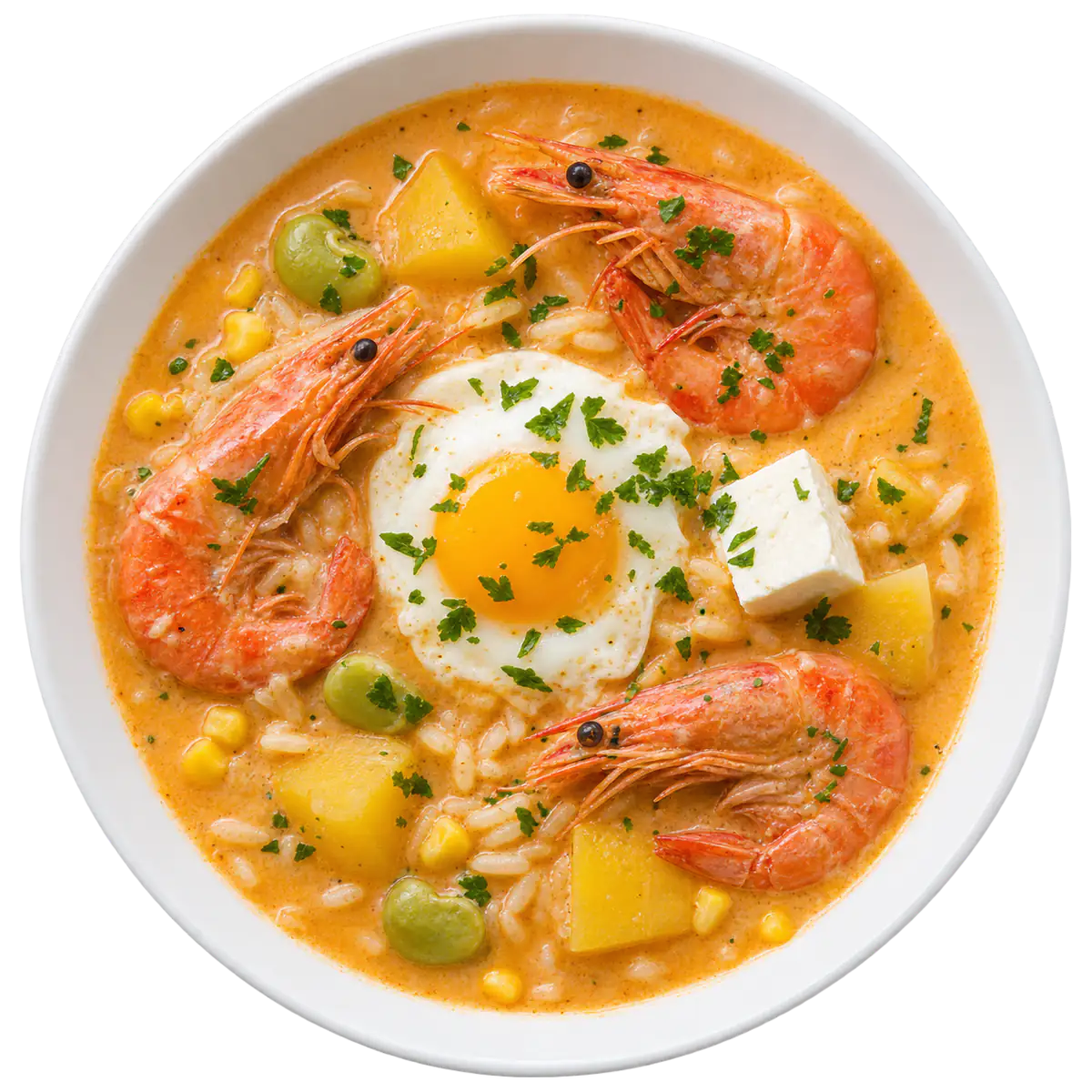
The emblematic soup of Arequipa: river shrimp (camarones) simmered with potato, fresh cheese, milk, ají, and typically rice, corn and fava beans, finished with an egg.
Origin and history
Chupe de camarones is the emblematic dish of Arequipa, in southern Peru, more than 120 km from the sea. El Comercio traces chupe to a Quechua word for a deep dish and says the older version used potato, huacatay and sometimes local meat; most agree that milk and cheese, brought by the Spanish, changed it. A local historian quoted by Correo says the dish was consolidated around 1650. Arequipa's picanterias serve chupes daily.
Make it at home
- Makes
- 4 servings
- Total time
- 1 h 15 min
- Hands-on
- 45 min
Ingredients
- 800 g1 3/4 lb whole raw shrimp (river shrimp, camarones de río, if possible), heads and shells removed and kept; bodies reserved
- 1.5 l6 1/3 cups water, for the shrimp stock
- 1 piece onion, plus 1 garlic clove and a pinch of salt, for the stock
- 2 tbsp vegetable oil
- 1 medium red onion, finely chopped
- 3 cloves garlic, crushed to a paste
- 2 tbsp ground ají panca or ají colorado, or mild paprika paste
- 1 tbsp ground ají amarillo, or paste
- 1/2 tsp ground cumin
- 1 tsp dried oregano
- 1/2 cup rice, rinsed
- 1/2 cup shelled fava (broad) beans, fresh or frozen
- 1 ear of choclo (Andean corn) or sweet corn, cut in rounds
- 1 cup squash (zapallo), diced
- 3 yellow potatoes, peeled, cut in chunks
- 150 g5 oz queso fresco, cubed
- 1 cup evaporated milk, or whole milk
- 1 sprig huacatay (Peruvian black mint), or a little fresh mint and cilantro
- 2 eggs
- salt and black pepper, to taste
Method
-
1. Simmer the shrimp heads and shells with the water, the piece of onion, the garlic clove and a pinch of salt for 15-20 minutes. Press the heads to release their juices, then strain and keep the stock.
-
2. Heat the oil in a large pot and cook the chopped onion over medium heat until soft, about 5 minutes.
-
3. Stir in the garlic, both ajíes, cumin, oregano and pepper and cook for 5-7 minutes, until the paste darkens and smells fragrant.
-
4. Pour in 1 litre (4 1/4 cups) of the strained stock and bring to a boil.
-
5. Add the rice, fava beans, choclo and squash and cook for about 15 minutes.
-
6. Add the potatoes and cook until they are tender and the rice is done.
-
7. Add the shrimp bodies and cook for 3-5 minutes only, until pink and just firm.
-
8. Lower the heat. Stir in the evaporated milk, cheese and huacatay without letting the soup boil hard.
-
9. Crack the eggs into the soup and let them set gently without stirring.
-
10. Taste for salt, remove the huacatay and serve at once, giving each bowl shrimp, potato, corn, cheese and some egg.
Notes
- In Arequipa the shrimp are freshwater river shrimp (from rivers such as the Majes). Elsewhere, use the largest whole raw shrimp you can find with heads on; the heads are what make the stock.
- The Arequipa soup is thick and hearty, closer to a chowder than a broth; if it gets too thick, thin it with stock.
- Milk and cheese arrived with the Spanish (a local historian adds egg to the Spanish contributions); the early Andean version used potatoes, huacatay and local meat. Ají gives flavour and colour, and the milk and cheese soften its heat.
- Some cooks poach the eggs whole in the broth and place one in each bowl; others beat them in. Rice, fava beans and squash vary by household.
- Make-ahead: the stock and base can be made a day early; add the shrimp, milk and egg only when serving.
- Home and cheaper versions use fewer ingredients; cooks usually warn that the shrimp need only a few minutes, and the older restaurant style used large Majes River shrimp as decoration. Other Arequipa chupes use dried lamb (cecina) and are separate soups.
Adapted from Infobae Peru, Receta de chupe de camarones, El Comercio (Peru), El chupe de camarones se convirtio en emblema de Arequipa, and Diario Correo (Arequipa), Chupe de camarones, el manjar con la receta de antaño.
At the festivals
No festival we list has printed it on a menu yet.