
🇰🇷 South Korea · Korea; Naju (South Jeolla) is the best-known home of the clear meat style
GomtangKorean clear beef soup
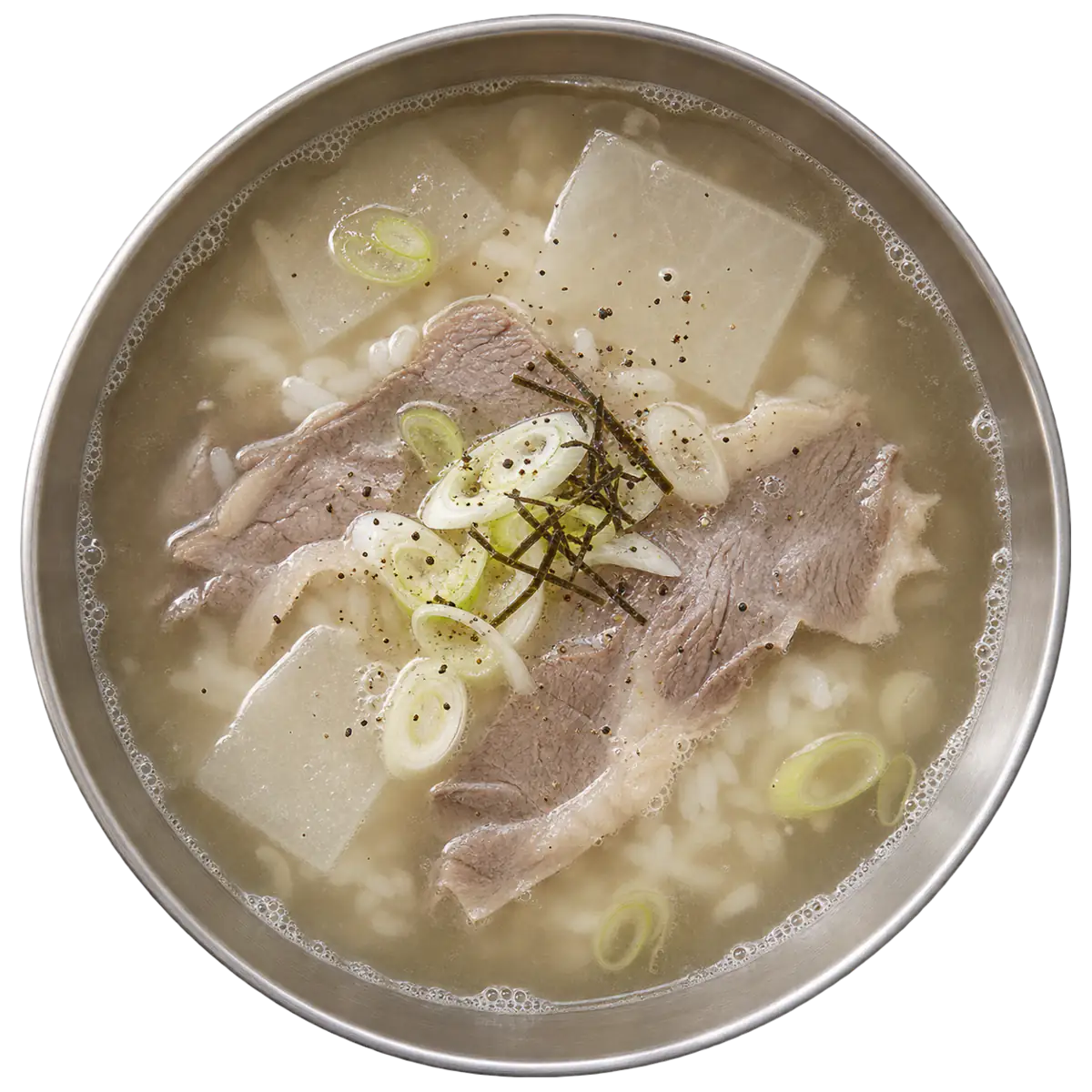
A long-simmered beef soup built on lean meat, chiefly brisket and shank, with no bones or only a few, so the broth stays light and clear; Naju is its best-known home, while some regional versions use more bones and turn milky.
Origin and history
Gomtang appears in Joseon-era cookbooks and was served on the royal table; the Encyclopedia of Korean Culture lists the name's possible roots as 'gongtang' (a soup of meat in plain water) or 'gomguk' (a soup of thoroughly simmered meat). Naju, a market town in South Jeolla, is the best-known home of the clear meat style; a Korean newspaper column notes a Naju gomtang restaurant, Hayanjip, opened in 1910. The Michelin Guide Korea notes that gomtang spread nationally after the Korean War, with regional forms.
Make it at home
- Makes
- 4 servings
- Total time
- 2 h 15 min
- Hands-on
- 30 min
Ingredients
- 400 g14 oz beef brisket (yangji) and/or shank (sadae), in one or two pieces, lean cuts, no bones; Naju cooks add a lot of meat
- 2 L2 qt water, plus enough to cover the meat for the first blanching
- 1 to 2 leeks or large scallions (daepa), one goes into the pot; the rest are sliced for the top
- 1/4 cup (60 ml)1/4 cup soju or other clear spirit, optional but used to quiet the beef's smell; one recipe uses a small cup
- 1/3 Korean radish (mu), about 200 g, cut into flat squares
- 5 pieces (about 10 cm each)5 pieces (4 in each) dried kelp (dashima)
- 4 tbsp guk-ganjang (Korean soup soy sauce), the main seasoning; add gradually and taste
- 1 tbsp minced garlic
- salt and ground black pepper, to taste, at the table
- 4 bowls cooked short-grain rice, to serve in or beside the soup
Method
-
1. Soak the beef in cold water for 30 minutes, changing the water once, to draw out blood.
-
2. Put the beef in a pot with just enough fresh water to cover it, bring to a boil and boil 5 minutes. Drain and rinse the meat.
-
3. Return the meat to a clean pot with the 2 L (2 qt) water, one leek and the soju. Bring to a boil, then lower the heat to medium-low.
-
4. Simmer for about 1 hour, skimming the fat and foam as they rise so the broth stays clear.
-
5. Lift out the meat and leek and discard the leek. Let the meat cool slightly, then slice it thin across the grain.
-
6. Return the sliced meat to the broth with the radish squares, garlic, soy sauce and kelp.
-
7. Simmer about 20 minutes, until the radish is translucent and tender, skimming again as needed. Taste and adjust with salt.
-
8. Take out the kelp, shred it finely and keep for garnish.
-
9. Put rice in four bowls or earthenware pots, ladle in the soup with meat and radish, and top with sliced leek, shredded kelp and pepper.
Notes
- Korean food writers (the Michelin Guide Korea, Gyeongin Ilbo) separate gomtang from seolleongtang by the bones: gomtang is built on lean cuts such as brisket and shank and stays clear, where seolleongtang is boiled from ox bones and turns milky. They name Naju in South Jeolla as the best-known home of the clear style, though Naju's own tourism page says its gomtang uses lean beef with only a few bones.
- Michelin Guide Korea links Naju's mild, clean flavor to skimming the yellow fat off the broth, left overnight to rise. The city's tourism page says radish, scallion and garlic go into the broth to tame the smell of fat. Hot broth is ladled over rice a little at a time to warm it, with sliced egg, scallion and beef on top, and the soup is eaten with cold kimchi and kkakdugi (radish kimchi); some diners add a spoon of the kkakdugi liquid.
- Michelin Guide Korea adds that gomtang in Hyeonpung and Masan uses ox bones, including leg bones and tail, and so turns milky and richer; they are practice, not separate variants.
- The Encyclopedia of Korean Culture describes a broader older sense of the word (gomguk), covering long-simmered beef with offal and bones, such as leg bones, shank, tail, tripe and intestines, boiled with radish until the broth is milky. This recipe follows the meat-only clear form.
- Make-ahead: the broth keeps for three days in the fridge; lift off the set fat before reheating.
Adapted from 10000recipe: Naju gomtang (quantities for 4), Naju City tourism: Naju gomtang, Michelin Guide Korea: gomtang versus seolleongtang, and Encyclopedia of Korean Culture: Gomguk.
At the festivals
No festival we list has printed it on a menu yet.