
🇰🇷 South Korea · Korea
GalbitangKorean beef short rib soup
A clear, long-simmered Korean beef broth of short ribs (galbi) with Korean radish, onion and garlic, served with the meat and often rice.
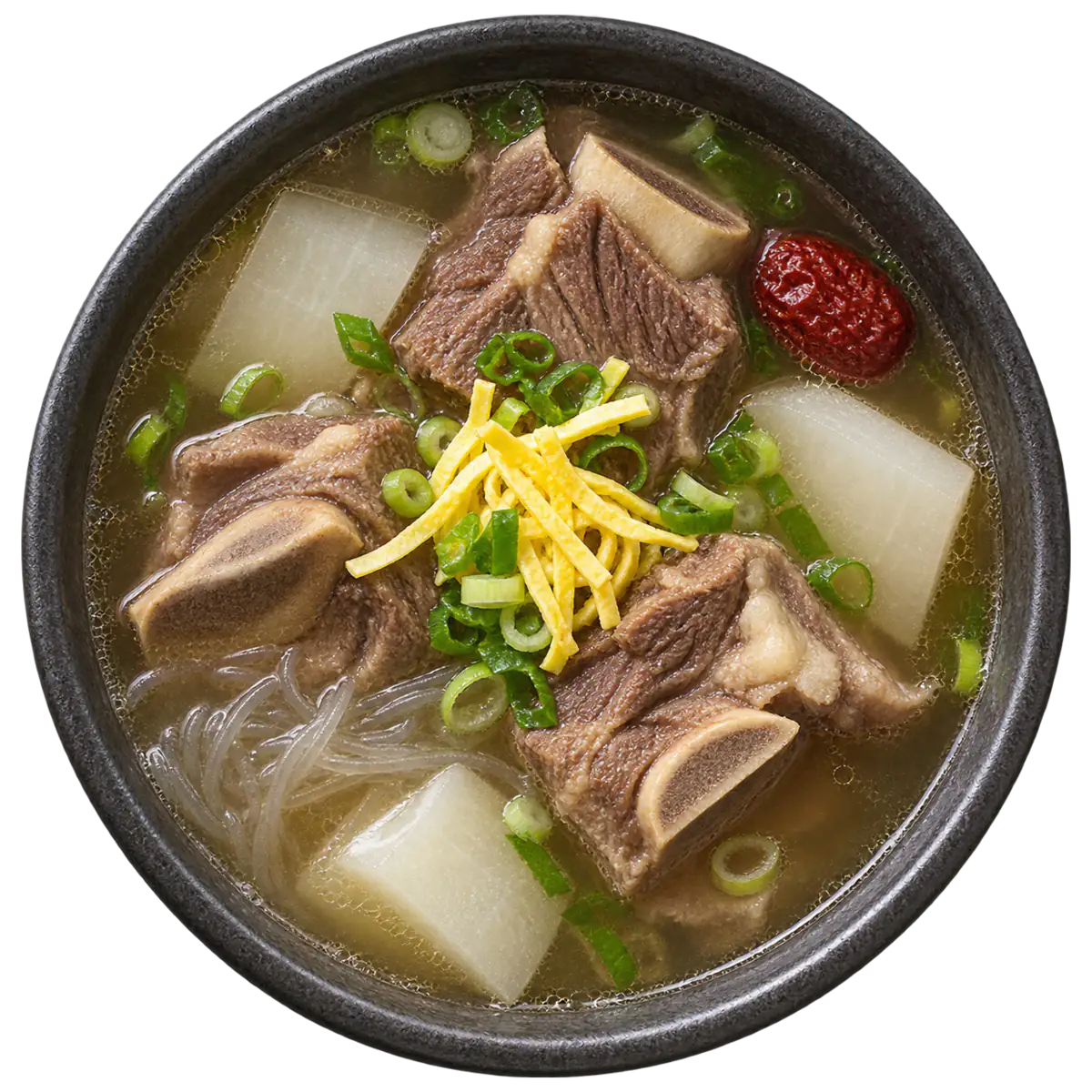
Origin and history
The Encyclopedia of Korean Culture lists galbitang (also garitang) in the court banquet tables of the 1890s and says only that eating ribs probably goes back to the end of the Goryeo period; the claim of 800 years is not adopted here. It is now a dish for celebrations and weddings and a restaurant favourite.
Make it at home
- Makes
- 4 to 6 servings
- Total time
- 3 h 30 min
- Hands-on
- 40 min
Ingredients
- 1.5 kg3.3 lb beef short ribs (galbi), cut in 5 cm (2 in) pieces, bone-in
- 500 g1 lb Korean radish (mu), one chunk, peeled, left whole
- 1 onion, halved
- 5 cloves garlic, peeled
- 1 slice ginger, about 2 cm (3/4 in)
- 3 L3 qt water
- 2 tbsp soup soy sauce (guk-ganjang), or to taste
- 1 1/2 tsp salt, plus more at the table
- 1 tsp toasted sesame oil
- 3 scallions, chopped
- 1/4 tsp ground black pepper
- 50 g2 oz dried glass noodles (dangmyeon), optional, soaked 20 minutes
- steamed rice, to serve
Method
-
1. Soak the short ribs in cold water for 30 to 60 minutes to draw out blood, then score the meat lightly and trim excess fat.
-
2. Cover the ribs with water, boil 5 to 10 minutes, then drain and rinse the ribs and the pot.
-
3. Return the ribs to the pot with the radish, onion, 3 garlic cloves, ginger and 3 L (3 qt) fresh water, bring to a boil, skim, then simmer gently, partly covered, for 2 1/2 hours.
-
4. Remove the radish and cut it into slices; take out the ribs, and discard the onion, ginger and garlic.
-
5. Chill the broth until the fat sets, or let it settle, and lift off the fat so the soup stays clear.
-
6. Mix the ribs with the remaining minced garlic, half the scallions, 1 tablespoon soup soy sauce, sesame oil and pepper, and return them with the radish to the broth.
-
7. Simmer 20 to 30 minutes, add the soaked glass noodles for the last 5 minutes if using, and season with the remaining soy sauce and the salt.
-
8. Serve in large bowls topped with scallion, with rice, kimchi and extra salt at the table.
Notes
- The meat should come off the bone easily and the broth should be clear and light. Skimming and removing the fat are the keys to that.
- Source versions differ: the seasoned form (cooked with soy sauce like gomguk) and the plain form, with the broth left unseasoned and salt and scallion added by each diner, are both traditional.
- Diners often add rice to the bowl and eat it with kimchi. Korean radish can be replaced with daikon, which is milder.
- It is similar to seolleongtang but clear, with short ribs; seolleongtang is milky and bone-based. Make ahead: it is better the next day.
Adapted from Encyclopedia of Korean Culture (한국민족문화대백과사전), 갈비탕, The Seoul Guide, Galbitang, and Korea Herald, on galbitang.
At the festivals
No festival we list has printed it on a menu yet.