
🇬🇭 Ghana, 🇳🇬 Nigeria, 🇸🇱 Sierra Leone, and 🇬🇲 Gambia · West Africa; Ghana's nkatenkwan, Nigerian Hausa groundnut soup
Groundnut soup
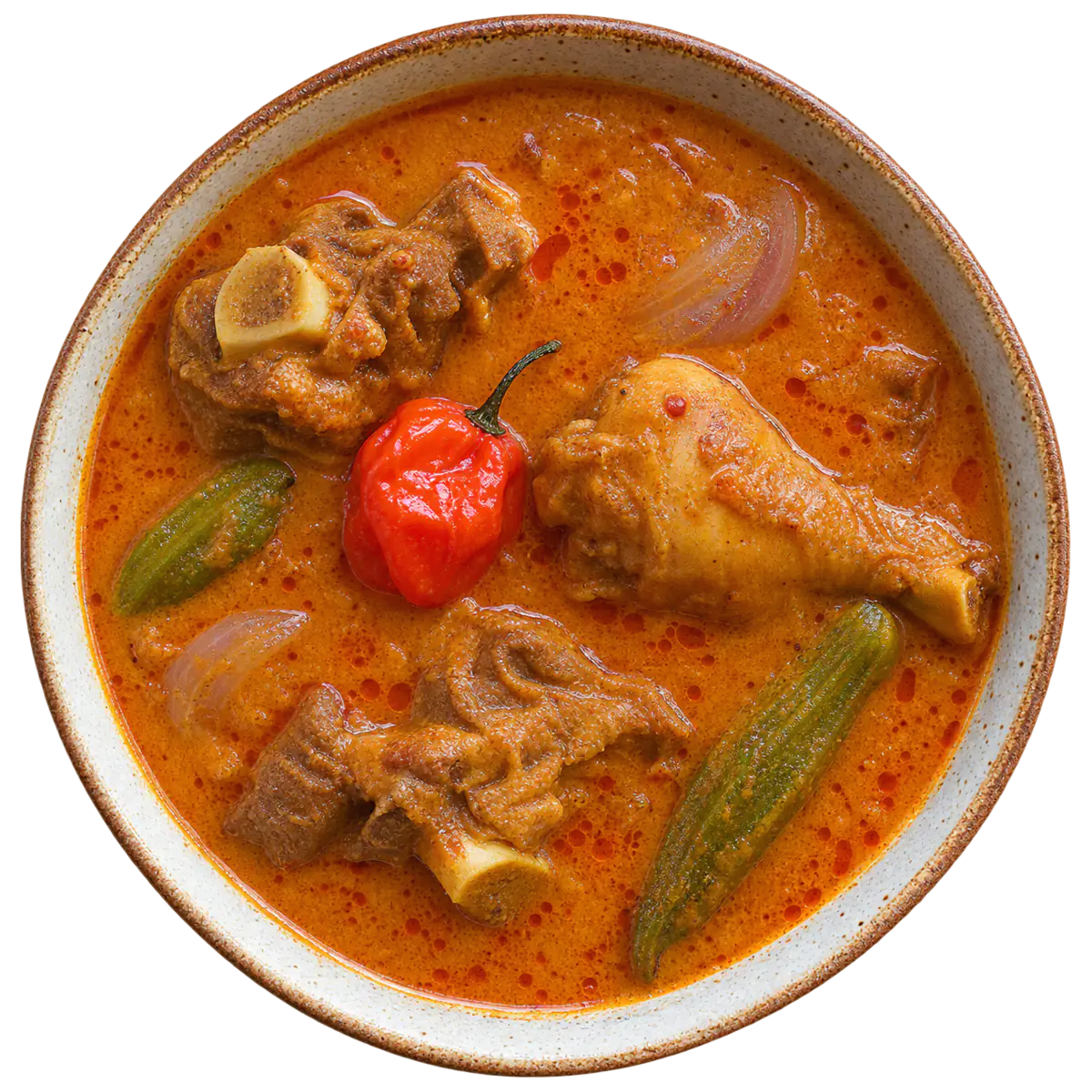
A rich West African soup of ground groundnuts or peanut butter in a tomato, onion, ginger and chilli broth with chicken, goat or fish, eaten with rice balls (omo tuo), fufu or rice.
Origin and history
Groundnut soup is eaten across West Africa. In Ghana it is nkatenkwan in Akan and azidetsi in Ewe, and sources credit it to Hausa cooks before it spread through the country. Peanuts reached West Africa from South America with European traders and displaced the native Bambara groundnut. It appears in Alice Dede's 1969 cookbook Ghanaian Favourite Dishes.
Make it at home
- Makes
- 6 servings
- Total time
- 1 h 30 min
- Hands-on
- 40 min
Ingredients
- 1.2 kg2.6 lb bone-in chicken pieces, or goat or oxtail, cooked longer
- 2 onions, peeled, left whole
- 3 ripe tomatoes, left whole
- 4 cm1.5 in fresh ginger, peeled and sliced
- 2 cloves garlic, optional
- 1 to 2 scotch bonnet peppers or 6 kpakpo shito, whole, to taste
- 2 bay leaves
- 1 litre4 cups chicken stock or water, plus more as needed
- 150 g2/3 cup natural peanut butter (groundnut paste), smooth, unsweetened, no added oil
- 500 ml2 cups hot water, to loosen the peanut paste
- 8 pods okra, optional garnish
- salt, to taste
- 400 g2 cups short- or medium-grain white rice, for the rice balls (omo tuo), unwashed or only lightly rinsed
- 1.2 litres5 cups water, for the rice balls
Method
-
1. Put the chicken, whole onions, whole tomatoes, ginger, garlic, hot peppers, bay leaves and salt in a large pot with the stock. Bring to a boil, then simmer for 30 to 40 minutes, until the chicken is tender.
-
2. Meanwhile, put the peanut butter in a bowl and stir in a little hot water at a time until it is a thick, smooth cream, then stir in the rest. Adding it slowly keeps it from clumping.
-
3. Pour the thinned paste into a second pot and simmer over medium-low heat for about 20 minutes, stirring often, until orange oil rises to the surface. It foams and can catch on the base, so do not leave it.
-
4. Lift the softened onions, tomatoes and peppers out of the chicken pot, blend them with a ladle of the broth and return the purée to the pot.
-
5. Stir the peanut mixture into the chicken pot and simmer, uncovered, for 20 to 30 minutes, stirring now and then, until the soup is the thickness of single cream and the oil gathers in a shiny orange layer. Skim some of the oil if you wish. Add water if it thickens too much.
-
6. Boil the okra in lightly salted water for 3 to 4 minutes and add it to the soup as a garnish. Taste and adjust the salt and heat.
-
7. For the omo tuo, bring the rice and water to a boil in a pot, cover and cook over low heat for 25 to 30 minutes, until the grains are overcooked and falling apart. Mash hard with a wooden spoon until smooth and sticky.
-
8. With damp hands or a wet bowl, shape the hot rice into rounds the size of a large orange. Serve each one in a bowl with the soup and chicken ladled around it.
Notes
- The usual accompaniment is omo tuo (rice balls), the classic partner in northern and Akan homes; fufu and plain rice are also common.
- Fresh roasted peanuts, skinned and ground to a paste, are the traditional base; store-bought natural peanut butter is the everyday shortcut and works well. Avoid brands with sugar or hydrogenated oil.
- Some cooks fry the peanut paste in a little red palm oil first, or add a spoonful of tomato paste to the broth; the soup should end up orange-red with a layer of oil, not pale.
- Ghanaian nkatenkwan (also nkate nkwan, Ewe azidetsi) is the best-attested form. The Nigerian (Hausa) groundnut soup is the same dish in principle and is often made with smoked fish and utazi leaf; it is a regional variation, not covered here.
- Kpakpo shito is a mild Ghanaian pepper. A small scotch bonnet or half a red jalapeno can replace it, but taste carefully as the heat differs.
- Peanut allergy warning: this soup is made from peanuts and is unsafe for anyone with a peanut allergy.
- Surinamese pindasoep (with allspice and tomtom) and Bolivian sopa de mani are different soups.
Adapted from Ghanaian Nkatenkwan, Talking of Food, Nkatenkwan (Ghanaian peanut soup), Afrifood Network, and Omo Tuo and Nkate Nkwan, Le Creuset.
At the festivals
No festival we list has printed it on a menu yet.