
🇨🇳 China · Lanzhou, Gansu; closely tied to the Hui community
Lanzhou beef noodle soup
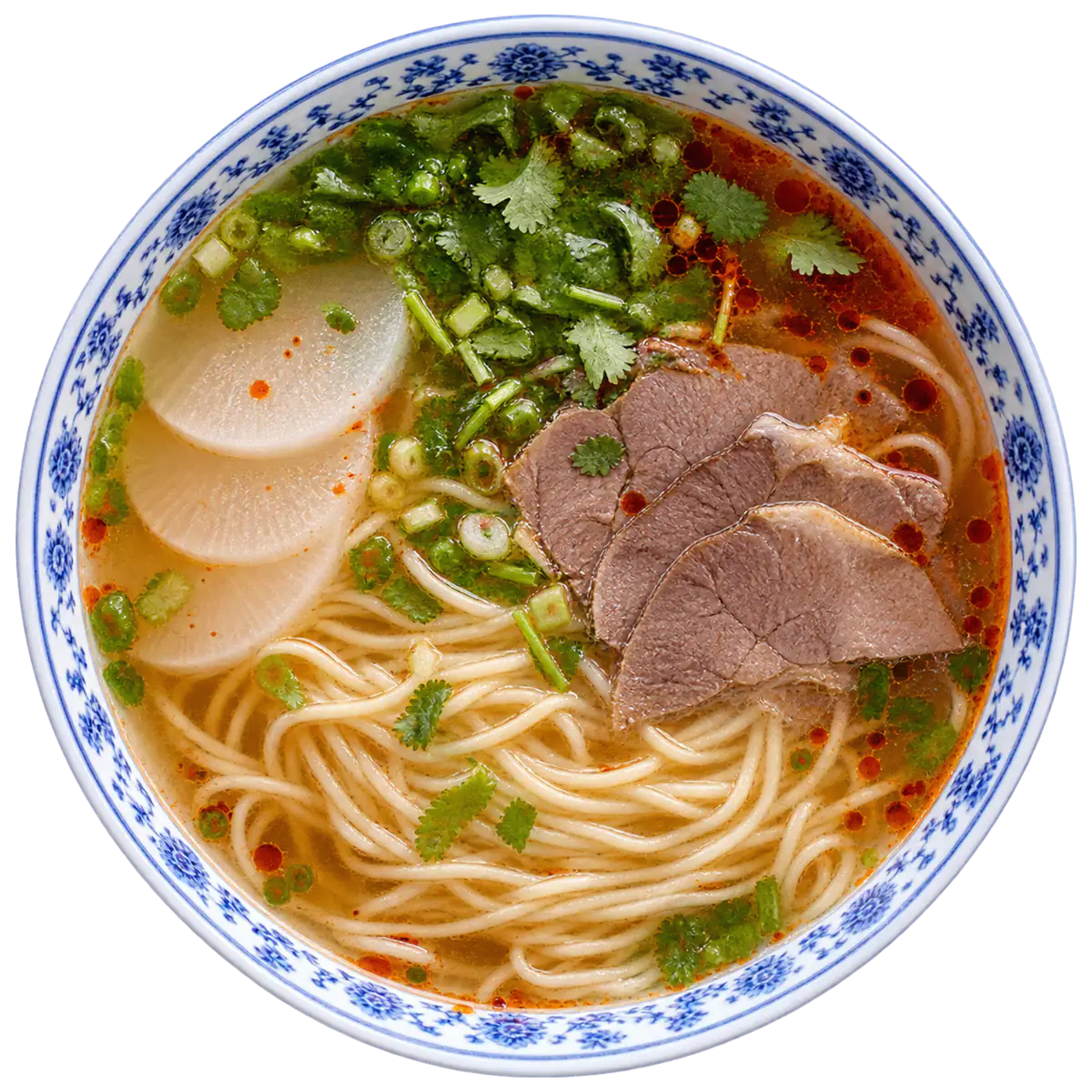
A clear, spiced beef-bone broth with hand-pulled wheat noodles, sliced braised beef, white radish, chili oil and fresh herbs.
Origin and history
Lanzhou beef noodle soup is a Hui Muslim dish of Gansu; one popular account credits Hui people there with developing hand-pulled noodles in the Tang era, when Lanzhou was a trade hub. Chinese accounts credit Ma Baozi with the modern form in 1915 and its rule of one clear, two white, three red, four green and five yellow, while ChineseFoodWiki treats named-inventor stories as folklore. In 2021 the making technique was listed as national intangible cultural heritage.
Make it at home
- Makes
- 6 servings
- Total time
- 4 h
- Hands-on
- 1 h
Ingredients
- 1.2 kg2.6 lb beef shank, in one or two pieces
- 800 g1.8 lb beef bones, marrow or knuckle, blanched
- 4 L4 qt water
- 1 large white radish (daikon), about 600 g (1.3 lb); half for the broth, half sliced for the bowls
- 5 slices fresh ginger
- 2 star anise
- 1 small stick cassia bark or cinnamon
- 1 tsp Sichuan peppercorns
- 1/2 tsp cumin seeds
- 1 tsp black peppercorns
- 2 tbsp light soy sauce, optional; some cooks season only with salt to keep the broth clear
- 2 tsp salt, to taste
- 600 g4 1/2 cups high-gluten bread flour, for the noodles
- 300 ml1 1/4 cups water, for the dough, plus extra as needed
- 1 tsp salt, for the dough
- 1/2 tsp baking soda, optional home stand-in for the traditional plant-ash alkali (peng hui); leave out if you prefer
- 4 tbsp Chinese chili flakes, heated in 4 tbsp hot oil for the chili oil
- 1 bunch cilantro and scallions, chopped
Method
-
1. Cover the beef bones with cold water, bring to a boil for 5 minutes, then drain and rinse them and the pot.
-
2. Return the bones and shank to the pot with 4 L (4 qt) water, bring to a boil and skim the foam thoroughly.
-
3. Add the ginger, half the radish (in large pieces), star anise, cassia, Sichuan and black peppercorns and cumin; simmer, partly covered, at a bare simmer for 2 1/2 hours until the shank is tender and the broth is clear and golden.
-
4. Lift out the shank, let it cool and slice it thinly; strain the broth, season with the soy sauce and salt, and keep it hot.
-
5. Make the noodle dough: stir the flour, salt and baking soda with the water until it comes together, then knead for 10 minutes until smooth, rest covered for 30 minutes, knead again briefly and rest 30 minutes more.
-
6. Pour the hot oil over the chili flakes in a heatproof bowl and let it sit; thinly slice the remaining radish and simmer it in the broth for 5 minutes until just tender.
-
7. Roll the dough into a log, oil it and stretch it long, fold it in half and stretch again; repeat 6 to 8 times until you have noodles of an even thickness, or roll and pull into broad ribbons.
-
8. Boil the noodles in plenty of water for 2 to 3 minutes until springy, drain well and divide between bowls.
-
9. Top each bowl with sliced beef and radish, ladle over the hot broth, spoon on chili oil and finish with cilantro and scallion.
Notes
- A proper bowl is judged by five colours: clear broth, white radish, red chili oil, green herbs and yellow noodles. Keep the broth clear by blanching the bones and simmering, never boiling hard.
- Traditional Lanzhou noodle dough uses peng hui, an alkali made from the ash of a desert plant from Gansu's arid country; it makes the dough elastic enough to pull very thin, and most shops today use a synthetic version. Alkali is not essential: one Lanzhou-style writer makes noodles without it by rolling, coiling and resting the dough under oil. The pinch of baking soda here is a home stand-in and the result will differ. In Lanzhou you choose the noodle width, from thin to wide.
- No time for hand-pulling? Use good fresh or dried Chinese wheat noodles; the soup is still recognisable.
- Taiwanese beef noodle soup is a separate, related dish with a soy-braised, often spicier broth. Make ahead: the broth keeps 3 days and improves.
Adapted from Afar, Soup of the Silk Road, ChineseFoodWiki, Lanzhou Hand-Pulled Noodles, and Goldthread, The secret to stretchy hand-pulled noodles is a Chinese desert plant.
At the festivals
No festival we list has printed it on a menu yet.