
🇰🇷 South Korea · Korea; the Seoul (Cheongjin-dong) form is the classic one
HaejanggukKorean hangover soup
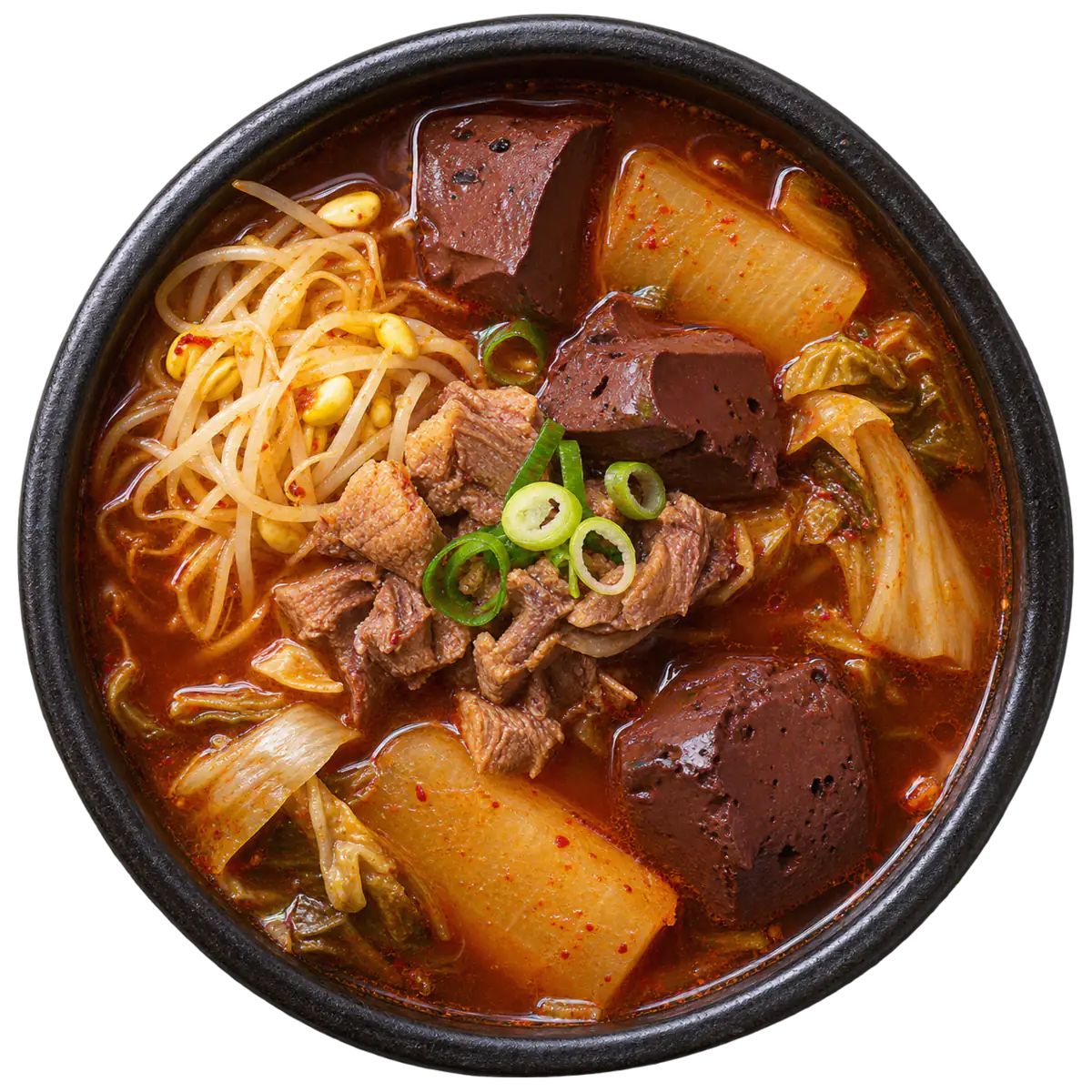
A hot, doenjang-seasoned soup of long-simmered beef bone broth with bean sprouts, radish, cabbage and scallion and cubes of congealed ox blood (seonji), eaten to relieve a hangover.
Origin and history
The Encyclopedia of Korean Culture gives the Goryeo-era textbook Nogeoldae's seongju-tang, a 'soup for sobering up' of beef broth, sliced meat, noodles, Sichuan pepper powder and scallion, as the prototype. Joseon cookbooks omit haejangguk but late Joseon sources describe it, including Shin Yun-bok's tavern painting. The classic Seoul form of ox-bone broth, doenjang, vegetables and ox blood is tied to Cheongjin-dong; the same entry on seonjiguk says the two names came to mean one dish eaten with rice, early in the morning, by workers and fishermen.
Make it at home
- Makes
- 4 servings
- Total time
- 1 h 15 min
- Hands-on
- 35 min
Ingredients
- 1 L4 cups beef bone broth (sagol stock), long-simmered ox leg or brisket bones, or good unsalted store-bought bone broth
- 400 ml1 3/4 cups anchovy and kelp stock, or water
- 400 g14 oz seonji (cooked, set ox blood), in large blocks, sold in Korean shops; blanched and cut in chunks
- 100 g3.5 oz woogeoji (dried outer leaves of napa cabbage or radish greens), boiled and squeezed; or blanched napa cabbage, about 150 g
- 150 g5 oz Korean radish (mu), cut in large slabs; optional alongside the greens
- 2 handfuls (about 150 g)5 oz soybean sprouts (kongnamul), rinsed
- 1 handful (about 60 g)2 oz beef for soup, preferably with some fat, chopped
- 2 tbsp doenjang (Korean soybean paste), stirred into the broth; a mild one, since the soup is not salty-sharp
- 2 tbsp gochugaru (Korean chili flakes), for the paste; the soup is often spicy
- 2 tbsp minced garlic
- 1 tbsp guk-ganjang (Korean soup soy sauce), plus salt to taste
- 1/2 tsp minced ginger
- 3 tbsp minced scallion, plus 1 sliced scallion to finish
- 1 tsp ground black pepper
- 4 bowls cooked rice, to serve; with kkakdugi (radish kimchi)
Method
-
1. Soak the blood in cold water briefly, then blanch the whole block in boiling water with 1 tbsp salt until firm. Drain and cut it into large chunks.
-
2. Squeeze the boiled woogeoji, cut it in bite-size lengths and mix it with the doenjang, gochugaru, garlic, ginger, scallion, soup soy sauce and pepper.
-
3. In a wide pot, put the sprouts, radish, seasoned greens and chopped beef. Pour in the bone broth and anchovy stock.
-
4. Bring to a boil over high heat, then turn to medium-low and simmer 30 to 40 minutes, until the greens and radish are very tender.
-
5. Taste and adjust with soup soy sauce or salt.
-
6. Slide in the blood chunks and simmer 5 minutes, no more; it is already cooked and breaks if boiled hard.
-
7. Add the sliced scallion, simmer one minute, and serve in bowls with rice and kkakdugi.
Notes
- The core of the Seoul form, according to the Encyclopedia of Korean Culture, is a long-simmered ox-bone broth with a little doenjang, bean sprouts, radish, napa cabbage and scallion, with ox blood added last. The entry describes a characteristic slightly bitter note and says Cheongjin-dong in Seoul was famous for it.
- Seonji can be hard to find outside Korean markets; the soup is still good without it, but it is then a different, lighter bowl. Seonjiguk and haejangguk came to be the same dish.
- A premium form, yanggol-guk, is a beef-bone and brisket soup with doenjang and dried cabbage leaves (ugeoji).
- Other hangover soups are separate dishes: Jeonju's kongnamul-gukbap (bean sprout rice soup) and the cold squid noodles (ojingeo mulhoe-guksu) of the east coast; versions with pork backbone are close to gamjatang.
- The soup's reputation as a cure is a tradition: the older prototype was seongju-tang in the Goryeo textbook Nogeoldae, a soup of beef broth, sliced meat, noodles, Sichuan pepper powder and green onion.
Adapted from Encyclopedia of Korean Culture (Academy of Korean Studies): Haejangguk, Encyclopedia of Korean Culture (Academy of Korean Studies): Seonjiguk, 10000recipe: spicy woogeoji ox blood soup (quantities), and 10000recipe: seonji haejangguk (4 servings).
At the festivals
No festival we list has printed it on a menu yet.