
🇰🇷 South Korea · Korea; its present form is said to have been settled in Incheon
GamjatangKorean pork backbone soup
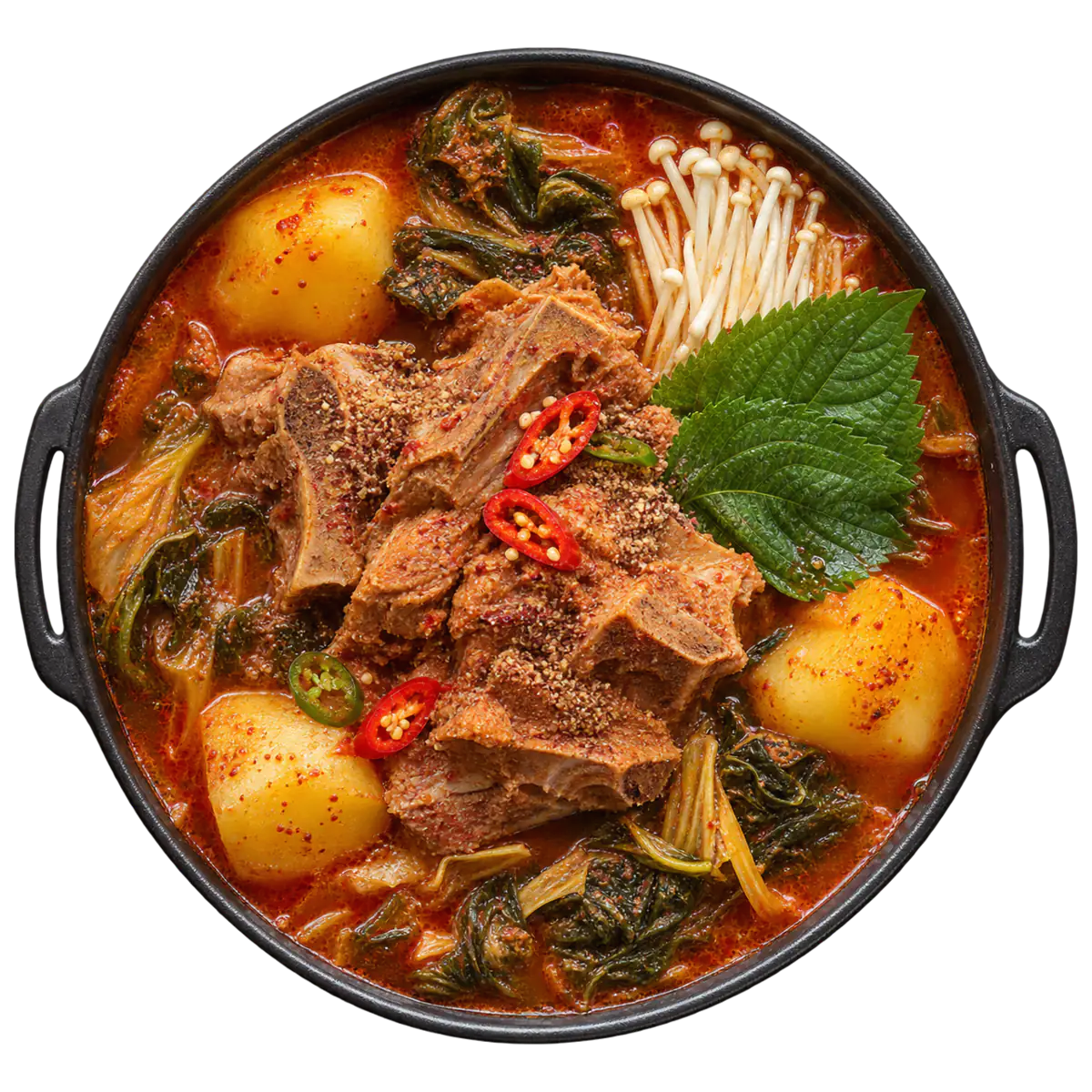
A spicy soup of pork backbone simmered with potatoes, perilla and kimchi cabbage or dried radish greens (siraegi or ugeoji), seasoned with perilla powder and chili.
Origin and history
A Korean newspaper column on the dish says that it originally had no potatoes, that its present flavour is said to have been settled in Incheon, and that potatoes arrived as it spread through the university districts in the 1970s and 1980s. The column lists four theories for the name (potato as an old word for the spinal cord, 'potato bones', a potato soup with bones added, or a Sino-Korean word for sweet pork) and calls the debate unresolved. The Korea Tourism Organization describes it as a savory, spicy dish of backbone, potatoes, cabbage and perilla powder.
Make it at home
- Makes
- 4 servings
- Total time
- 2 h 15 min
- Hands-on
- 40 min
Ingredients
- 1 kg2.2 lb pork backbone (spine) bones, cut in pieces, soaked in cold water 4 to 5 hours, water changed several times
- 3 tbsp cheongju (rice wine) or dry white wine, for boiling the bones
- 1 tbsp doenjang (Korean soybean paste), for boiling the bones
- 6 to 7 cloves garlic, whole, for boiling
- 1 piece (about 2 cm)1 piece (3/4 in) ginger, for boiling
- 1/2 onion, for boiling
- 1 stalk scallion, for boiling
- 3 bay leaves, for boiling
- 3 small potatoes, peeled, cut in large chunks, parboiled
- 100 g3.5 oz woogeoji or siraegi (cooked dried radish or cabbage greens), or well-fermented napa cabbage kimchi / blanched napa cabbage; squeezed
- 4 tbsp perilla seed powder (deulkkae-garu), ground perilla seeds
- 4 tbsp guk-ganjang (Korean soup soy sauce), for the seasoning
- 3 tbsp gochugaru (Korean chili flakes), more to taste
- 1 tbsp minced garlic, for the seasoning
- 3 bunches (about 10 leaves)10 leaves perilla (kkaennip) leaves, to finish
- 1/2 pack (about 50 g)2 oz enoki mushrooms, optional
- 1 red chili and 1 green chili, sliced, optional, to finish
- 2.5 L2.5 qt water, enough to cover the bones
Method
-
1. Soak the bones in cold water for 4 to 5 hours, changing the water now and then, so they lose blood and smell.
-
2. Cover the bones with plenty of fresh water, boil for 5 minutes, drain, and rinse the pot clean of fat and scum.
-
3. Return the bones to the pot with the 2.5 L (2.5 qt) water, the wine, doenjang, garlic, ginger, onion, scallion and bay leaves. Simmer on medium heat for 40 to 50 minutes, until the meat pulls easily from the bone.
-
4. While they simmer, peel the potatoes, cut them in large chunks, and parboil them until partly cooked; raw potato clouds the broth with starch.
-
5. Lift out the onion, ginger, garlic, scallion and bay leaves. Mix the soup soy sauce, gochugaru and minced garlic into a sauce.
-
6. Add the potatoes, the greens, the sauce and the perilla powder to the pot. Simmer 20 to 25 minutes, until the potatoes are tender and the greens soft, adding a little water if it reduces too much.
-
7. Taste; add gochugaru for heat or soup soy sauce for salt.
-
8. Add the perilla leaves, mushrooms and chilies for the last 2 minutes, and serve from the pot with rice, picking the meat off the bone.
Notes
- The defining parts are the pork backbone cooked in the soup, potatoes, a leafy green (dried radish greens such as siraegi or woogeoji, or kimchi cabbage), and perilla (powder and leaves) with chili. Some restaurants use dried radish greens or aged kimchi in place of fresh cabbage.
- Another home recipe uses 800 g bones, 1 head of napa cabbage, a doenjang and gochujang broth with 2 tbsp perilla powder, and a pressure cooker (about 35 minutes).
- Make-ahead: reheat gently the next day and add fresh perilla leaves at the end.
- A Korean newspaper column says the dish originally had no potatoes, that the present version is said to have been settled in Incheon, and that potatoes arrived as it spread through university districts in the 1970s and 80s. The origin of the name is debated.
- Eaten as a hangover soup (the tourism board notes this) and related to the pork-backbone versions of haejangguk.
Adapted from 10000recipe: gamjatang (4 servings, 1 kg backbone), 10000recipe: gamjatang (4 servings, 800 g backbone), Korea Tourism Organization (VisitKorea): Gamjatang, and Seoul Shinmun (2015): history of gamjatang.
At the festivals
No festival we list has printed it on a menu yet.