
🇭🇺 Hungary · Baja, Danube (Bácska)
Bajai halászléBaja fish soup
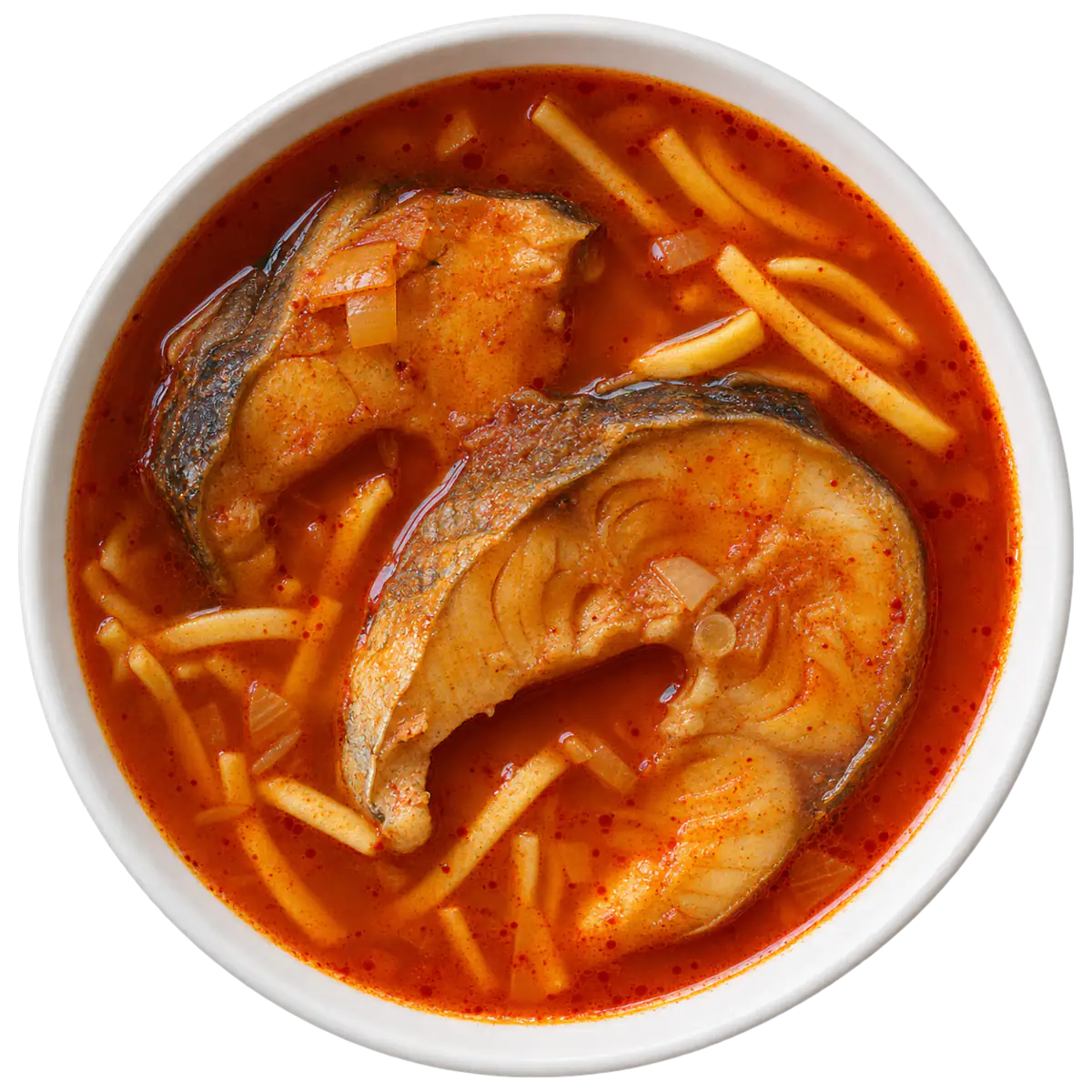
The Danube form of halászlé from Baja: mostly carp (about 75 percent in the English Wikipedia description), the broth not strained, eaten with thick-cut gyufatészta (matchstick-like) pasta.
Origin and history
Baja, a Danube town in Bács-Kiskun, is famous for its unstrained carp halászlé eaten with matchstick pasta. Fishermen ate it first; it entered the town's middle-class kitchens in the second half of the 19th century and is now eaten in almost every Baja home. Bajai halászlé was added to the Hungarikum Collection in 2015, and the town's annual Halfőző Fesztivál (fish-soup cooking festival) in July fills the streets with kettles.
Make it at home
- Makes
- 6 servings
- Total time
- 3 h
- Hands-on
- 35 min
Ingredients
- 2 kg4.4 lb whole carp (ponty), ideally a fleshy fish of 2–3 kg, scaled, gutted, gills and the bitter throat tooth removed; body cut crosswise into 3–4 cm horseshoe steaks (patkó), head split
- 30 g2 tbsp salt, for salting the fish ahead, plus more to taste
- 200 g7 oz yellow onions, finely chopped or grated
- 2.6 l11 cups cold water, about 1.3 l per kg of fish
- 4 tbsp (30 g)4 tbsp Hungarian sweet ground paprika (édesnemes fűszerpaprika), the best you can find; it gives the colour
- 3–4 hot cherry peppers (cseresznyepaprika), fresh or dried, whole
- 250 g9 oz gyufatészta (thick 'matchstick' egg pasta for halászlé), or thick-cut egg tagliatelle broken into 5 cm lengths
- fresh hot peppers or hot paprika paste, at the table
- white bread, to serve
Method
-
1. Rub the carp steaks and head all over with the salt, cover and refrigerate for at least 2 hours, or overnight as Baja cooks prefer.
-
2. Put the onion and the cold water into a wide pot or bogrács and bring it to the boil.
-
3. Lay in the head and then the fish steaks in a single layer if possible and bring back to a strong boil.
-
4. Let it boil until the grey foam that forms has broken up and disappeared, 3–5 minutes; do not stir.
-
5. Sprinkle the paprika evenly over the surface, breaking up any lumps with a spoon, and drop in the whole cherry peppers.
-
6. Keep the soup at a hard, rolling boil for 20–25 minutes, shaking or turning the pot every few minutes instead of stirring, so the fish stays whole and the fat emulsifies into a glossy red broth.
-
7. Meanwhile cook the pasta in a separate pot of lightly salted boiling water until just tender, then drain it.
-
8. Taste the broth and add salt if it needs it; the fish is done when the flesh lifts easily from the backbone.
-
9. Do not strain the soup. Put 2–3 tablespoons of pasta in each bowl, add one or two pieces of fish (or serve the fish on a separate plate) and ladle the hot, clear red broth over.
-
10. Serve at once, with hot peppers for those who want more heat and bread on the side.
Notes
- What makes it Bajai: mostly or only carp, the broth never passed through a sieve (Baja cooks call straining a sin), a thinner and clearer red broth than the Szeged style, and gyufatészta served with it. Szegedi halászlé, by contrast, is built on a strained, thickened stock of trimmings and eaten with bread.
- Some Baja cooks add a little dwarf catfish (törpeharcsa) or other river fish; the English-language descriptions put the carp share at about three quarters. A few families add a splash of wine, and some cooks soften the onion with tomato and green pepper in oil first; the classic Baja way is simply onion boiled in water.
- Gyufatészta is a thick, square-cut egg noodle sold in Hungary specifically for halászlé. If you cannot find it, thick egg tagliatelle or homemade egg noodles cut into short strips are the closest substitute.
- The roe and milt of the carp go in for the last 5–10 minutes. The broth is eaten first, the fish after.
- In Baja each family has its own recipe; there is no single binding rule, but carp, onion, paprika, salt and water are always the core.
- Cooked outdoors in a kettle over a hot acacia or willow wood fire, the fierce heat matters: a gentle simmer gives a thin, watery soup. Leftovers set to a jelly in the fridge.
Adapted from Pénzcentrum / HelloVidék: Megszereztük a bajai halászlé eredeti receptjét, Hungarikum Collection: Bajai halászlé, and Roads & Kingdoms: Hungary's fish soup masters.
At the festivals
Served at 2 festivals in Hungary.
Earlier editions
-
July 09, 2026
🇭🇺 Baja, Hungary
30th anniversary Bajai Halászléfőző Népünnepély (29th edition)
By Friends, families, workplace communities and visitors cooking in thousands of cauldrons, Cooking teams, in more than a thousand cauldrons (bogrács), and Cooks in cauldrons (bogrács) on the main square, enjoyed with family and friends
-
April 11, 2026
🇭🇺 Kiskunhalas, Hungary
5th Félúton Fesztivál és Halászléfőző Verseny
- July 09, 2025
- July 14, 2018
-
July 07, 2016 – July 10, 2016
🇭🇺 Baja, Hungary
Bajai Halfőző Fesztivál
On the menu as Sobri-féle halászlé / bajai halászlé gyufatésztával
By nearly two thousand amateur cooks
-
July 10, 2014
🇭🇺 Baja, Hungary
Bajai Halfőző Fesztivál
-
July 13, 1996
🇭🇺 Baja, Hungary
1st Bajai Halászléfőző Népünnepély ("300 éves város – 300 bogrács halászlé")
By cooks in cauldrons on the square