
🇭🇺 Hungary
HúslevesHungarian meat soup
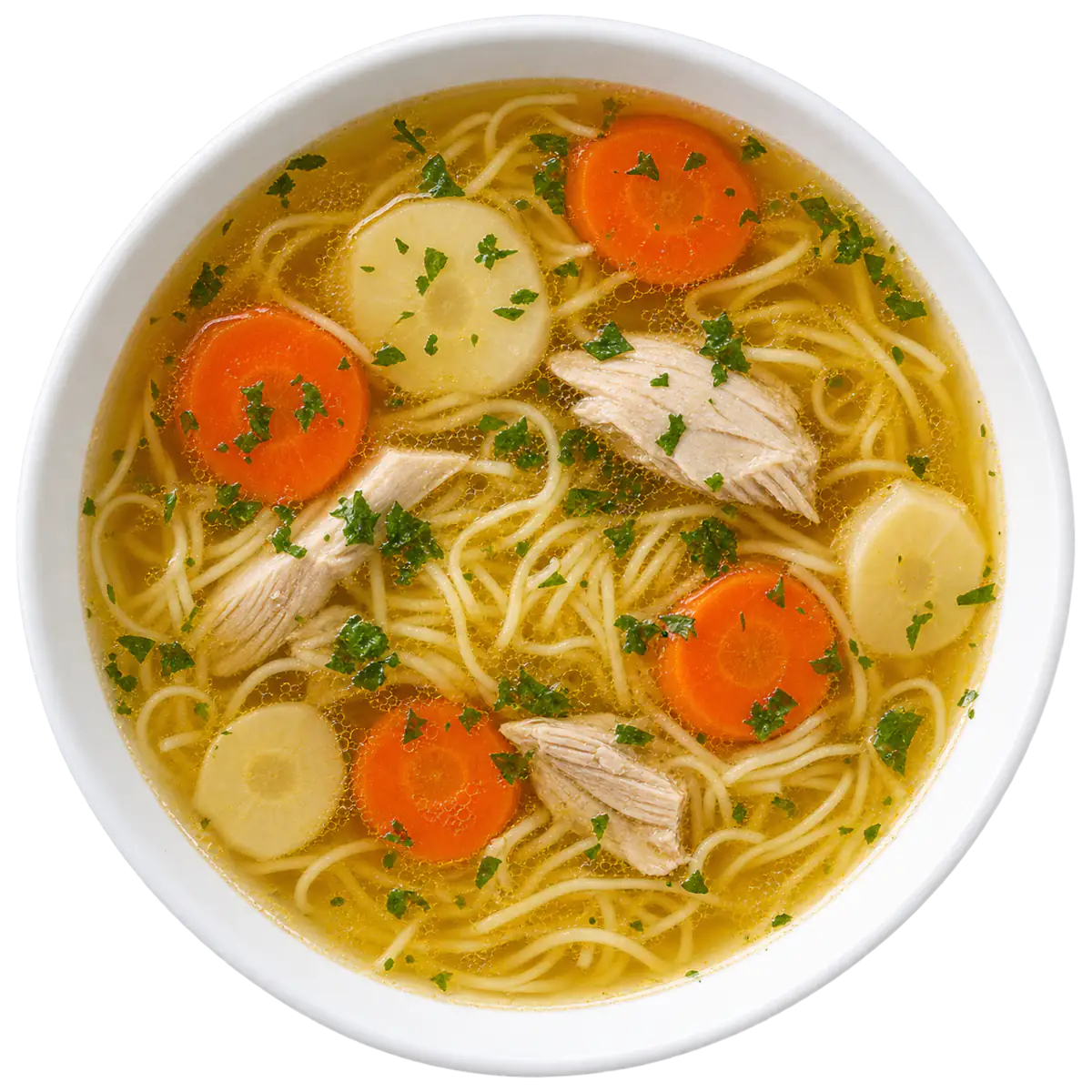
Hungary's clear meat soup: beef or chicken simmered on the bone with root vegetables (carrot, parsnip, celeriac, kohlrabi), served with thin or snail-shaped noodles and hot paprika, traditionally at weekend family lunch.
Origin and history
Húsleves, Hungary's clear meat soup, is traditionally served at weekend family lunch; Taste Hungary calls the Sunday lunch practically a sacred ritual and the soup its opening. Hungarians eat it both when ill and when well, on weekdays and at weddings. Everyone adds hot paprika or slices of hot green pepper at the table, and beef versions come with marrow on toast.
Make it at home
- Makes
- 6 servings
- Total time
- 3 h 15 min
- Hands-on
- 40 min
Ingredients
- 1.2 kg2.6 lb chicken pieces on the bone, thighs, wings, backs, necks; or beef shank and soup bones for marhahúsleves
- 3.5 l3 1/2 quarts cold water, about 3 times the weight of the meat
- 3 carrots, peeled, halved lengthwise
- 2 parsnips, peeled
- 1/2 celeriac (celery root), peeled, with its leaves if you have them
- 1 kohlrabi, peeled; optional
- 1 onion, unpeeled skin gives colour, halved
- 1 yellow or green pepper, optional
- 1 tsp whole black peppercorns
- 1 1/2 tsp salt, adjust at the end
- 200 g7 oz thin soup noodles (metélt or csigatészta, snail-shaped)
- to serve hot paprika paste or sliced hot green pepper, at the table
- 1 small bunch flat-leaf parsley, chopped
Method
-
1. Put the chicken in a large pot with the cold water. Bring slowly to a gentle boil, uncovered, and skim the grey foam as it rises, for about 15 minutes.
-
2. Add the carrots, parsnips, celeriac, kohlrabi, onion, pepper, peppercorns and a pinch of salt. Keep the heat low so the surface only trembles.
-
3. Simmer for about 2 hours for chicken (3 to 4 hours for beef, until the meat is very tender), until the meat is falling from the bones and the broth is clear and golden or amber.
-
4. Lift out the meat and vegetables. Pull the chicken from the bones, discarding the skin, and cut the carrots and parsnips into pieces. Discard the onion and pepper.
-
5. Strain the broth through a fine sieve and season with salt.
-
6. Boil the noodles separately in salted water for 2 to 3 minutes, until just tender, and drain.
-
7. To serve, put noodles, meat and carrots in each bowl, ladle the hot broth over, scatter parsley and bring the hot paprika to the table.
Notes
- Húsleves is a matter of ratios: roughly one carrot to every two white root vegetables (SBS Food), and three to four times the meat weight in water (SBS Food uses 3:1 in its recipe and 4:1 as its rule; Telex uses about 4 l per kg of meaty bones).
- Beef (marhahúsleves) uses shank and bones, often with marrow bones, and needs longer simmering than poultry (Telex gives 5 to 6 hours, Offbeat Budapest about 4 hours in all); the marrow is spread on toast and sprinkled with salt, black pepper and sweet paprika. Chicken or hen (tyúkleves) is the other common version. Both are one soup here.
- Cook the noodles, and any finely cut carrot or parsnip, separately so they do not cloud the broth. Serving differs by region and household: some serve the meat and vegetables first and then the soup, others serve soup with noodles and the meat as a main course, and Budapest-style everything goes in one bowl.
- Telex and Offbeat Budapest also mention ginger, bay leaf and garlic as optional additions (Telex adds lovage, mushroom and kale); blanching the meat in boiling water and rinsing it before the real simmer helps keep the broth clear.
- The broth freezes well. Do not confuse with gulyásleves, which is a paprika-based soup.
Adapted from SBS Food, Húsleves is the Hungarian answer for everything, Taste Hungary, Sunday lunch in Hungary, Telex, Elronthatatlan receptek kezdőknek: az életmentő, aranyló húsleves, and Offbeat Budapest, Beef consommé (marhahúsleves).
Variants
At the festivals
No festival we list has printed it on a menu yet.