
🇹🇷 Türkiye · Turkey (made in all regions); close counterparts under local names in Greece (patsás) and Bulgaria (shkembe chorba)
İşkembe çorbasıTurkish tripe soup
White tripe soup of beef or sheep tripe in a flour- or egg-yolk-and-lemon-thickened broth, finished with garlic-vinegar, hot pepper butter and lemon at the table, traditionally eaten late at night and after drinking.
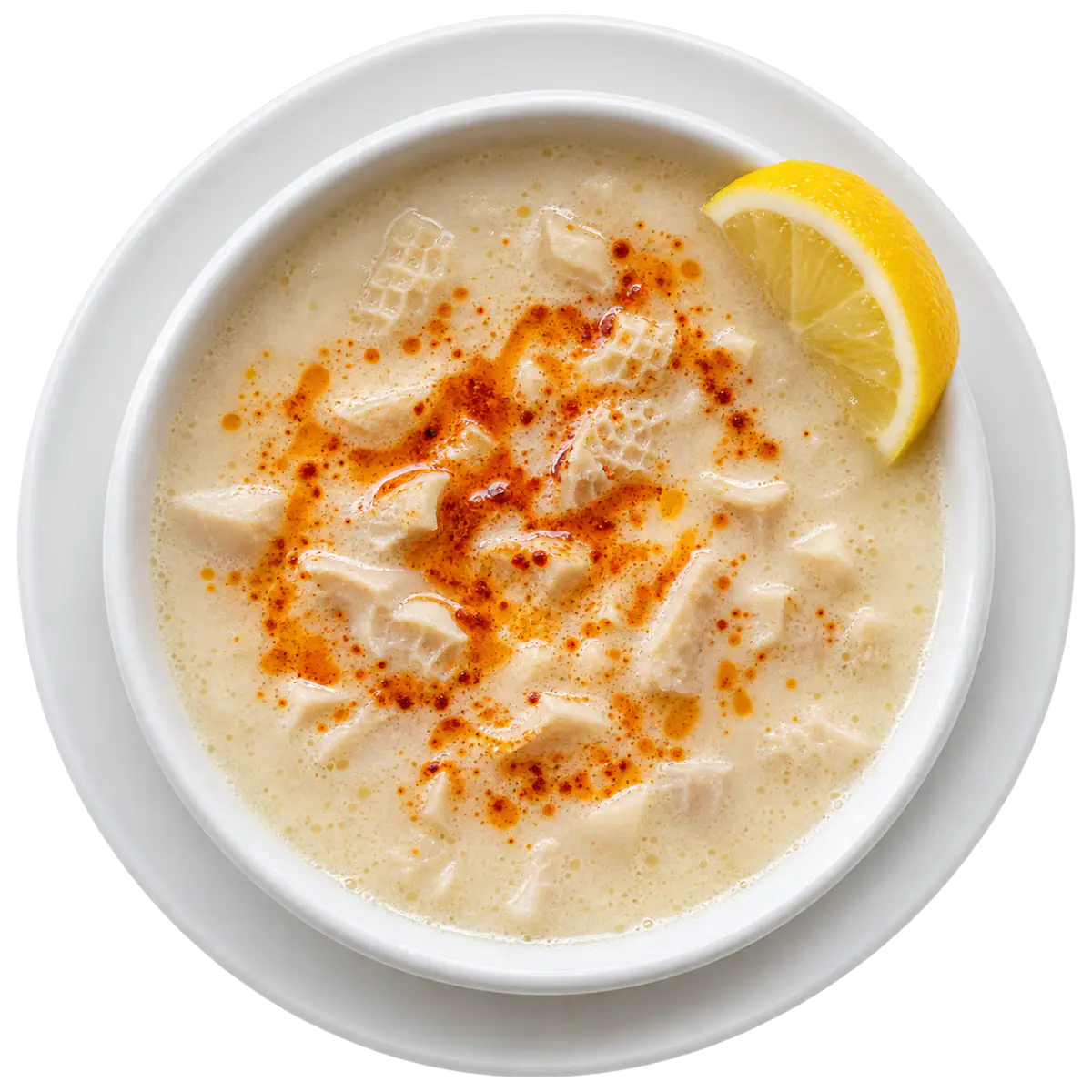
Origin and history
Istanbul's tripe soup shops are traced back to the 17th century, when the traveller Evliya Çelebi is usually said to have counted about 300 of them, a figure often repeated second-hand. Today the soup is made in every region of Turkey. Tarihi Haliç İşkembecisi in Istanbul has served it since 1938. It is traditionally eaten late at night, especially after drinking.
Make it at home
- Makes
- 6 servings
- Total time
- 4 h
- Hands-on
- 40 min
Ingredients
- 600 g1.3 lb beef tripe (işkembe), already scraped, scrubbed and rinsed several times; see notes
- 2 l2 quarts water, for the first simmer
- 1 onion, halved
- 1 bay leaf
- 3 tbsp plain flour
- 3 tbsp butter, for the roux
- 2 egg yolks, for the terbiye
- 3 tbsp lemon juice
- 2 tsp salt, or to taste
- 5 cloves garlic, crushed
- 120 ml1/2 cup white wine or grape vinegar, for the garlic vinegar (sarımsaklı sirke)
- 50 g3 1/2 tbsp butter, for the pepper butter
- 1 tbsp pul biber (Turkish red pepper flakes)
Method
-
1. Put the cleaned tripe in a large pot with the 2 l of water, the halved onion and the bay leaf. Bring to a boil and skim the grey foam for the first 10 minutes.
-
2. Reduce the heat to low, cover partly and simmer for 2 to 3 hours, until a piece of tripe can be cut easily with a spoon edge.
-
3. Lift the tripe out, keep the broth and cut the tripe into small 1 cm (1/2 in) cubes or thin strips. Discard the onion and bay leaf.
-
4. Melt 3 tbsp butter in a clean pot, stir in the flour and cook for 1 to 2 minutes, without letting it brown much.
-
5. Whisk in the strained broth a ladle at a time until smooth, then add the tripe and the salt. Simmer for 10 minutes.
-
6. In a bowl whisk the egg yolks with the lemon juice. Whisk in a ladle of hot (not boiling) soup, then pour the mixture slowly into the pot, stirring, and heat gently for 2 minutes. Do not let it boil or the yolks will scramble.
-
7. Stir the crushed garlic into the vinegar and leave it to stand while you finish.
-
8. Melt 50 g butter with the pul biber until it foams and turns red, about 1 minute.
-
9. Serve the soup hot and white. Each person adds pepper butter, garlic vinegar (a little at first) and more lemon at the table.
Notes
- Tripe must be thoroughly cleaned and long-simmered; Turkish soup shops spend hours scraping and rinsing it. Buy tripe that has been bleached and cleaned by the butcher, and rinse it again; some cooks pre-boil it for 20 minutes in salted water and drain before the main simmer.
- The thickening differs by place: the Ministry of Culture and Tourism's version uses a flour roux only, Izmir uses an egg-and-lemon thickener, Gaziantep adds tomato paste and the Black Sea coast uses a chickpea, yogurt and flour mix. The recipe here uses a roux plus egg yolk and lemon, which is the common restaurant form.
- Some cooks stir a spoonful of yogurt into the terbiye. In Greece the related patsás also includes trotters (the name comes from the Turkish word for trotter), which add body.
- Traditionally eaten late at night and after drinking, with bread. Greek patsás and Bulgarian shkembe chorba are close relatives; Polish flaki and Czech dršťková are red, paprika-based soups without vinegar and are different dishes.
- The broth and tripe can be made a day ahead; add the terbiye and the garnishes only at serving.
Adapted from Turkish Ministry of Culture and Tourism, Tripe Soup (İşkembe Çorbası) and Jídlo na cestách, İşkembe çorbası.
At the festivals
No festival we list has printed it on a menu yet.