
🇵🇱 Poland
FlakiPolish tripe soup
A Polish soup of thin strips of beef tripe in rich beef broth with root vegetables, seasoned with marjoram, nutmeg and paprika.
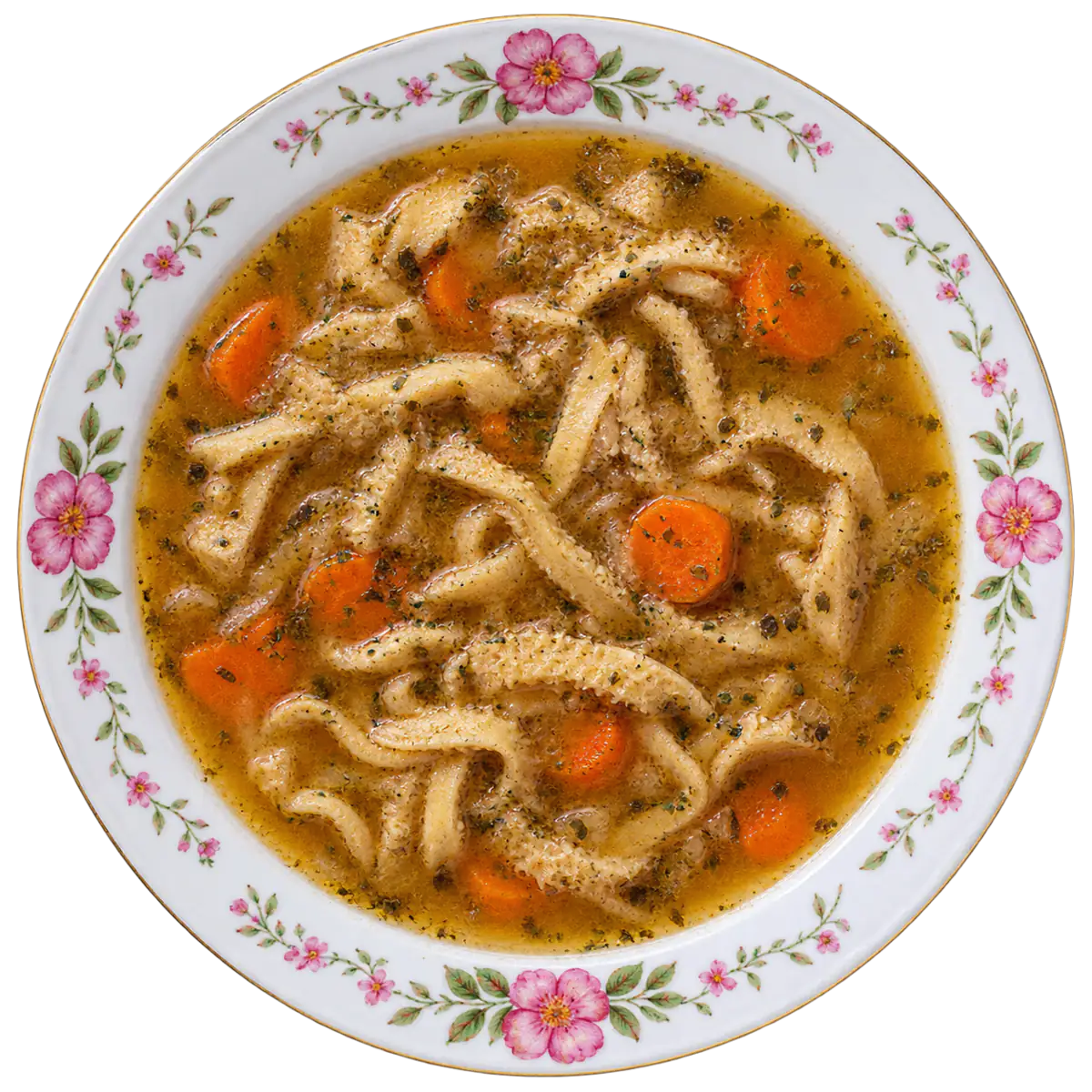
Origin and history
Tripe soup has been eaten in Poland since at least the 14th century and, according to tradition, was a favourite of King Władysław Jagiełło. Lucyna Ćwierczakiewiczowa included it in her 1860 cookbook 365 obiadów, and in 19th-century Warsaw it took on its city style, with marjoram and roux alongside ginger, nutmeg and meatballs. Pre-war Warsaw bars and restaurants served it with Parmesan; after 1945 it was a milk-bar staple, ladled into jars at the Różycki bazaar.
Make it at home
- Makes
- 6 servings
- Total time
- 4 h 30 min
- Hands-on
- 50 min
Ingredients
- 1 kg2.2 lb beef tripe (flaki wołowe), cleaned, or 800 g (1.75 lb) pre-cooked sliced tripe; see notes
- 500 g1.1 lb beef with some bone: shank, brisket (szponder) or neck
- 2.5 l10 1/2 cups cold water, for the broth, plus more for the tripe
- 2 carrots, peeled
- 1 parsley root (pietruszka) or small parsnip, peeled
- 150 g5 oz celeriac (celery root), peeled
- 1/2 leek, white and pale green part
- 1 onion, halved
- 2 bay leaves
- 4 allspice berries (ziele angielskie)
- 6 black peppercorns
- 30 g2 tbsp butter, for the roux
- 30 g1/4 cup plain flour, for the roux
- 2 tbsp dried marjoram (majeranek)
- 1/2 tsp freshly grated nutmeg
- 1 tsp sweet paprika, plus a pinch of hot paprika
- 1/2 tsp ground ginger
- salt and freshly ground black pepper, to taste
- fresh bread rolls (bułki) or rye bread, to serve
Method
-
1. Rinse the tripe several times in cold water. Put it in a pot, cover with cold water, bring to the boil and cook for 10 minutes. Drain and rinse it again; this removes most of the strong smell.
-
2. Return the tripe to the pot with fresh cold water to cover by 5 cm (2 in) and simmer for 1 1/2 hours. Drain, cover with fresh water again and simmer for another 1 1/2-2 hours, until a piece is tender and gives easily when pinched.
-
3. Meanwhile, put the beef in a large pot with the 2.5 litres of cold water, bring slowly to the boil and skim off the grey foam.
-
4. Add the carrots, parsley root, celeriac, leek, onion, bay, allspice and peppercorns, with a teaspoon of salt. Simmer gently, partly covered, for 2-2 1/2 hours, until the beef is tender.
-
5. Drain the tripe and, when cool enough to handle, cut it into thin strips about 5 mm wide and 4-5 cm (2 in) long.
-
6. Lift the beef and vegetables out of the broth and strain the broth. Cut the carrot, parsley root and celeriac into thin strips or small dice and pull the beef into shreds. Discard the onion, leek and whole spices.
-
7. Bring the broth back to a simmer, add the tripe and cook for 15 minutes.
-
8. Add the vegetables and beef and simmer for 5 minutes more.
-
9. Melt the butter in a small pan, stir in the flour and cook for 1-2 minutes until pale gold. Whisk in a ladle of the hot broth until smooth, then stir the roux into the pot.
-
10. Season with the marjoram, rubbed between your palms, the nutmeg, paprika, ginger, plenty of black pepper and salt. Simmer gently for 10 minutes, until the soup is slightly thickened and the tripe is soft.
-
11. Taste and adjust: flaki should be peppery and strongly scented with marjoram. Serve very hot with fresh rolls.
Notes
- Total time: 4 h 30 min (1 h 15 min with pre-cooked tripe).
- Shortcut: Polish shops sell tripe already cleaned, blanched and cut into strips (flaki krojone, sparzone), and many home cooks use it. It still needs about 30-45 minutes simmering in the broth until tender, so skip steps 1, 2 and 5 and add it at step 7 for longer. Jarred flaki are sold ready to heat.
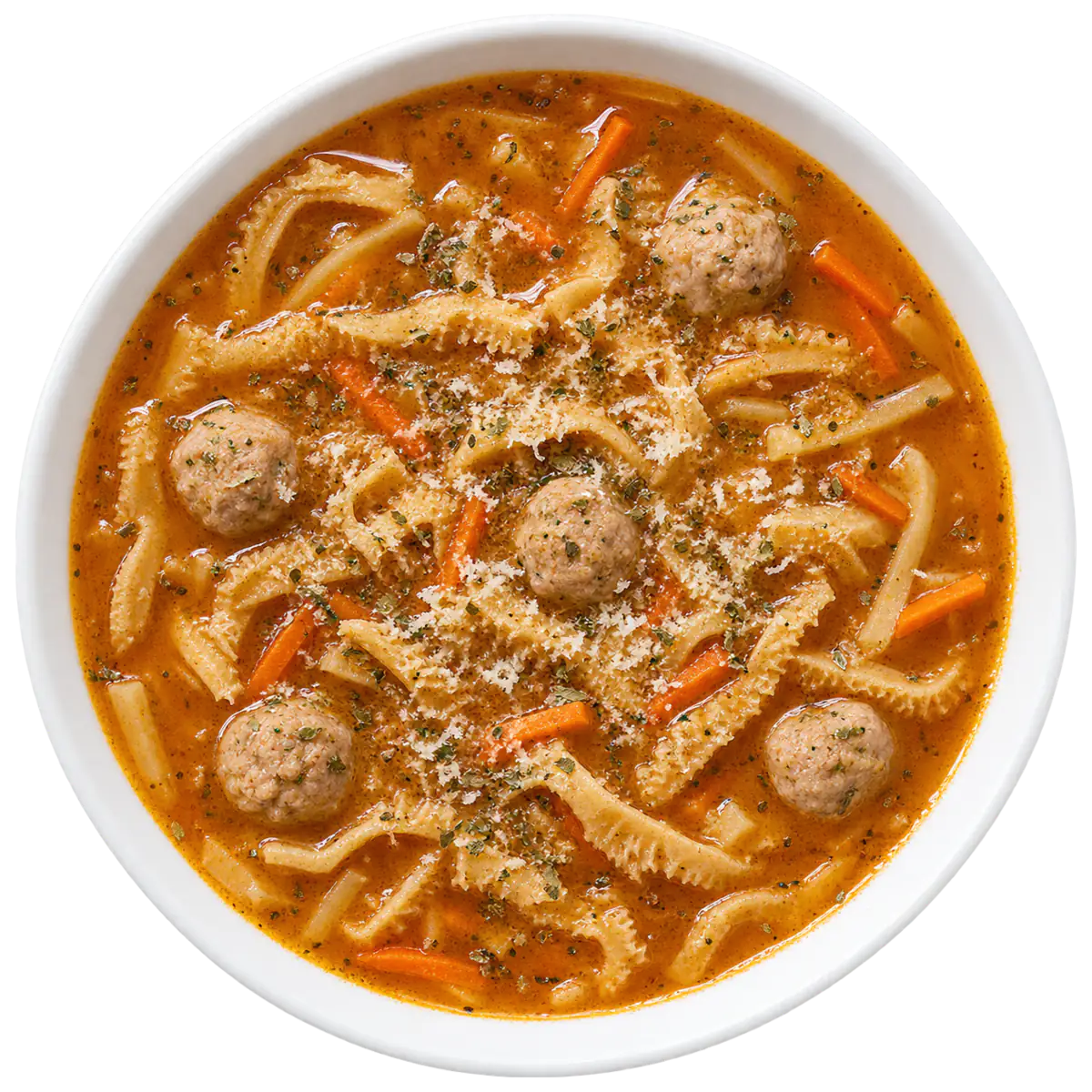
- Warsaw style (flaki po warszawsku): the soup is finished with small veal meatballs (pulpety) poached in it and served with grated cheese, traditionally Parmesan, at the table.
- Regional forms on Poland's List of Traditional Products include calf-tripe flaki from Radziwiłłów (Masovia), thickened with a bread roll soaked and browned in butter and served with grated cheese, meatballs or potato dumplings, and Cieszyn pajszle. Zamość-style flaki add tomato.
- Some cooks make the soup without a roux for a thinner broth; others cook a little chicken in the stock for a milder flavour.
- Meatless version: flaczki z boczniaków use oyster mushrooms cut in strips, simmered in vegetable broth with the same roots, marjoram and nutmeg.
- Flaki is a celebration soup as much as an everyday one, a fixture of weddings, christenings and wakes in Poland.
- Make-ahead: like most tripe dishes it is better reheated the next day. It keeps 3-4 days in the fridge and freezes well.
Adapted from Ministry of Agriculture and Rural Development (Poland), List of Traditional Products: "Flaki cielęce z Radziwiłłowa", Beszamel.pl, "Flaki po warszawsku z pulpetami", Kuchnia Lidla, "Flaki wołowe", and Lucyna Ćwierczakiewiczowa, 365 obiadów za pięć złotych (1860).
Variants
At the festivals
Served at 1 festival in Poland.
Earlier editions
-
March 22, 2025
🇵🇱 Widuchowa, Poland
Festiwal Zup i Zlot Motocyklowy Widuchowa
By KGW Lawenda Widuchowa i przyjaciele