
🇰🇷 South Korea · Korea; a Korean-Chinese restaurant dish, with the red chili form associated with Gunsan
JjamppongKorean-Chinese seafood noodle soup
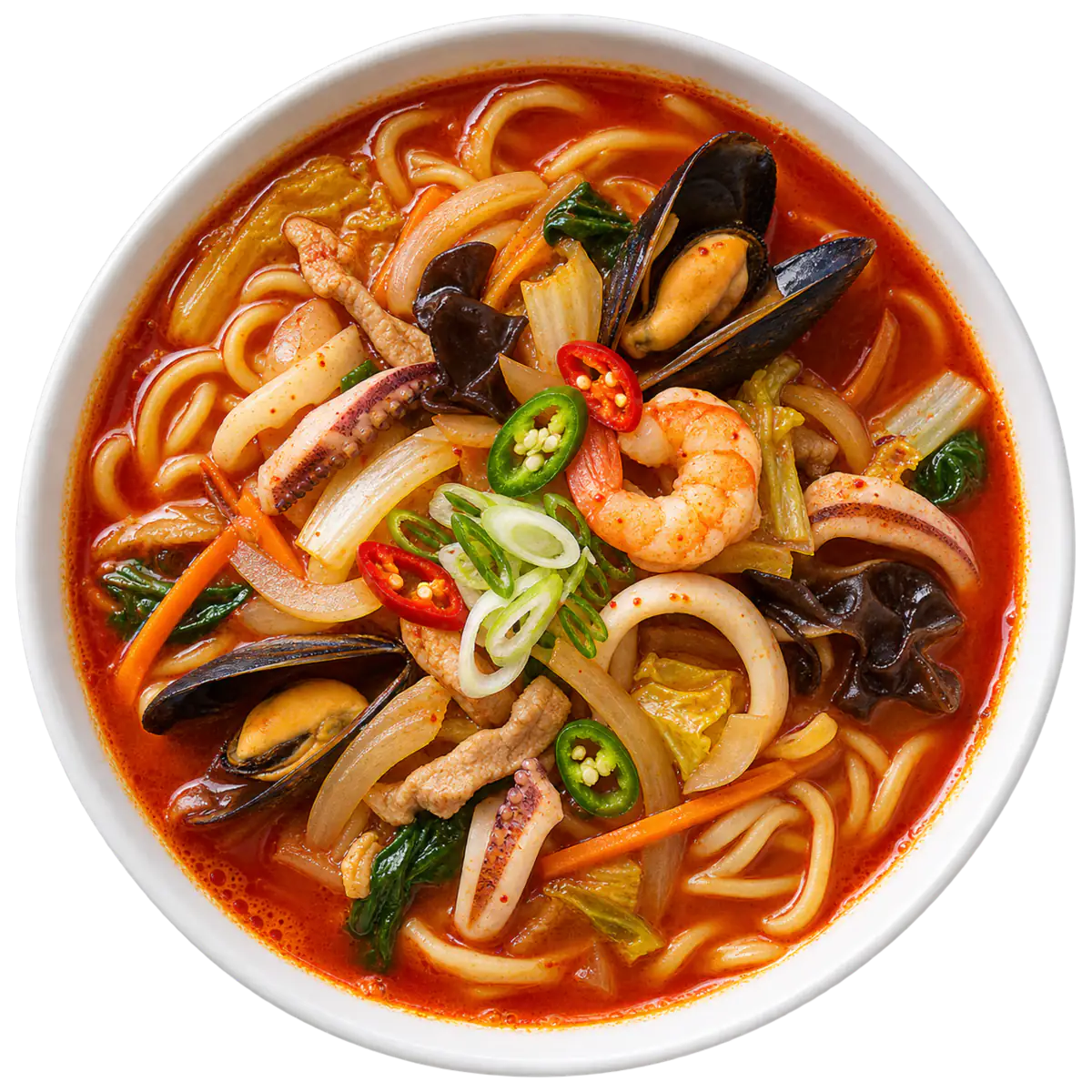
A red, spicy noodle soup of wheat noodles with squid, shrimp, mussels, pork and vegetables stir-fried with chili and simmered in a pork, chicken or seafood broth, from Korean-Chinese restaurants.
Origin and history
The Korean word jjamppong comes from Japanese chanpon, a Chinese-style dish of mixed seafood and vegetables, according to the National Institute of the Korean Language, which records the 1997 purified term chomamyeon. A Korean business-press article says the version first served in Korea was white, made with pork and chicken broth and adapted slightly from Shandong chaomamian, that a spicy red version appeared in the port city of Gunsan in the 1970s and spread nationwide, and that seafood jjamppong became the standard in the 1980s as frozen seafood became cheaper.
Make it at home
- Makes
- 4 servings
- Total time
- 50 min
- Hands-on
- 35 min
Ingredients
- 1.6 L6 1/2 cups anchovy stock, strong anchovy stock; pork or chicken stock also works
- 100 g3.5 oz pork, in thin strips, marinated in a little salt, pepper, ginger juice and rice wine
- 130 g4.5 oz squid, cleaned, scored and cut in pieces; blanched briefly
- 90 g3 oz shrimp, peeled
- 130 g4.5 oz mussels, scrubbed and debearded
- 100 g3.5 oz cabbage, cut in thick strips
- 70 g2.5 oz onion, cut in thick strips
- 40 g1.5 oz carrot, cut in thick strips
- 60 g2 oz wood ear mushrooms (mogi), fresh or soaked and rinsed
- 1/2 handful spinach
- 1/2 stalk scallion, sliced on the diagonal
- 1 each green chili and red chili, sliced
- 4 tbsp neutral cooking oil, for the chili oil
- 6 tbsp gochugaru (Korean chili flakes), 3 or 4 go into the oil and the rest into the broth
- 2 tsp minced garlic
- 2 tbsp cooking rice wine
- 4 tbsp guk-ganjang (Korean soup soy sauce), plus salt, 1/2 to 1 tbsp, to taste
- 600 g21 oz fresh wheat noodles (Chinese-style or knife-cut), about 150 g per bowl
Method
-
1. Marinate the pork with a little salt, pepper, ginger juice and rice wine, and cut all the vegetables.
-
2. Warm the oil gently in a large pot or deep pan. Stir in 3 to 4 tbsp of the gochugaru just until the oil turns red, keeping the heat low so it does not burn. Add the garlic for a few seconds.
-
3. Raise the heat, add the pork and stir-fry until it is about half cooked.
-
4. Add the onion, cabbage and carrot with the remaining gochugaru and the rice wine; stir-fry 1 to 2 minutes, then pour in the anchovy stock.
-
5. Boil for about 5 minutes, until the firm vegetables have softened.
-
6. Add the squid, shrimp, mussels and wood ears and cook 4 to 5 minutes, until the mussels open and the shrimp turn pink.
-
7. Season with soup soy sauce and salt, a little saltier than you would normally like, since the noodles will dilute the broth.
-
8. Add the spinach, scallion and chilies and cook 1 minute.
-
9. Boil the noodles until chewy, 3 to 4 minutes for fresh noodles, rinse briefly in cold water, divide among four bowls and pour the hot soup and seafood over them.
Notes
- Koreans took the word jjamppong from Japanese chanpon, a Chinese-style dish of mixed seafood and vegetables; the 1997 purified term is chomamyeon (炒碼麵). The red chili broth is what sets it apart from the earlier white versions.
- A Korean business-press article says the jjamppong first served in Korea was white, with a pork and chicken broth and only a little dried chili, and calls it a slight modification of the Shandong chaomamian (炒碼麵) recipe. It dates the red, spicy bowl to Gunsan in the 1970s and says seafood became the norm in the 1980s as frozen seafood got cheaper.
- The same article describes a beef-brisket version (chadol jjamppong, around 2010, with no clear record of who started it): the brisket is fried first, its fat is used to stir-fry the vegetables, and a spicy broth goes in after.
- Clams can replace the mussels. Stir-frying the pork and vegetables in the red chili oil before the stock goes in flavours them before the broth is built; keep the heat low while the chili flakes are in the oil, since they burn quickly.
- Keep the broth a little saltier than you would eat it alone, because the noodles dilute it. Make-ahead: the broth keeps 2 days in the fridge; cook the noodles fresh.
Adapted from 10000recipe: haemul jjamppong (chili oil, anchovy stock), 10000recipe: jjamppong (quantities of seafood and vegetables), National Institute of the Korean Language (Saeguk-eo sosik, 2000): jjamppong and chomamyeon, and Block Media: history of jjamppong.
At the festivals
No festival we list has printed it on a menu yet.