
🇰🇷 South Korea · Korea
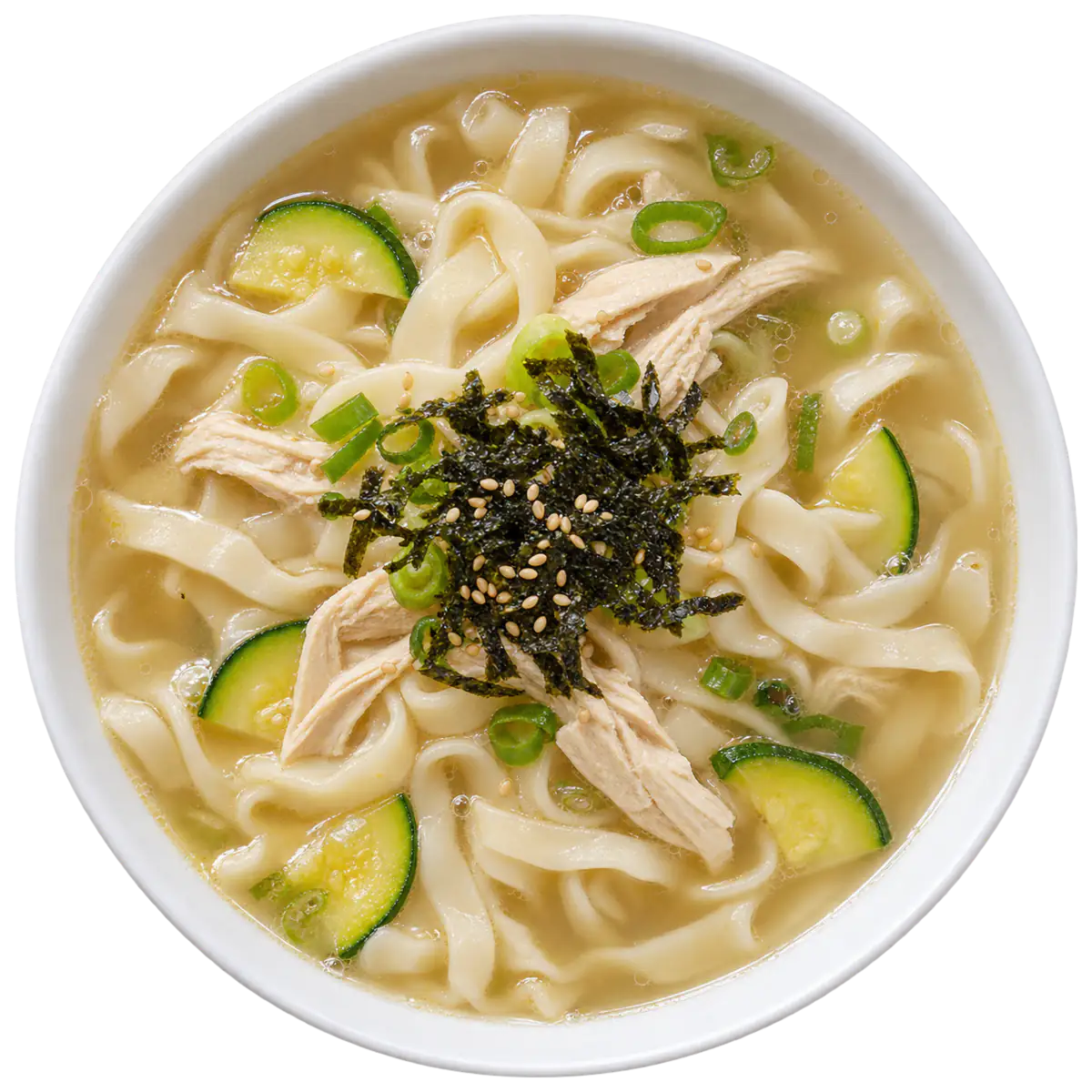
KalguksuKorean knife-cut noodle soup
A Korean noodle soup of wheat noodles cut by knife and cooked in an anchovy, beef, chicken or clam broth with vegetables.
Origin and history
The Encyclopedia of Korean Culture records the knife-cut noodle's earliest Joseon appearance as jeolmyeon in the cookbook Gyugon sieuibang, made mainly of buckwheat flour with wheat flour as a binder. Wheat flour was scarce and expensive, imported in the Goryeo period and eaten mainly at ceremonies, and wheat-flour kalguksu recipes appear in early twentieth-century cookbooks. The sources give no earlier date.
Make it at home
- Makes
- 4 servings
- Total time
- 1 h
- Hands-on
- 40 min
Ingredients
- 2 L8 1/2 cups anchovy and kelp stock, or beef, chicken or clam stock; see notes
- 500 g1.1 lb fresh knife-cut wheat noodles (kalguksu), or fresh udon-type noodles
- 1/2 medium zucchini (aehobak), cut in thin matchsticks
- 1 small carrot, cut in thin matchsticks
- 1/2 onion, sliced thin
- 2 scallions, sliced
- 2 cloves garlic, minced
- 2 tbsp soup soy sauce (guk-ganjang), or light soy sauce, plus salt to taste
- 1 sheet roasted seaweed (gim), crushed
- 1/2 red chili, sliced; optional
- black pepper and toasted sesame seeds, a pinch each
Method
-
1. Bring the stock to a boil in a wide pot.
-
2. Add the carrot, onion and zucchini. Return to a boil and cook 2 minutes.
-
3. Shake loose flour off the noodles so the broth stays clear, then add them, stirring so they do not clump.
-
4. Cook 3 to 5 minutes, until the noodles are tender and the broth has turned slightly thick and silky from the noodle starch.
-
5. Season with the soup soy sauce and salt, and stir in the garlic and half the scallions.
-
6. Ladle into deep bowls. Top with crushed seaweed, the rest of the scallion, chili, pepper and sesame seeds. Serve immediately.
Notes
- Kalguksu means knife noodles: the dough is rolled thin and cut by knife, which leaves floury, irregular strands that thicken the broth. Fresh noodles are sold in Korean shops; fresh udon is the best substitute, and spaghetti is not.
- The broth varies. Beef-bone broth is the most common and chicken (dak-kalguksu) is popular; anchovy and Manila clam broths are typical of seafood versions, and bajirak kalguksu from the west coast uses plenty of clams. The Encyclopedia of Korean Culture notes that modern kalguksu is boiled directly in the broth, which turns cloudy and savoury, whereas older practice served the noodles in a separate clear broth.
- Cooks add clams, dumplings or other vegetables to taste, and a little chopped chili gives heat. The soup is easy to make at home with store-bought fresh noodles, and is popular on rainy or cold days.
- Janchi guksu (banquet noodles) is a different noodle soup that uses factory-made noodles. Naengmyeon is the cold noodle dish of Korea; udon is the Japanese cousin.
- Eat it right away: the noodles keep absorbing broth and soften.
Adapted from Encyclopedia of Korean Culture (Academy of Korean Studies), entry on kalguksu, Korea Tourism Organization, Kalguksu, and Seonkyoung Longest, Easy kalguksu.
At the festivals
No festival we list has printed it on a menu yet.