
🇫🇷 France
Julienne soup
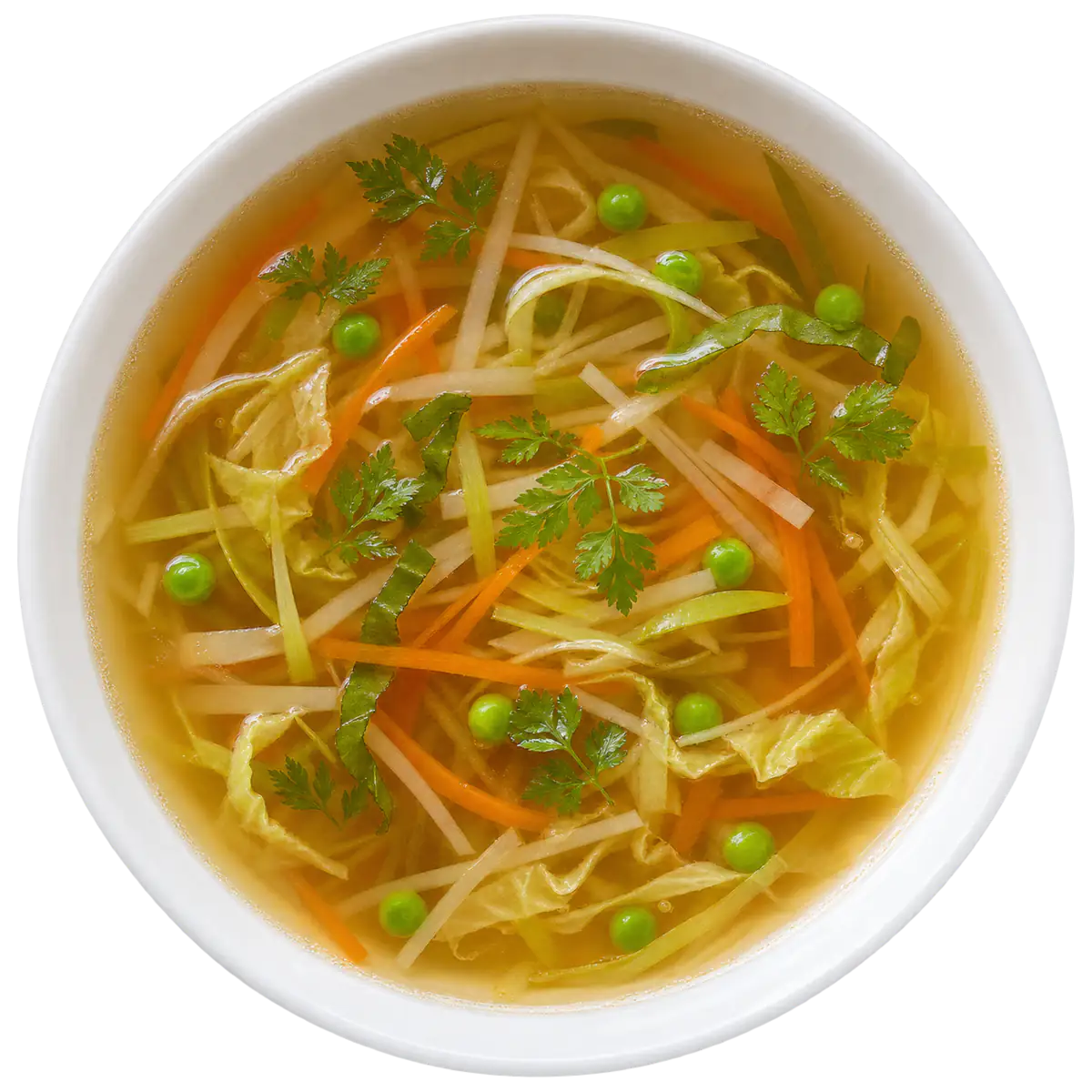
A classic French clear soup in which vegetables cut into fine strips (julienne) are simmered in stock or broth; the cut is named after the soup.
Origin and history
Julienne soup is a French classic: the thin-strip cut called julienne takes its name from the old potage à la julienne, a clear soup garnished with vegetables cut in fine strips, and the word is recorded from the early 18th century. It became a staple of 19th-century menus: Mrs Beeton's Book of Household Management (1861) gives Soup à la Julienne as seasonable all year and opens many dinner bills with it, and Escoffier's Le Guide culinaire (1903) keeps it as Consommé Julienne.
Make it at home
- Makes
- 4-6 servings
- Total time
- 1 h 10 min
- Hands-on
- 35 min
Ingredients
- 1.5 l6 1/3 cups clear beef or chicken stock (consommé or well-skimmed bouillon), homemade if possible; it is the body of the soup
- 2 medium carrots, only the red outer part, cut in julienne
- 1 medium turnip, cut in julienne
- 1 leek, white part, cut in julienne
- 1 celery stalk, cut in julienne
- 1/2 onion, cut in thin strips
- 100 g3 1/2 oz green cabbage leaves, cut in strips the same size, blanched 2 minutes and drained
- 30 g2 tbsp butter
- 1 pinch sugar
- 2 tbsp small green peas, fresh or frozen, cooked
- 1 small handful sorrel and lettuce leaves, cut in fine ribbons (chiffonade)
- 1 tbsp chervil leaves, picked, or flat-leaf parsley
- salt and white pepper, to taste
Method
-
1. Cut the carrots, turnip, leek, celery and onion into thin matchsticks about 5 cm (2 in) long, all the same thickness so they cook evenly.
-
2. Melt the butter in a heavy pot over low heat. Add the cut vegetables with a pinch of salt and the sugar, cover and let them sweat for 10-12 minutes, stirring now and then, until they soften without taking any colour.
-
3. Heat the stock separately and pour it over the vegetables. Bring to a bare simmer.
-
4. Add the blanched cabbage strips and cook very gently, uncovered, for 25-30 minutes, until all the strips are tender but still whole. Skim off the butter and any fat that rises, so the broth stays clear.
-
5. Add the peas and the sorrel and lettuce ribbons and simmer for 2 minutes more, just until the leaves wilt.
-
6. Taste and season with salt and a little white pepper. Scatter the chervil into the tureen or the bowls, ladle in the soup and serve at once.
Notes
- This follows the classic French consommé julienne: the broth must stay clear, so simmer gently and skim. Stock is what makes it; a weak stock gives a thin soup.
- Mrs Beeton's English version fries only the carrots in butter, adds boiling stock and the rest of the vegetables with lettuce, sorrel and chervil, stews it for at least an hour and pours it over small thin rounds of bread. In summer she adds green peas, asparagus tips or French beans, and blanches strong-tasting vegetables instead of frying them.
- If sorrel is hard to find, leave it out or add a few drops of lemon juice at the end for its sharpness; the soup is still a julienne without it.
- In Portugal 'sopa juliana' today usually means a puréed vegetable soup finished with cabbage and carrot cut in thin strips: a different, thicker soup, close to sopa de legumes. Potage julienne Darblay is also different: a potato and leek purée garnished with a julienne.
- Cut the vegetables and make the stock ahead, but cook the soup just before serving: the strips go limp if they sit in the broth.
Adapted from Auguste Escoffier, Le Guide culinaire (1903), "Consommé Julienne" (English translation: A Guide to Modern Cookery) and Isabella Beeton, The Book of Household Management (1861), "Soup à la Julienne".
At the festivals
No festival we list has printed it on a menu yet.