
🇰🇷 South Korea · Northern Korea (Pyongan and Hamgyong); popular across Korea
NaengmyeonKorean cold noodle soup
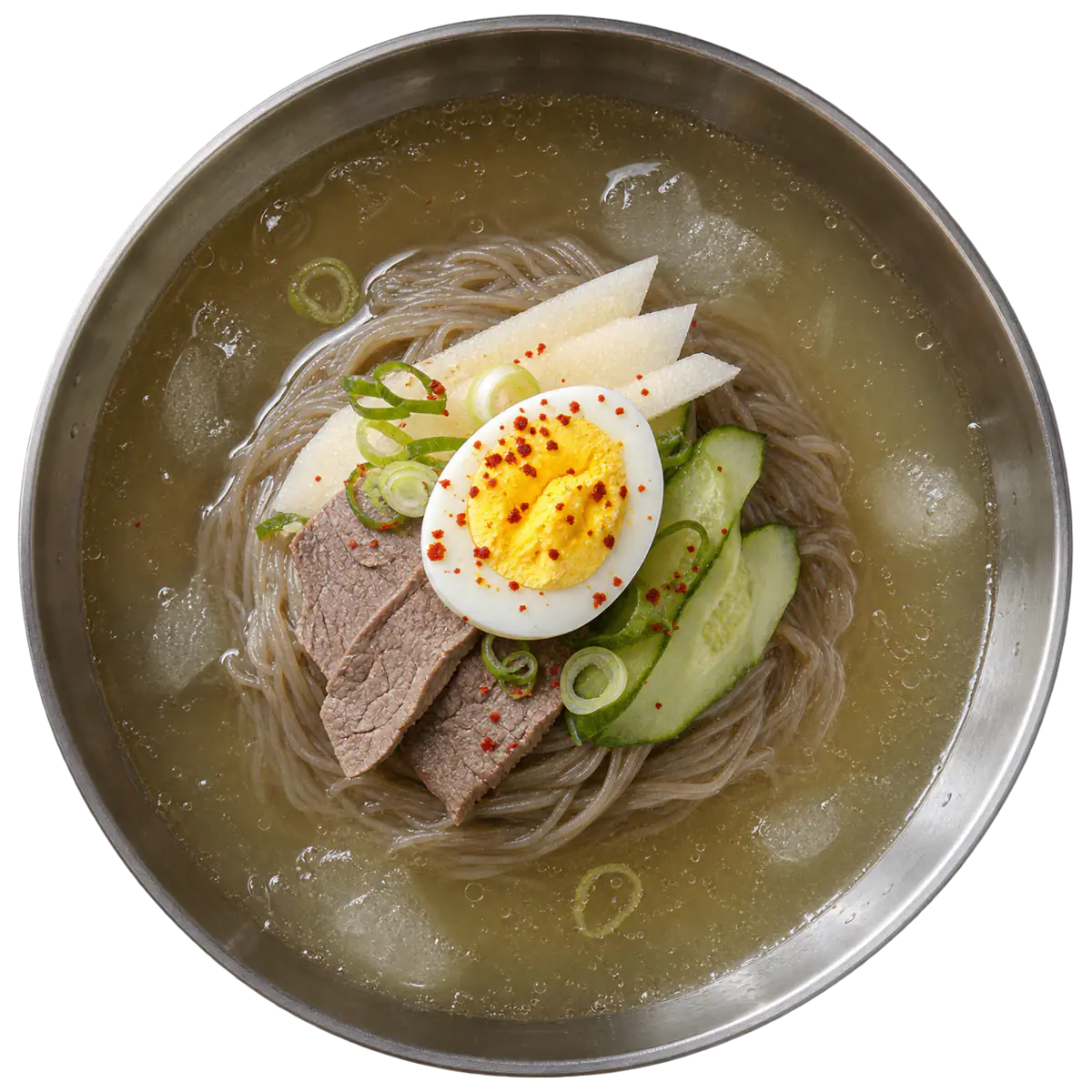
Chewy buckwheat (or starch) noodles served in an icy beef or dongchimi (radish water kimchi) broth, topped with meat, pear, cucumber and egg; a cold noodle soup.
Origin and history
Naengmyeon appears in Joseon-period sources: the Dongguk Sesigi lists it as a food of the start of winter, and other Joseon texts mention it. It was a winter food because radish and dongchimi broth are winter foods, and King Gojong is reported to have liked it as a late-night snack. The Encyclopedia of Korean Culture says northern refugees spread it across Korea after the Korean War, and today it is eaten mostly in summer.
Make it at home
- Makes
- 4 servings
- Total time
- 2 h 30 min
- Hands-on
- 40 min
Ingredients
- 250 g9 oz beef brisket, for the broth
- 170 g6 oz Korean radish (mu), chunked, for the broth
- 1/2 onion, for the broth
- 6 cloves garlic, for the broth
- 3 slices ginger
- 1/2 tsp black peppercorns
- 2 L8 1/2 cups water
- 2 tbsp soup soy sauce (guk-ganjang)
- 500 ml2 cups dongchimi (radish water kimchi) brine, chilled; or replace with more beef broth plus 2 tbsp vinegar
- 1 tsp sugar, plus more to taste
- salt, to taste
- 400 g14 oz dried naengmyeon noodles (buckwheat or starch type)
- 1/2 Korean pear, thinly sliced
- 1 cucumber, cut in thin half moons, lightly salted and squeezed
- 2 eggs, hard-boiled, halved
- rice vinegar and hot mustard, for the table
Method
-
1. Put the brisket, radish chunks, onion, garlic, ginger, peppercorns and water in a pot. Bring to a boil, skim, then simmer for about 1 hour.
-
2. Add 1 tablespoon of the soup soy sauce for the last 10 minutes of simmering. Lift out the brisket, strain the broth and chill the broth completely, at least 1 hour.
-
3. Skim the fat from the chilled broth. Stir in the dongchimi brine, the rest of the soy sauce, 1 teaspoon sugar and salt until tangy, lightly sweet and savoury. Put it in the freezer until slushy at the edges, about 1 hour.
-
4. Slice the cold brisket thinly. Put serving bowls in the freezer.
-
5. Boil the noodles as the package says, usually 2 to 4 minutes. Drain, rinse in several changes of cold water while rubbing the noodles to remove starch, then plunge in ice water. Drain well.
-
6. Divide the noodles into the cold bowls, top with beef, pear, cucumber and half an egg each.
-
7. Pour in the icy broth. Serve at once, with vinegar and mustard for each diner to add.
Notes
- This is mul naengmyeon, the broth form, which the page covers. The same noodles are served without broth as bibim naengmyeon, dressed with a spicy gochujang-based sauce.
- Regional styles: Pyongyang naengmyeon is buckwheat noodles in a clean beef (formerly pheasant) and dongchimi broth with pear, egg and mustard and vinegar at the table; Hamhung style uses chewy potato or sweet-potato starch noodles with a spicy seasoning, often with gochujang-seasoned raw fish; Jinju style uses buckwheat noodles in beef broth with boiled sliced beef and no pork. Summer radish kimchi can replace the winter dongchimi broth.
- Buckwheat noodles taste more earthy and break more easily; the starch-based kind are chewier. Vinegar, mustard and sugar are added at the table to taste.
- Dongchimi needs days to ferment; store-bought brine, or the liquid from a ready jar of radish kimchi, can stand in. The beef-broth-and-vinegar substitute changes the flavour slightly but keeps the tang.
- Make-ahead: the broth keeps three days chilled; cook the noodles only at serving.
Adapted from Encyclopedia of Korean Culture (Academy of Korean Studies), entry on naengmyeon, Korean Bapsang, Naengmyeon (cold noodles), and Korea.net, Naengmyeon.
At the festivals
No festival we list has printed it on a menu yet.