
🇰🇷 South Korea · Korea
Janchi guksuKorean banquet noodle soup
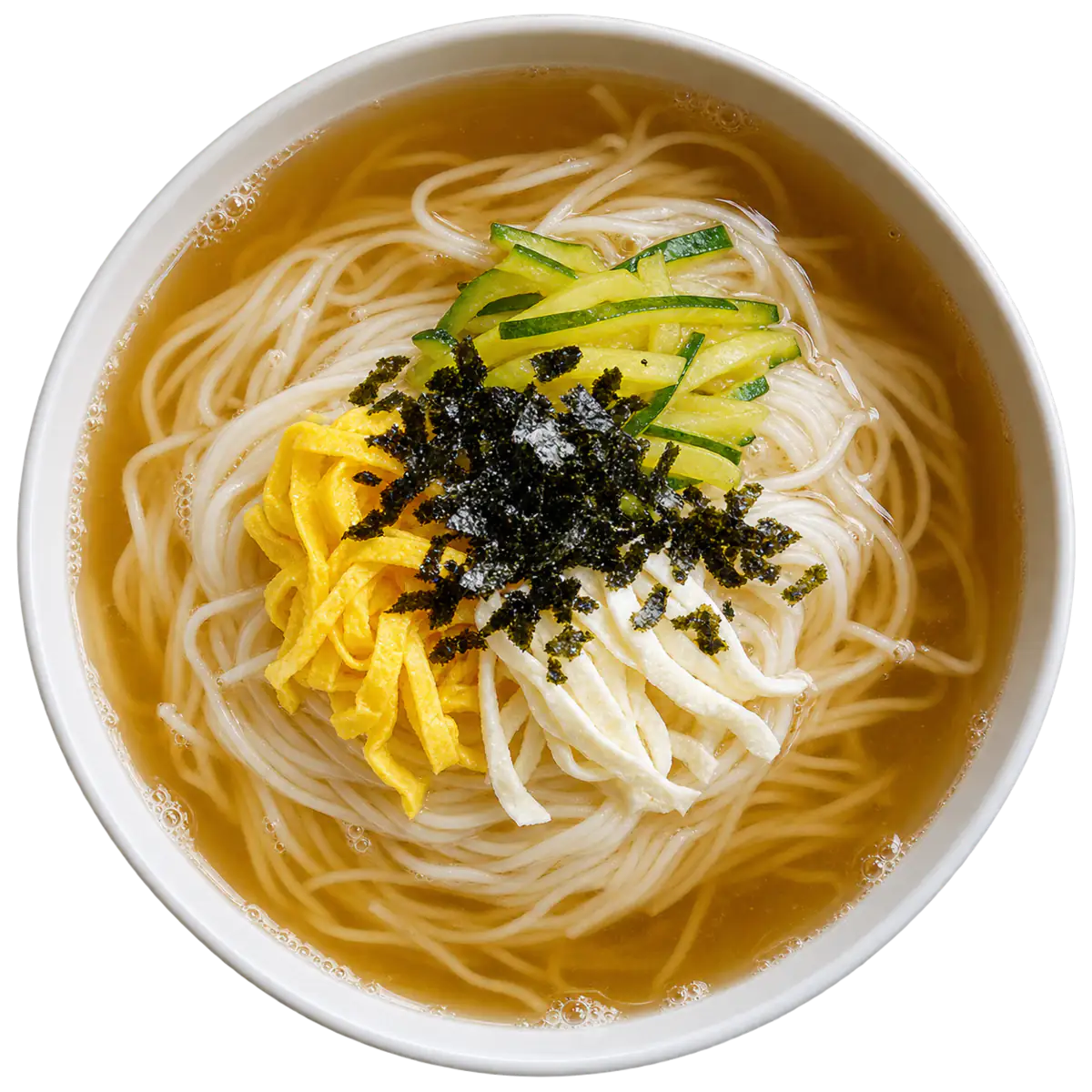
Noodles served in hot clear broth (beef brisket in the traditional banquet form, anchovy-based in the modern everyday form) and topped with egg strips, zucchini and seaweed or other greens.
Origin and history
The Encyclopedia of Korean Culture describes the dish under guksu-jangguk, or onmyeon: noodles in hot broth, important at wedding feasts and set on the first-birthday and ritual tables because the long strands signify long life. It says the noodles were once mostly buckwheat and are now wheat or blended. 'Janchi guksu' means 'feast noodles'; many present-day recipes, home and restaurant, use an anchovy broth in place of the beef one.
Make it at home
- Makes
- 4 servings
- Total time
- 45 min
- Hands-on
- 30 min
Ingredients
- 1.8 L1 3/4 qt water, reduces to about 1.4 L (6 cups) of broth
- 15 g1/2 oz (a handful) dried anchovies for broth (guksuyong myeolchi), heads and guts removed, dry-toasted briefly
- 1 piece (about 150 g)5 oz Korean radish (mu), optional; sweetens the broth
- 2 pieces (10 cm each)2 pieces (4 in each) dried kelp (dashima)
- 400 g14 oz somyeon (thin dried wheat noodles), about 100 g per bowl
- 2 eggs, for thin egg sheets (jidan), cut in strips
- 1 Korean zucchini (aehobak), cut in matchsticks, salted lightly and stir-fried briefly
- roasted seaweed (gim), crumbled, to top
- salt, and soup soy sauce (guk-ganjang), to season the broth; it should taste a little strong because the noodles dilute it
- 5 tbsp soy sauce, for the seasoning sauce (yangnyeomjang)
- 1/2 tbsp gochugaru (Korean chili flakes), for the sauce; up to 2 tbsp for a hotter sauce
- 1/2 tbsp minced garlic, for the sauce
- 1/2 tbsp sugar, for the sauce
- 1 tbsp sesame oil, for the sauce
- 2 tbsp finely chopped scallion, for the sauce
Method
-
1. Put the water, anchovies, radish and kelp in a pot. Bring to a boil, remove the kelp after about 10 minutes, and simmer the rest for 15 to 20 minutes more.
-
2. Strain the broth and season it with salt and a little soup soy sauce until it tastes a bit strong. Keep it hot.
-
3. Mix the soy sauce, gochugaru, garlic, sugar, sesame oil and scallion into the seasoning sauce.
-
4. Beat the eggs, pour them in a thin layer into a lightly oiled pan over low heat and flip once when set. Cool, roll, and slice into thin strips.
-
5. Stir-fry the zucchini with a pinch of salt for 1 to 2 minutes, just until it wilts but is still bright green.
-
6. Boil the noodles in plenty of water. When it rises to a boil, add a ladle of cold water; repeat once or twice, until a strand is tender when bitten.
-
7. Drain the noodles, rinse them under cold running water, rub gently, and drain well.
-
8. Divide the noodles among four bowls, ladle in the hot broth, and top with the egg strips, zucchini and seaweed.
-
9. Serve with the seasoning sauce on the side, a spoonful per bowl.
Notes
- This is the modern everyday version, with an anchovy broth. The traditional banquet form (guksu-jangguk, also called onmyeon) uses a clear beef broth: the Encyclopedia of Korean Culture gives roughly 600 g of beef (brisket best, shank second) to 4 L of water, enough for about fifteen bowls, skimmed and seasoned more strongly than ordinary soup. Its garnishes are egg strips, wood ear mushroom strips, threaded red pepper, zucchini or scallion and seasoned greens, with sliced boiled beef or stir-fried ground beef for a fuller bowl.
- Long noodles stand for a wish for long life, which is why the dish is served at weddings and celebrations and set on first-birthday and ancestral-rite tables.
- Noodles were once mostly buckwheat, blended with wheat flour at about 7 to 3 or 5 to 5 because buckwheat is not sticky; today they are mostly wheat.
- A restaurant version in Yeoncheon has egg stirred into a strong anchovy broth, finished with zucchini, fried tofu and seaweed flakes.
- A common home add-on is sour kimchi tossed with a little sugar, as a garnish or on the side. Dried pollack (hwangtae) can join the anchovies for a richer broth.
- Make-ahead: broth and sauce keep for days; cook noodles only when serving, as they swell in broth.
Adapted from Encyclopedia of Korean Culture (Academy of Korean Studies): Guksu-jangguk, 10000recipe: Janchi guksu (4 servings, sauce), and Korea Tourism Organization: Janchi guksu at Gungpyeong-ri, Yeoncheon.
At the festivals
No festival we list has printed it on a menu yet.