
🇳🇬 Nigeria and 🇬🇭 Ghana · Yoruba, Igbo, Efik, Ibibio and Hausa kitchens
Okra soup
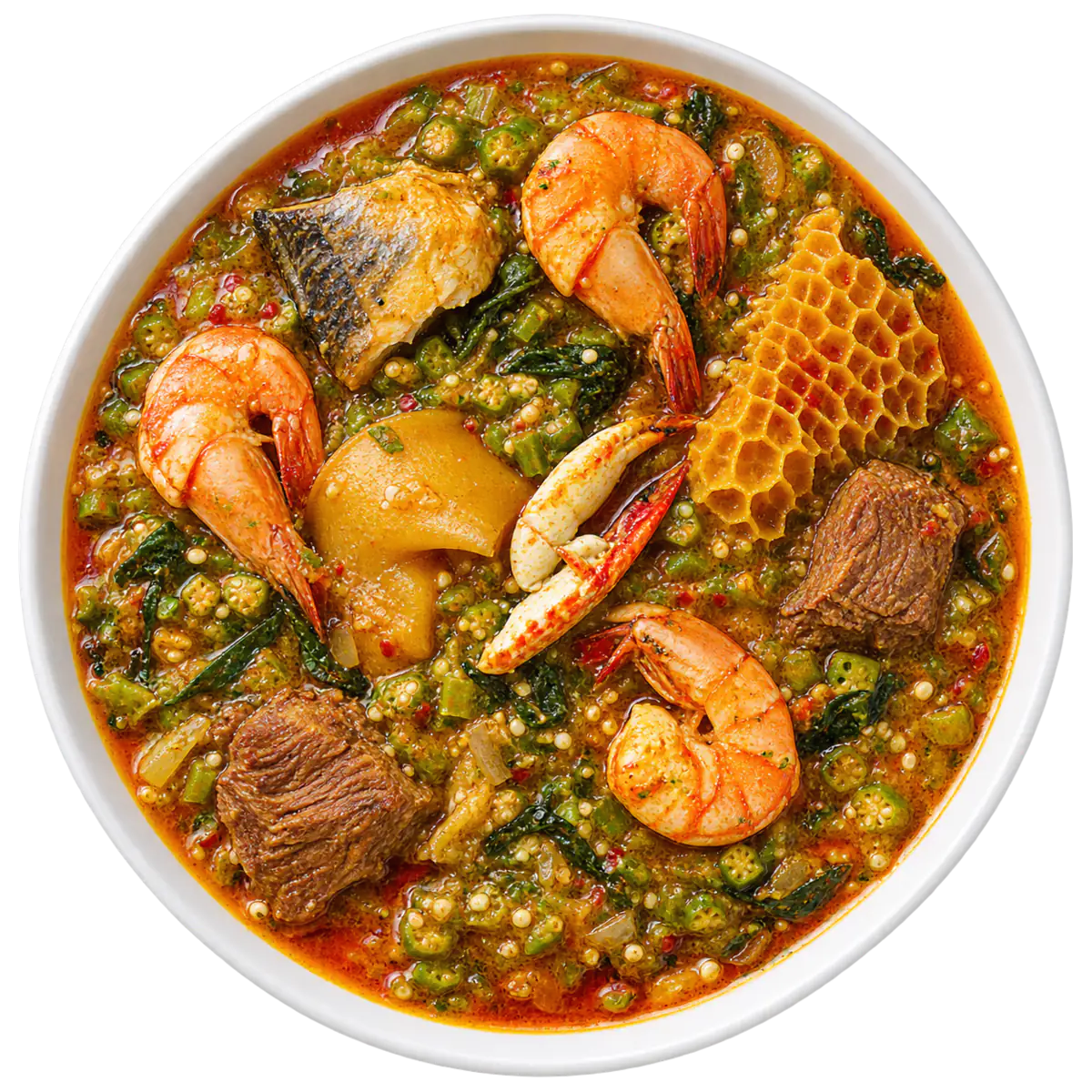
A slippery 'draw' soup of fresh sliced or grated okra, cooked quickly with palm oil or in a plain form with fermented locust beans (iru), meat, fish and crayfish, and eaten with a swallow.
Origin and history
Okra is one of the most common soups across Nigeria, cooked by the Igbo, Yoruba, Efik, Ibibio and Hausa, each with their own name and style. The vegetable, widely grown in West Africa, thickens the soup in the same slippery way as ogbono, which is why both are called draw soups.
Make it at home
- Makes
- 6 servings
- Total time
- 1 h 15 min
- Hands-on
- 30 min
Ingredients
- 300 g10.5 oz fresh okra (okro), washed, trimmed, finely chopped or grated
- 500 g1.1 lb assorted meat, beef, shaki (tripe), ponmo (cow skin), chicken, in chunks
- 200 g7 oz assorted fish, stockfish, dried fish, fresh fish
- 800 ml3 1/3 cups meat stock, from cooking the meat
- 90 ml6 tbsp red palm oil
- 1 small onion, chopped
- 1 tbsp ground dried crayfish
- 1-2 scotch bonnet chillies, ground, to taste
- 2 handfuls ugu (pumpkin leaf) or spinach, thinly shredded
- 1-2 stock cubes, optional
- salt, to taste
Method
-
1. Season the meat and stockfish with the onion, a stock cube and salt and cook until tender; tripe and cow skin first, as they take longest. Keep the stock.
-
2. If using fresh fish, poach it in a little stock for about 5 minutes and set aside whole so it does not break up.
-
3. Heat the palm oil in a clean, dry pot for a minute.
-
4. Add the okra and stir for about 5 minutes until it begins to draw and turn a little slippery.
-
5. Add the stock, crayfish, chilli, the meat and the stockfish, cover and simmer for 5 minutes.
-
6. Add the greens and the fresh fish and salt to taste. Cover and cook about 3 minutes more until the fish is just cooked through.
-
7. Switch off the heat so the okra stays green and serve.
Notes
- Okra soup (okro soup, obe ila in Yoruba, miyan kubewa in Hausa) is the same idea across Nigeria. The parent recipe here follows the Igbo style, cooked in palm oil with assorted meats. The plain Yoruba form is served with a separate tomato-pepper stew (obe ata); ila alasepo has its own page, with okra and stew cooked together, and otong is the Efik and Ibibio version with ugu and uziza leaves.
- Cook the okra only a few minutes. Chopped finely gives a lighter draw; grated gives a more slippery soup.
- Fresh okra is easy to find; frozen sliced okra works well, thawed. The draw will be slightly less. Add iru (fermented locust beans) for the Yoruba note; without it, a little more crayfish gives some depth. Palm oil can be replaced with a mix of neutral oil and a little tomato, which makes a lighter soup without palm's flavour.
- Some cooks add ogbono or akaun (potash) for extra thickness. Ugu can be replaced with spinach.
- The usual swallow: pounded yam, eba (garri), fufu, amala, semovita, or tuwo masara in the north.
- Best eaten the same day; the okra loses its green and the soup thickens in the fridge.
Adapted from Nigerian Food TV, Nigerian Okra Soup (Obe Ila), Google Arts & Culture, Six Savoury and Sumptuous Soups, and Cookbook:Miyan Kubewa (Okra Soup), Wikibooks.
Variants
-
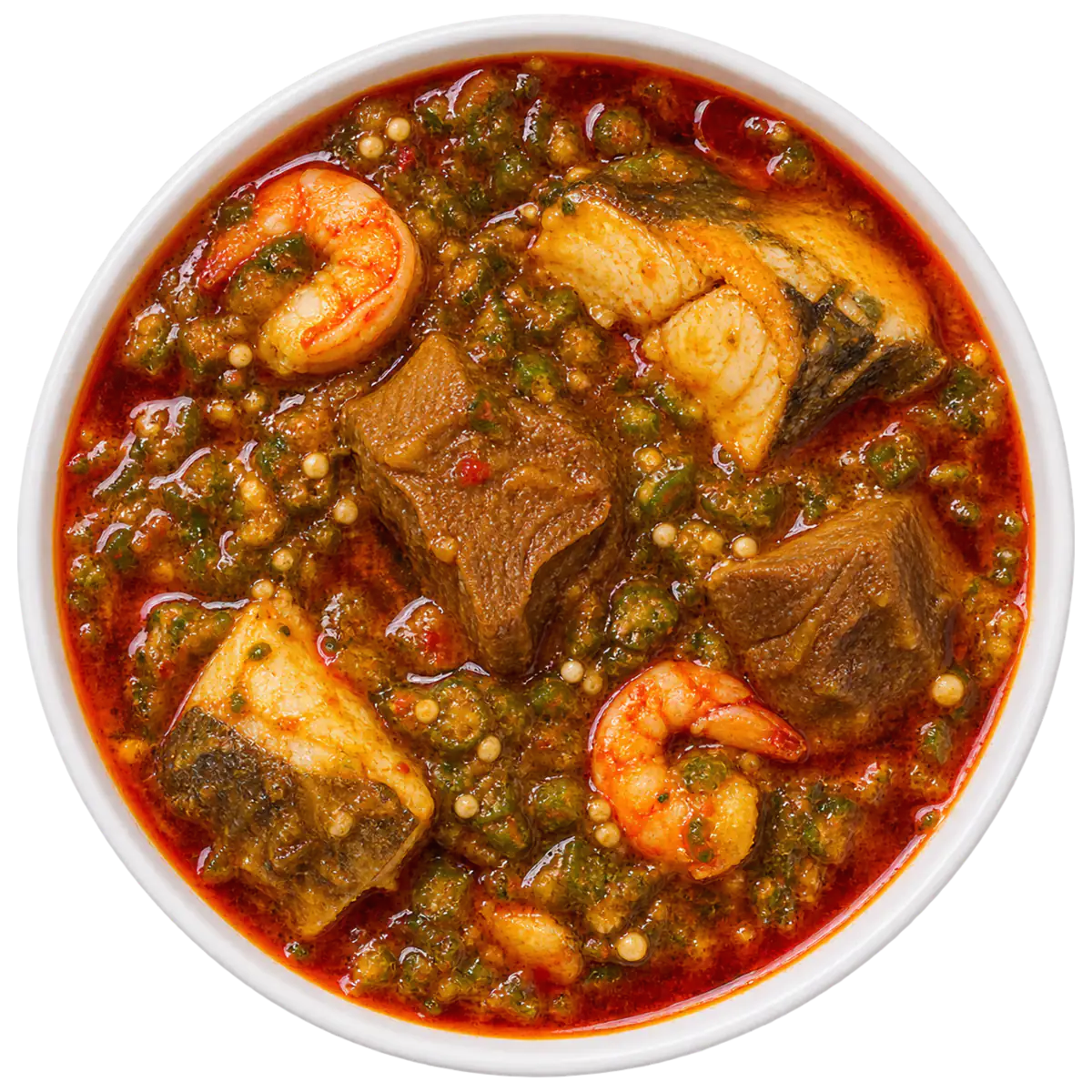 Ila alasepo (Yoruba okra soup)
Yoruba okra soup
South-west Nigeria (Yoruba)
The Yoruba form of okra soup in which the okra is cooked together with the pepper stew (obe ata) in one pot; 'alasepo' means 'cooked together'.
-
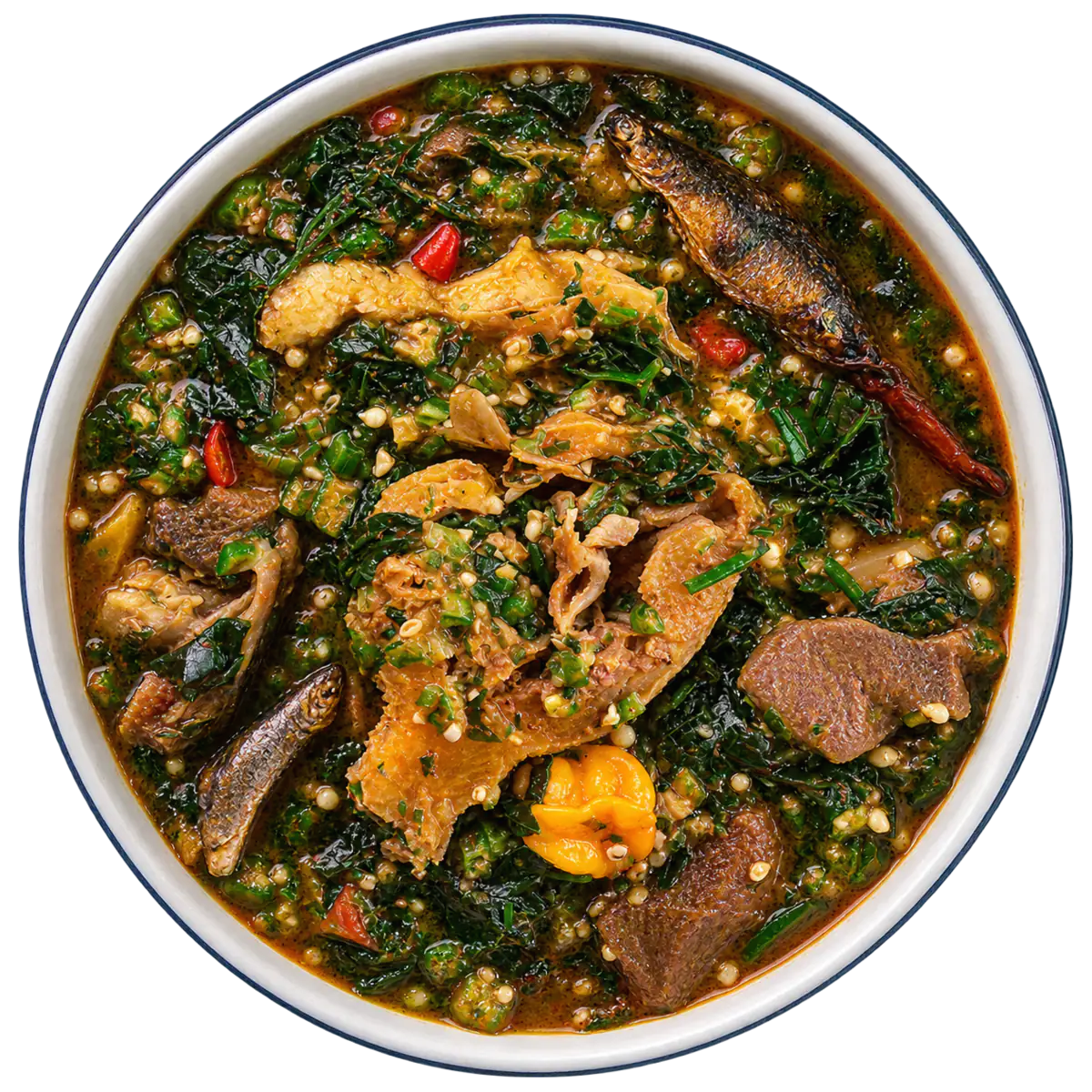 Otong soup (Efik okra soup)
Efik okra soup
South-south Nigeria (Efik, Ibibio: Cross River, Akwa Ibom)
The Efik and Ibibio okra soup: okra cooked with assorted meats and fish, crayfish, bonnet pepper, onion and palm oil, typically with leafy greens such as ugu.
At the festivals
No festival we list has printed it on a menu yet.