
🇳🇬 Nigeria · Niger Delta (Urhobo, Isoko, Itsekiri)
Banga soupNiger Delta palm nut soup
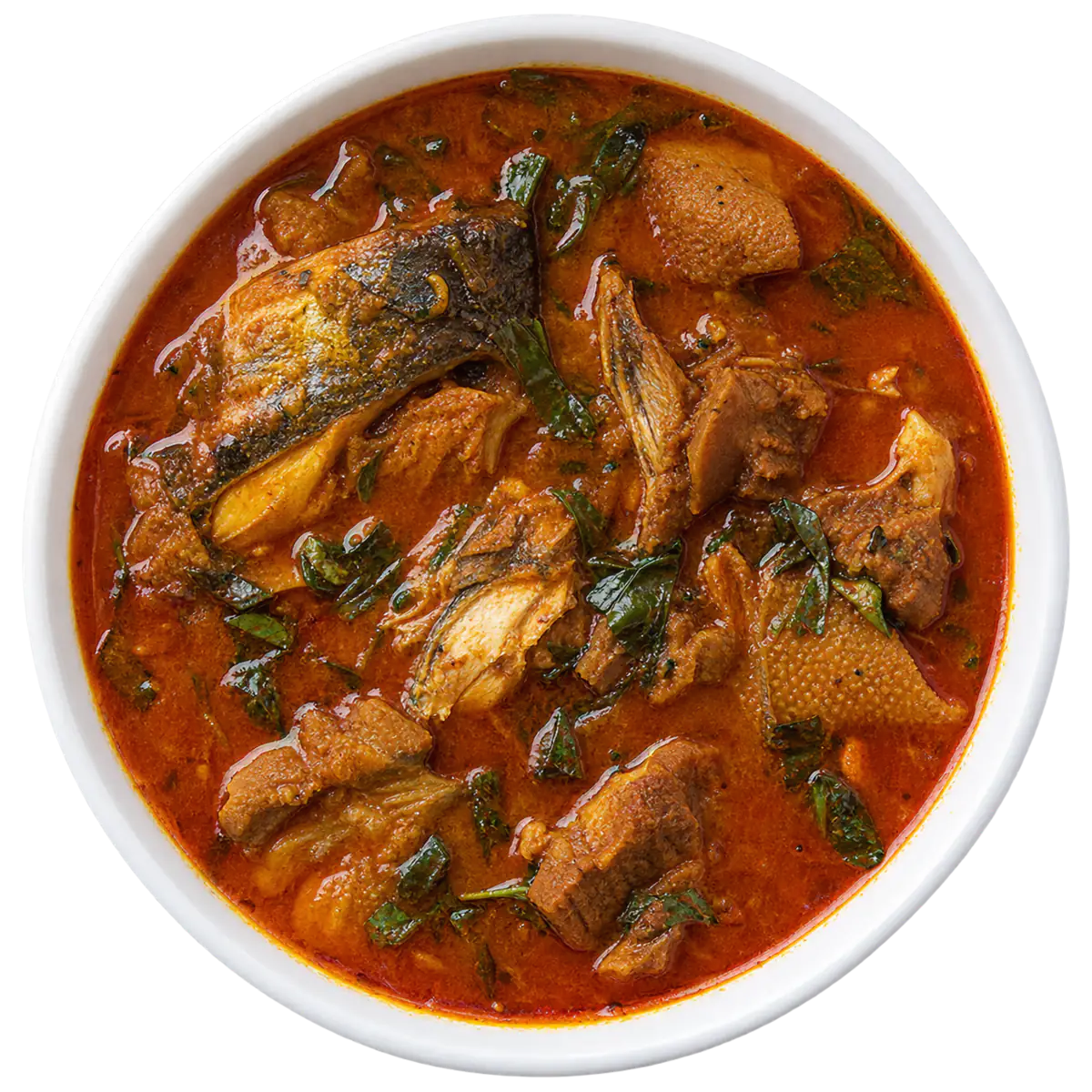
The Niger Delta form of palm nut soup: palm fruit extract cooked with fresh or dried fish or meat and seasoned with a ground banga spice mix (ataiko, irugeje), an oburunbebe stick and beletete (or scent) leaves; thicker than abenkwan and eaten with starch or eba.
Origin and history
Banga is the palm-fruit soup of Nigeria's Niger Delta, above all of the Urhobo, Isoko, Okpe and Itsekiri peoples of Delta State, and it is eaten in Edo State too. It shares its base, the orange pulp washed from boiled palm fruit, with Ghana's abenkwan, but takes its character from a ground spice blend, the oburunbebe stick and beletete leaves. Among the Urhobo, Isoko and Okpe it is eaten ceremonially with usi starch, and it is served at traditional weddings.
Make it at home
- Makes
- 6 servings
- Total time
- 1 h 45 min
- Hands-on
- 45 min
Ingredients
- 1.5 kg3.3 lb fresh palm fruit (banga), or 800 g (28 oz) canned palm fruit concentrate; see notes
- 600 g1.3 lb assorted beef or goat meat, with tripe (shaki) and cow skin (ponmo) if you like, cut in chunks
- 500 g1.1 lb fresh catfish, cut in steaks, cleaned of slime with hot water and salt
- 1 (about 150 g)1 (about 5 oz) dried or smoked fish (catfish or mackerel), soaked briefly, bones removed, in pieces
- 1 onion, chopped
- 3 tbsp ground crayfish
- 1 tbsp banga spice: ataiko and irugeje (rohojie) seeds, ground together, or a ready banga spice mix
- 1 oburunbebe stick (banga stick), rinsed
- 2 tbsp dried beletete leaves (also called atama), or a handful of scent leaf or washed bitter leaf; see notes
- 2-4 Scotch bonnet peppers (ata rodo), blended with a splash of water
- 150 g1 cup periwinkles or fresh prawns, optional
- salt (and a stock cube, as many Delta cooks use), to taste
- 2 l2 qt (8 1/2 cups) water, warm, for extracting the palm fruit, plus a little for the meat
- Delta starch (usi), eba or pounded yam, to serve
Method
-
1. Season the meat with salt, half the onion and the stock cube, if using. Put it in a pot with a cup of water, cover and cook for 30-40 minutes, until tender, adding water as needed. Keep the stock.
-
2. Meanwhile, wash the palm fruit and boil it in water to cover for 20-30 minutes, until the skins slip and the flesh is soft.
-
3. Drain the fruit and pound it in a mortar, or mash it hard in a bowl, until the orange flesh comes away from the kernels.
-
4. Pour about 1 l (1 qt) of the warm water over the pulp, squeeze it with your hands to wash the flesh off the fibres and kernels, and pour the orange liquid through a sieve into a large pot. Repeat with the rest of the water and discard the kernels and fibre. With canned concentrate, simply whisk it into the warm water and pour it into the pot.
-
5. Bring the palm extract to the boil uncovered, with a wooden spoon laid across the pot to stop it boiling over. Cook for 15-20 minutes, stirring now and then, until it thickens and red oil gathers on the surface.
-
6. Add the cooked meat with its stock, the blended peppers, the rest of the onion, the dried fish and the crayfish, and simmer for 10 minutes.
-
7. Stir in the banga spice and drop in the oburunbebe stick. Simmer for 10 minutes more, stirring often so the soup does not catch; thin it with a little water if it gets too thick to pour from a ladle.
-
8. Lay the catfish steaks and the periwinkles or prawns in the soup and simmer gently for 8-10 minutes, without stirring hard, until the fish is just cooked.
-
9. Crumble in the beletete leaves and cook for 3-5 minutes more, until the soup smells strongly of the herbs.
-
10. Remove the stick, taste for salt and serve hot with starch, eba or pounded yam.
Notes
- How it differs from the parent palm nut soup: banga is the Niger Delta form of the same palm-fruit soup. It is thicker and saucier than Ghanaian abenkwan, which is cooked with tomato and is more liquid. Its flavour comes from the banga spice blend, the oburunbebe stick and beletete leaves, and it is classically made with fresh catfish and eaten with starch or eba rather than fufu. The parent recipe on this site is closest to Ghanaian abenkwan.
- Spices: ataiko and irugeje seeds, and the oburunbebe stick, sometimes called African liquorice stick, are found in Nigerian and African grocers, usually as a ready-ground banga spice mix. The stick can be rinsed, frozen and used again.
- If you cannot find beletete, dried basil, scent leaf or bitter leaf are the usual stand-ins; the soup stays good but loses its distinctive Delta aroma.
- Canned palm fruit concentrate ('palm cream' or 'sauce graine') is the norm outside West Africa. Dilute it with about twice its weight of warm water; the result is close to fresh-fruit banga.
- Proteins vary by household and by the coast: fresh or dried catfish is the classic, with beef, goat, tripe, snails, crab, prawns and periwinkles all common. Some cooks add okra, which makes a slippery soup that goes well with eba.
- Among the Urhobo, Isoko and Okpe, banga is eaten with usi, a yellow starch made from cassava, pinched off with the fingers. Many other Nigerians eat it with eba, fufu or pounded yam. The red oil that rises can be skimmed off and kept for cooking.
- The same spiced palm extract is used to cook banga rice.
- Make-ahead: banga keeps 2-3 days in the fridge; add the fresh fish and leaves when you reheat if you can.
Adapted from Vanguard (Nigeria), "Banga delicacy, the Delta way", My Active Kitchen, "Banga Soup (Niger Delta Style)", and Tasting Table, "Banga, the Nigerian soup that stars a rich blend of spices".
At the festivals
No festival we list has printed it on a menu yet.