
🇬🇭 Ghana, 🇳🇬 Nigeria, 🇨🇲 Cameroon, 🇨🇮 Côte d'Ivoire, and 🇨🇩 Congo, The Democratic Republic of the · West and Central Africa
Palm nut soup
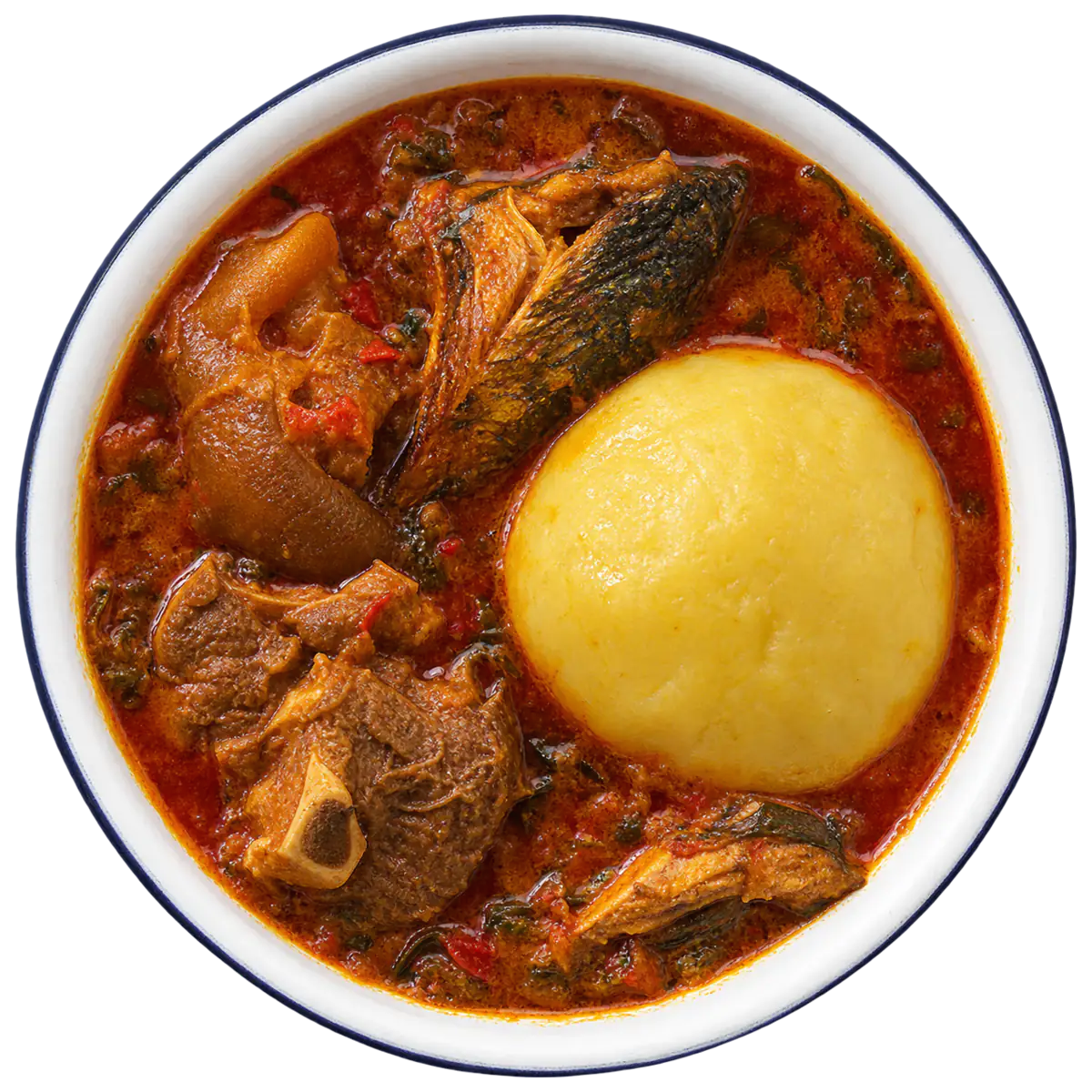
Rich soup made from the pulp of boiled and pounded palm fruit (nuts), simmered with meat or fish, tomato, onion and chilli, eaten with fufu, rice or starch. Called abenkwan in Ghana, mbanga in Cameroon, sauce graine in Côte d'Ivoire; Nigeria's banga is a variant.
Origin and history
Palm nut soup is cooked across West and Central Africa, wherever the native oil palm grows. In Ghana it is the Akan abenkwan ('palm soup'), a staple eaten with fufu in many homes; in Nigeria's Niger Delta it is banga, in Cameroon mbanga, in Côte d'Ivoire sauce graine. The method, boiling and pounding the fruit and washing the orange pulp off the kernels with water, is the same everywhere.
Make it at home
- Makes
- 6 servings
- Total time
- 2 h 30 min
- Hands-on
- 50 min
Ingredients
- 1 kg2.2 lb goat meat, lamb or beef on the bone (or a mix with tripe or cow foot), cut into chunks
- 2 onions, 1 chopped for the meat, 1 whole for the soup
- 5 cm piece2 in piece fresh ginger, peeled; half grated for the meat, half left whole
- 3 cloves garlic, crushed
- 1.5 kg3.3 lb fresh palm fruit (palm nuts), or 1 can (about 800 g / 28 oz) palm nut concentrate (palm cream); see notes
- 4 medium tomatoes, whole
- 1–2 Scotch bonnet or other hot fresh chillies, whole
- 2 pieces (about 200 g)2 pieces (about 7 oz) smoked fish (mackerel, herring or catfish), skin and bones removed, broken into pieces
- 2 crabs (optional), cleaned and halved
- 6 (optional) garden eggs (small white or green African eggplants) or a handful of mushrooms
- 2 L2 qt (8 1/2 cups) water, warm, for extracting or thinning the palm pulp
- salt, to taste
Method
-
1. Season the meat with salt, the chopped onion, the grated ginger and the garlic, and leave it 15–30 minutes.
-
2. Put the meat in a large pot with a splash of water, cover and steam it over medium heat for 15–20 minutes, stirring now and then, until it has released its juices and the onion has softened.
-
3. If using fresh palm fruit, wash it and boil it in water to cover for about 30 minutes, until the skins slip and the flesh is soft.
-
4. Drain the fruit and pound it in a mortar (or mash it hard in a bowl) until the orange flesh comes away from the hard kernels.
-
5. Add about 1 L (1 qt) of the warm water, squeeze the pulp with your hands to wash the flesh off the fibres and kernels, and pour the orange liquid through a sieve into the meat pot; repeat with the rest of the water and discard the kernels and fibre. If using canned concentrate, simply whisk it with the 2 L (2 qt) of warm water and strain it into the pot.
-
6. Add the whole tomatoes, the whole onion, the whole chillies, the piece of ginger and the garden eggs to the pot and bring to the boil, uncovered.
-
7. After about 15 minutes, when the tomatoes and garden eggs are soft, lift them out with the onion, ginger and chillies, blend or grind them smooth and return the purée to the pot through a sieve (keep back some chilli if you want less heat).
-
8. Simmer uncovered for about 1 hour, stirring from time to time, until the meat is tender, the soup has thickened slightly and a layer of deep red oil gathers on the surface.
-
9. Add the smoked fish and the crabs for the last 15–20 minutes, so the fish stays in pieces.
-
10. Taste for salt; skim off some of the red oil if you prefer a lighter soup.
-
11. Serve hot in deep bowls with fufu, omo tuo (rice balls), banku or plain rice.
Notes
- The pulp is the soup: palm oil comes from the same fruit, but used alone it makes a thin, oily broth without the body of abenkwan. Canned palm nut concentrate ('palm cream', 'sauce graine') is the usual choice outside West Africa and gives a very good result.
- Ghanaian abenkwan takes whatever the household has: goat, beef, cow foot, tripe, chicken, snails, crab and several kinds of smoked or dried fish are all common. A seafood-only version is made on the coast.
- Some Ghanaian cooks add the herbs prekese (Tetrapleura tetraptera) and grains of selim for a smoky, aromatic note; others add okra near the end.
- Nigeria's banga soup, especially among the Urhobo, Isoko and Itsekiri of the Niger Delta, uses the same palm fruit base but is seasoned with a special banga spice mix and finished with beletete (or scent) leaves; it is usually thicker and eaten with starch or eba. Cameroon's mbanga is eaten with kwacoco; Côte d'Ivoire calls the dish sauce graine.
- The traditional partner in Ghana is fufu of pounded cassava and plantain (or cocoyam); palm soup is also the base of aprapransa, a festive dish thickened with roasted corn flour.
- Palm nut soup tastes better the next day and keeps 3 days in the refrigerator; it also freezes well without the crab.
Adapted from Afri Food Network: Palmnut soup (abenkwan), Savory Thoughts: Ghanaian palm nut soup (abenkwan), and Eat With Afia: Ghanaian palm nut soup.
Variants
At the festivals
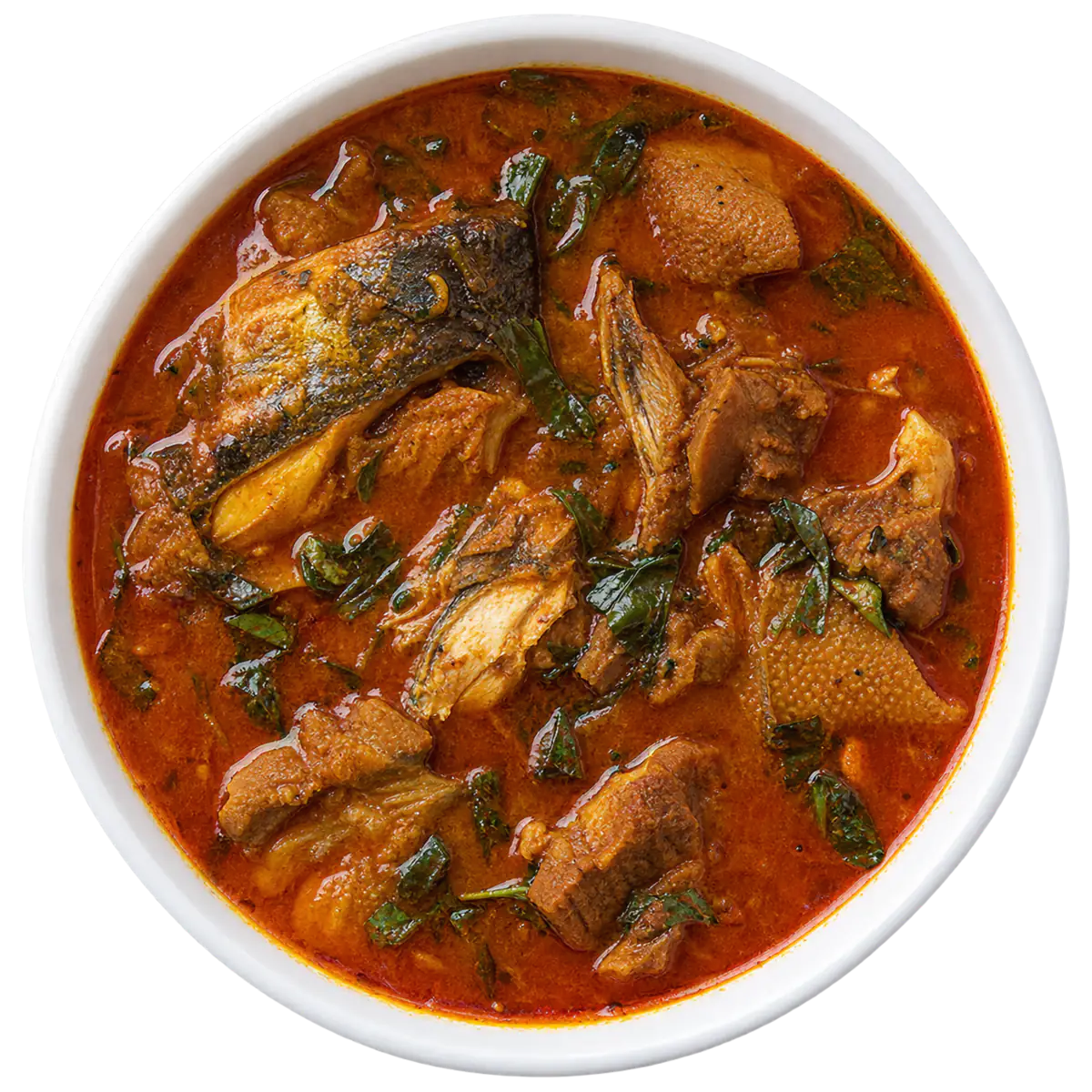
Served at 1 festival in Germany.
Earlier editions
- November 15, 2025