
🇳🇬 Nigeria, 🇨🇲 Cameroon, and 🇬🇭 Ghana · (Niger Delta and the south), shared along the Gulf of Guinea coast
Pepper soup
A thin, fiery West African broth of meat, fish or offal simmered with a ground blend of indigenous spices (calabash nutmeg, uda or Negro pepper, uziza, grains of paradise or alligator pepper) and hot chilli, often with crayfish and a scented leaf such as uziza or basil at the end. Served hot, usually without a starch, and sometimes drunk like a tonic.
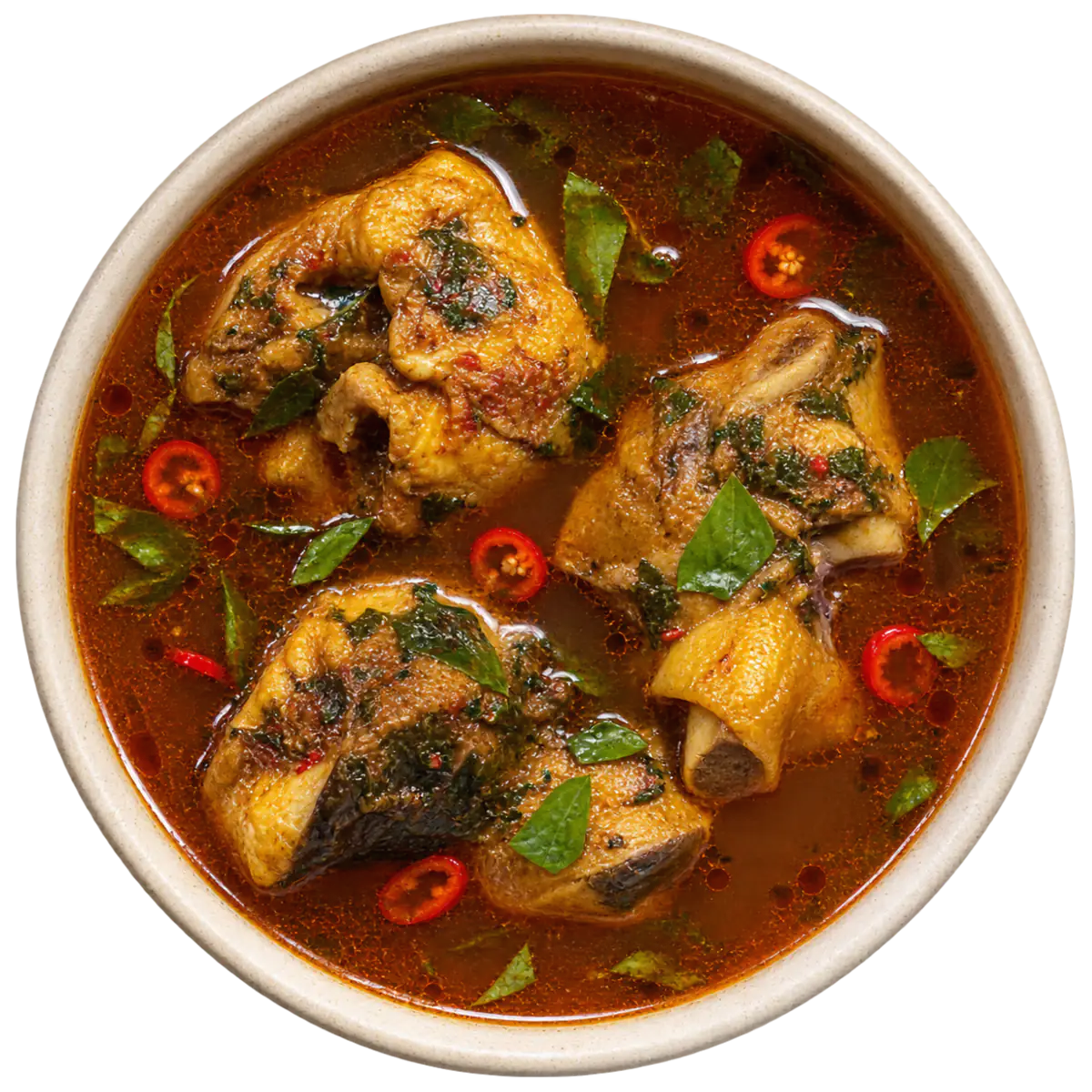
Origin and history
Pepper soup is cooked across southern Nigeria and along the Gulf of Guinea, with local names such as nwo-nwo and ngwo-ngwo in Igbo. Its spices are native West African seeds. Nigerians eat it as a warming dish for gatherings and cold or rainy days, and it is the standard fare of bars and pepper-soup joints.
Make it at home
- Makes
- 6 servings
- Total time
- 1 h 15 min
- Hands-on
- 25 min
Ingredients
- 1.2 kg2.6 lb chicken (a tough local-style hen if you can find one), cut into small pieces on the bone
- 2.5 litres10 cups water
- 1 medium onion, chopped
- 3 tbsp ground pepper soup spice blend, calabash nutmeg (ehuru), Negro pepper (uda), uziza seeds, alligator pepper; see notes for a home blend
- 1-2 habanero or scotch bonnet chillies, ground or finely chopped, to taste
- 2 tbsp ground dried crayfish
- 1 stock cube, optional
- 1 handful scent leaf (efirin / nchanwu) or uziza leaf, torn; fresh basil if neither is available
- salt, to taste
Method
-
1. Put the chicken in a large pot with the onion, a little salt and about 500 ml (2 cups) of the water.
-
2. Bring to a boil over medium heat, then lower to a simmer and cook for 10 minutes so the meat gives up its juices.
-
3. Add the remaining water, the stock cube if using, and the chilli.
-
4. Stir in the pepper soup spice blend and the ground crayfish.
-
5. Simmer gently, partly covered, for 35 to 45 minutes, until the chicken is tender but still on the bone. Skim off any foam.
-
6. Taste and correct the salt and heat. The broth should be thin, clear-ish, and sharply peppery.
-
7. Turn off the heat, stir in the scent leaf and leave it for a minute so its fragrance stays fresh.
-
8. Ladle into bowls, bones included, and serve very hot.
Notes
- Pepper soup is defined by its spice blend and thin broth rather than by the meat. The parent recipe here is the everyday chicken version; goat meat pepper soup and catfish pepper soup (point and kill) have their own pages, and cooks also make it with beef, cow leg, tripe, offal or turkey.
- The classic home blend is calabash nutmeg (Monodora myristica, ehuru in Igbo, ariwo in Yoruba), Negro pepper or uda (Xylopia aethiopica), uziza seeds (Piper guineense) and alligator pepper (grains of paradise), toasted and ground. Niger Delta cooks add more local seeds such as gbafilo and umilo.
- Outside West Africa, buy a ready-made pepper soup spice from an African grocer. If you cannot, use freshly grated nutmeg, black peppercorns (for uda and uziza), a pinch of grains of paradise or extra black pepper, and a little ginger. The soup will be less resinous and floral but still peppery and warming.
- Scent leaf is West African wild basil; Thai holy basil or ordinary basil is the closest substitute and gives a sweeter, cleaner note. Ground dried crayfish can be replaced with a spoonful of dried shrimp powder; leave it out for a lighter broth.
- It is eaten as a soup course on its own and often drunk from the bowl like a tonic, with a boiled yam, plantain or agidi (eko) on the side. It is not served with a swallow like eba or pounded yam as a rule. Few cooks use any oil; a little palm oil is optional in some homes.
- Make-ahead: the broth keeps three days in the fridge and tastes better reheated; add the scent leaf only after reheating.
Adapted from Nigerian Food TV, Goat Meat Pepper Soup and Catfish Pepper Soup, Kitchen Butterfly (Ozoz Sokoh), How to Make Nigerian Pepper Soup, and Google Arts & Culture, Peppersoup: an explosion of pepper and spices.
Variants
-
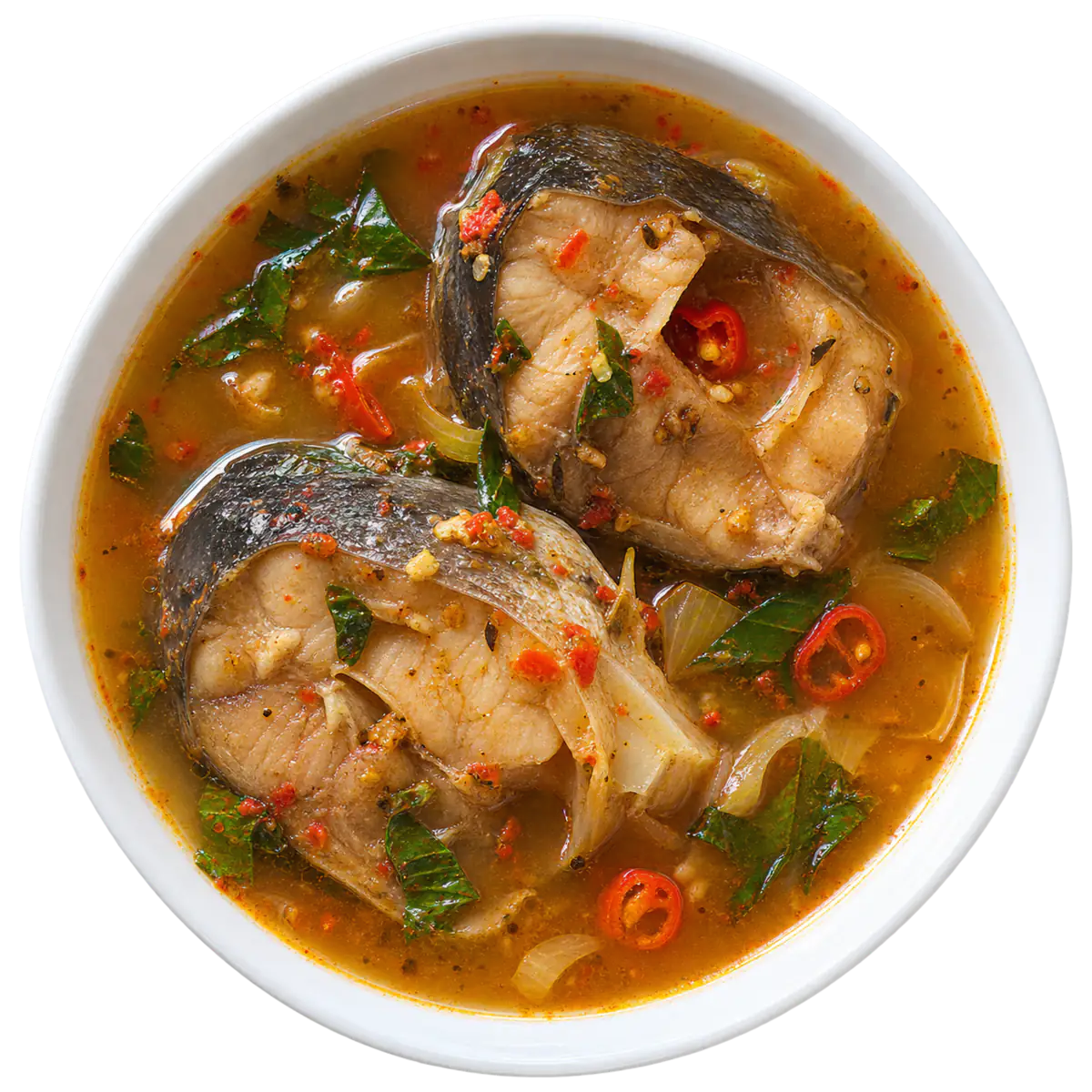 Catfish pepper soup (point and kill)
beer parlours and pepper-soup joints
Pepper soup made with fresh catfish chosen live or fresh at the stall (hence 'point and kill'), cooked briefly in the pepper-soup spice blend with crayfish and uziza or basil.
-
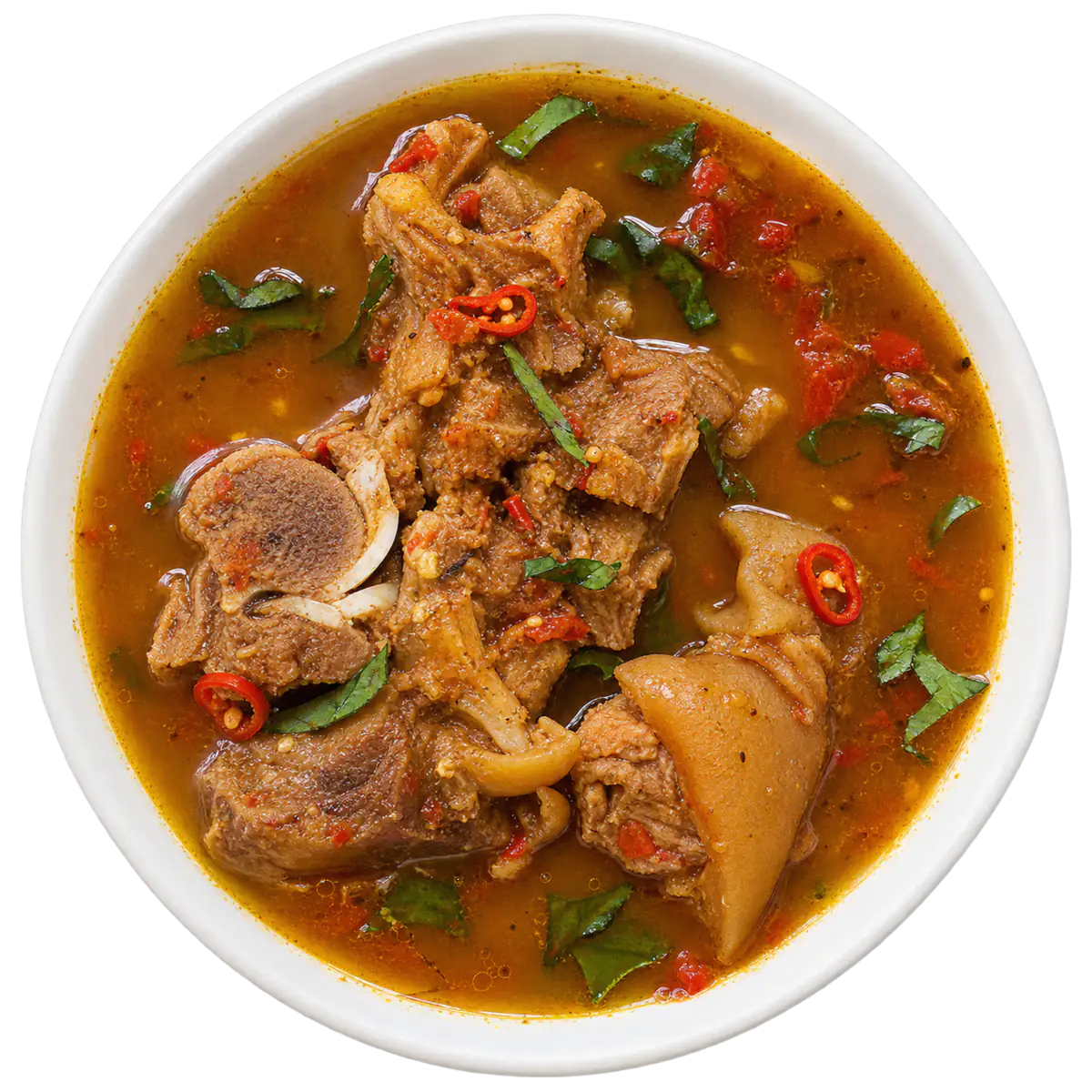 Goat meat pepper soup
Pepper soup made with bone-in goat meat (and sometimes the head or offal), the best-known form of the soup, simmered with the pepper-soup spice blend, onion and chilli, finished with uziza or basil.
At the festivals
No festival we list has printed it on a menu yet.