
🇲🇾 Malaysia and 🇸🇬 Singapore · Peranakan/Malay cuisine of Malaysia and Singapore
LaksaMalaysian curry noodle soup
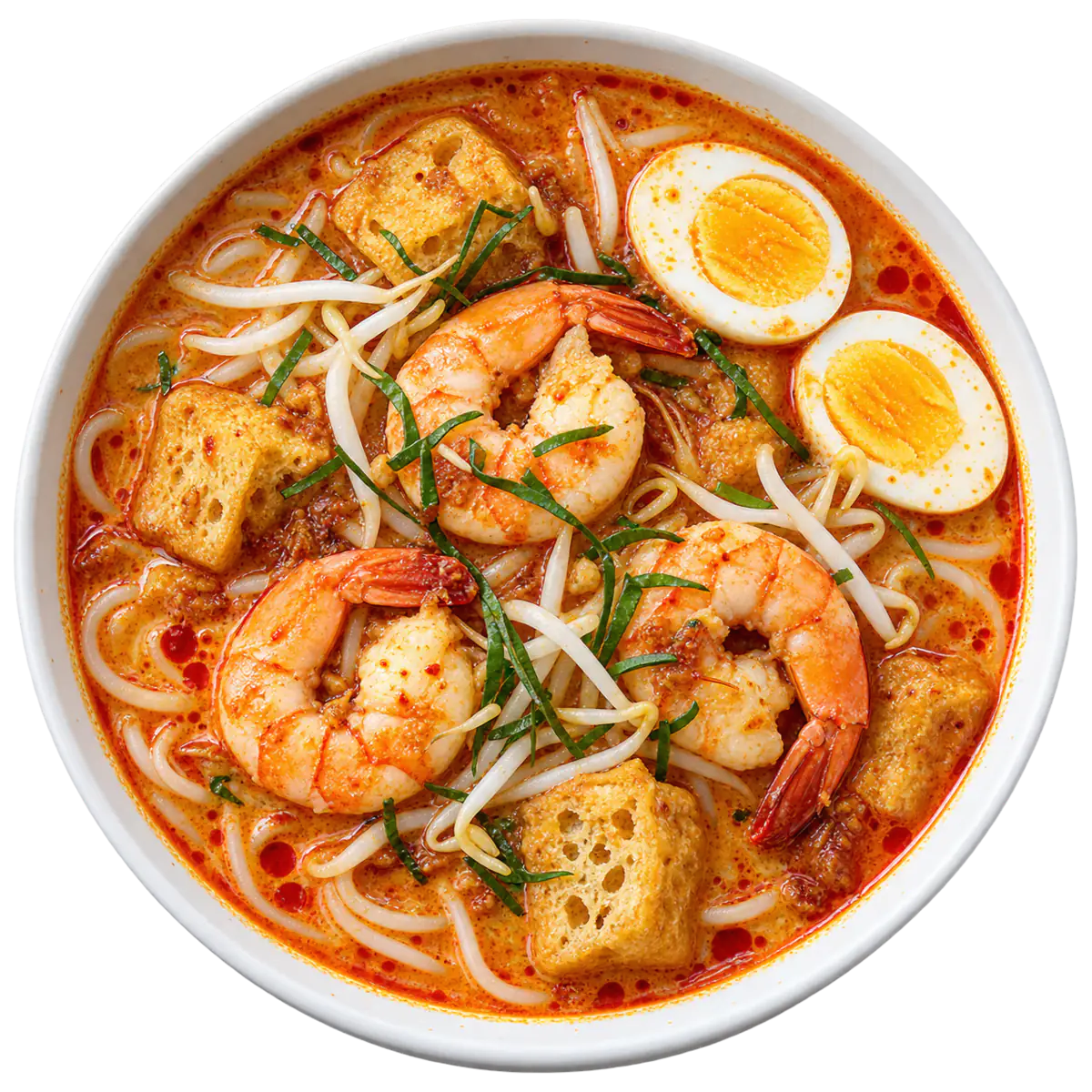
Spicy Malay-Peranakan noodle soup of thick rice noodles in a coconut-milk curry broth (laksa lemak, curry laksa) built on a fried rempah of chilli, lemongrass, galangal, candlenut, dried shrimp and belacan, topped with prawns, fish cake, tofu puffs, bean sprouts and laksa leaf.
Origin and history
A noodle soup of the Peranakan (Straits Chinese) communities of Malacca, Penang and Singapore, where Chinese settlers' noodle soups met Malay spices and coconut milk; the origin of the name is debated (Persian and Sanskrit or Hindi words for noodles have been proposed). It split into regional forms, from Penang's sour asam laksa to Singapore's Katong laksa, and Singapore listed laksa in its intangible cultural heritage inventory in 2019.
Make it at home
- Makes
- 4 servings
- Total time
- 1 h 45 min
- Hands-on
- 1 h
Ingredients
- 10-12 dried red chillies, for the rempah, seeded if you want less heat, soaked in hot water 20 min
- 3 fresh red chillies, for the rempah, sliced
- 150 g5 oz (about 10 small) shallots, for the rempah, peeled
- 3 garlic cloves, for the rempah
- 2 lemongrass stalks, for the rempah, tender lower part only, sliced
- 30 g1 oz (a 4 cm / 1 1/2 in piece) galangal (lengkuas), for the rempah, peeled, sliced
- 3 cm piece or 1 tsp1 1/4 in piece or 1 tsp fresh turmeric (kunyit), or ground turmeric, for the rempah
- 5 candlenuts (buah keras), for the rempah, or macadamia nuts
- 1 tbsp coriander seeds, for the rempah, toasted and ground
- 10 g1 1/2 tsp belacan (fermented shrimp paste), for the rempah, toasted in a dry pan or foil until crumbly
- 40 g1/3 cup dried shrimp (udang kering), for the rempah, soaked 15 min; keep the soaking water
- 400 g14 oz medium prawns, shell on, peeled; keep heads and shells for the stock
- 1.2 l5 cups water, for the stock
- 100 mlscant 1/2 cup neutral oil, plus 1 tbsp for the shells
- 1 small bunch laksa leaves (daun kesum, Vietnamese coriander), a few sprigs whole for the pot, the rest finely shredded
- 600 ml2 1/2 cups coconut milk (santan)
- 1-2 tsp sugar
- salt, to taste
- 500 g fresh or 250 g dried1.1 lb fresh or 9 oz dried thick round rice noodles (laksa noodles, thick bee hoon)
- 200 g7 oz bean sprouts (taugeh), tails pinched off
- 150 g5 oz fish cake, sliced
- 8 tofu puffs (tau pok), halved
- 2 hard-boiled eggs or a handful of blood cockles, optional
- sambal belacan (chilli and shrimp paste relish), to serve
Method
-
1. Make the stock: heat 1 tbsp oil in a pot and fry the prawn heads and shells for about 5 minutes, pressing them, until they turn red and smell toasty.
-
2. Add the water and the dried-shrimp soaking water, bring to the boil and simmer for 30 minutes. Strain, pressing the shells; you need about 1 l (4 cups) of stock.
-
3. Meanwhile, make the rempah: pound or blend all the rempah ingredients (drained chillies, fresh chillies, shallots, garlic, lemongrass, galangal, turmeric, candlenuts, coriander, belacan, soaked dried shrimp) to a fine paste, adding a spoonful of water only if the blender needs it.
-
4. Heat the 100 ml oil in a wok or heavy pot over medium-low heat and add the rempah. Fry it, stirring often, for 20-30 minutes, until it darkens to a deep brick red, smells sweet rather than raw, and the oil separates and pools around the paste (pecah minyak).
-
5. Pour in the prawn stock, add the whole laksa leaf sprigs and simmer for 15-20 minutes.
-
6. Poach the peeled prawns in the simmering broth for 1-2 minutes, until just pink, and lift them out. Add the tofu puffs and let them soak up the broth for 3 minutes, then lift them out too.
-
7. Stir in the coconut milk, bring the broth back to a simmer without boiling hard, and season with sugar and salt. It should be rich, spicy and savoury with a faint sweetness; remove the laksa leaf sprigs.
-
8. Blanch the noodles and bean sprouts in boiling water for 30-60 seconds (cook dried noodles according to the packet first), drain, and divide among deep bowls.
-
9. Top with the prawns, fish cake, tofu puffs and egg or cockles, and ladle the very hot broth over.
-
10. Scatter with shredded laksa leaves and serve with a spoonful of sambal belacan on the side.
Notes
- This parent recipe is the coconut-milk curry laksa, called laksa lemak or Nyonya laksa (lemak means rich with coconut milk). It is the form most people outside the region mean by 'laksa'.
- Asam laksa, Penang's laksa, is a different branch: a sour broth of mackerel (ikan kembung) cooked with tamarind and asam keping (dried garcinia), lemongrass, galangal, chilli and belacan, with no coconut milk, served over thick rice noodles with shredded cucumber, pineapple, onion, mint, torch ginger flower and a spoonful of thick prawn paste (hae ko). It is not made from this recipe.
- Regional curry laksas include Singapore's Katong laksa, with the noodles cut short so it is eaten with a spoon only; Malaysian curry mee or curry laksa, often with a mix of egg noodles and rice vermicelli; and Sarawak laksa, a separate dish built on a sambal-belacan-tamarind paste.
- Frying the rempah slowly until the oil separates is the step that matters most; underfried paste tastes raw and harsh.
- Laksa leaf (daun kesum) has a sharp, peppery-minty smell; if you cannot find it, use a mix of mint and coriander, which is milder.
- Candlenuts thicken and enrich the paste; macadamias are the usual substitute. Dried shrimp and belacan give the broth its depth, so do not reduce them.
- The rempah freezes well, and the broth can be made a day ahead; add the coconut milk when reheating.
- Related: tom kha gai, the Thai coconut-milk soup.
Adapted from FairPrice (Singapore), "Laksa", The Meatmen (Singapore), "Katong Laksa", and Karen Chan, SBS Food, "Curry laksa (Nyonya laksa lemak)".
Variants
At the festivals
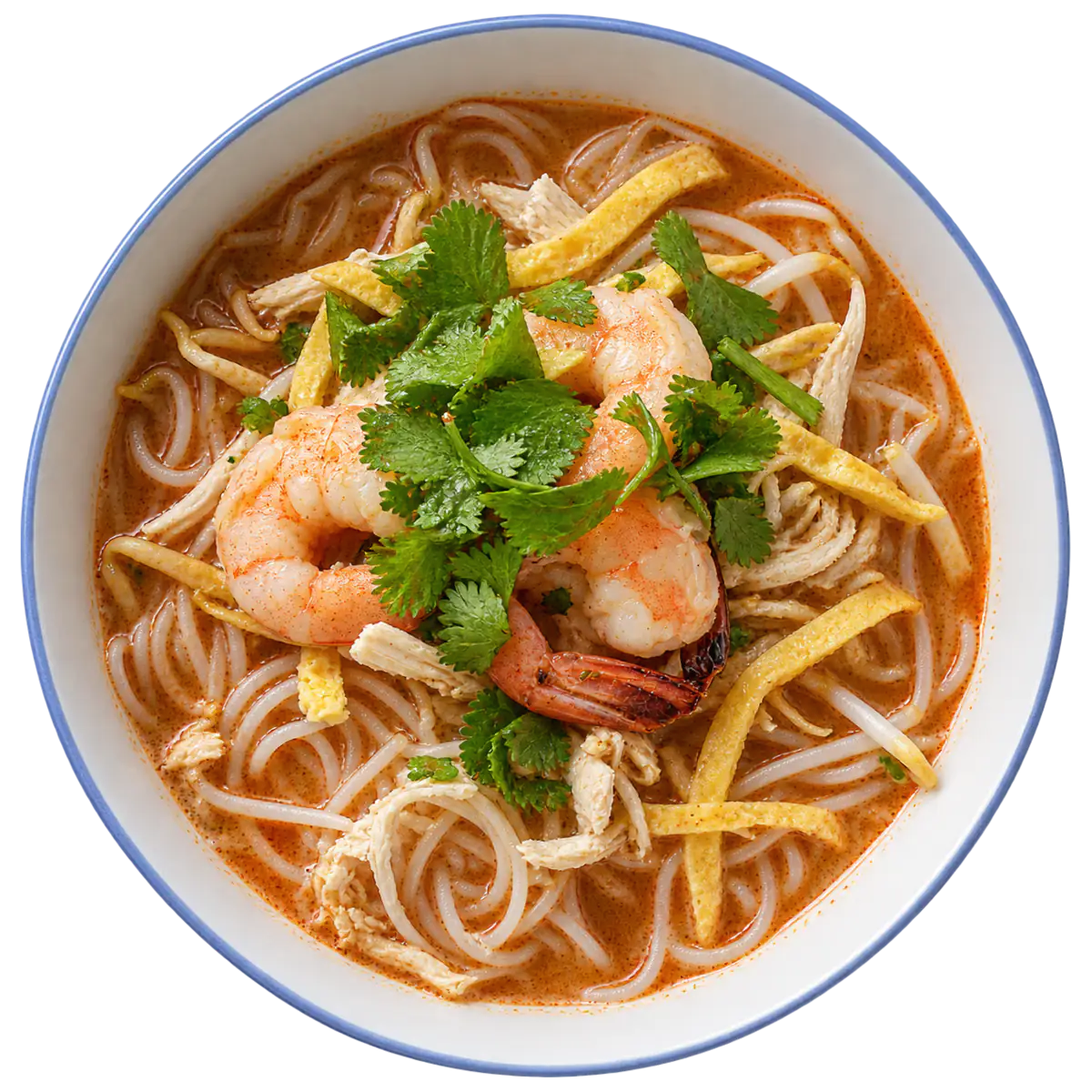
Served at 1 festival in Czechia.
Earlier editions
- October 17, 2026