
🇨🇴 Colombia and 🇪🇨 Ecuador · Chiefly Colombia's Pacific coast; also the Colombian Caribbean coast and the Ecuadorian coast
Sancocho de pescadoFish sancocho
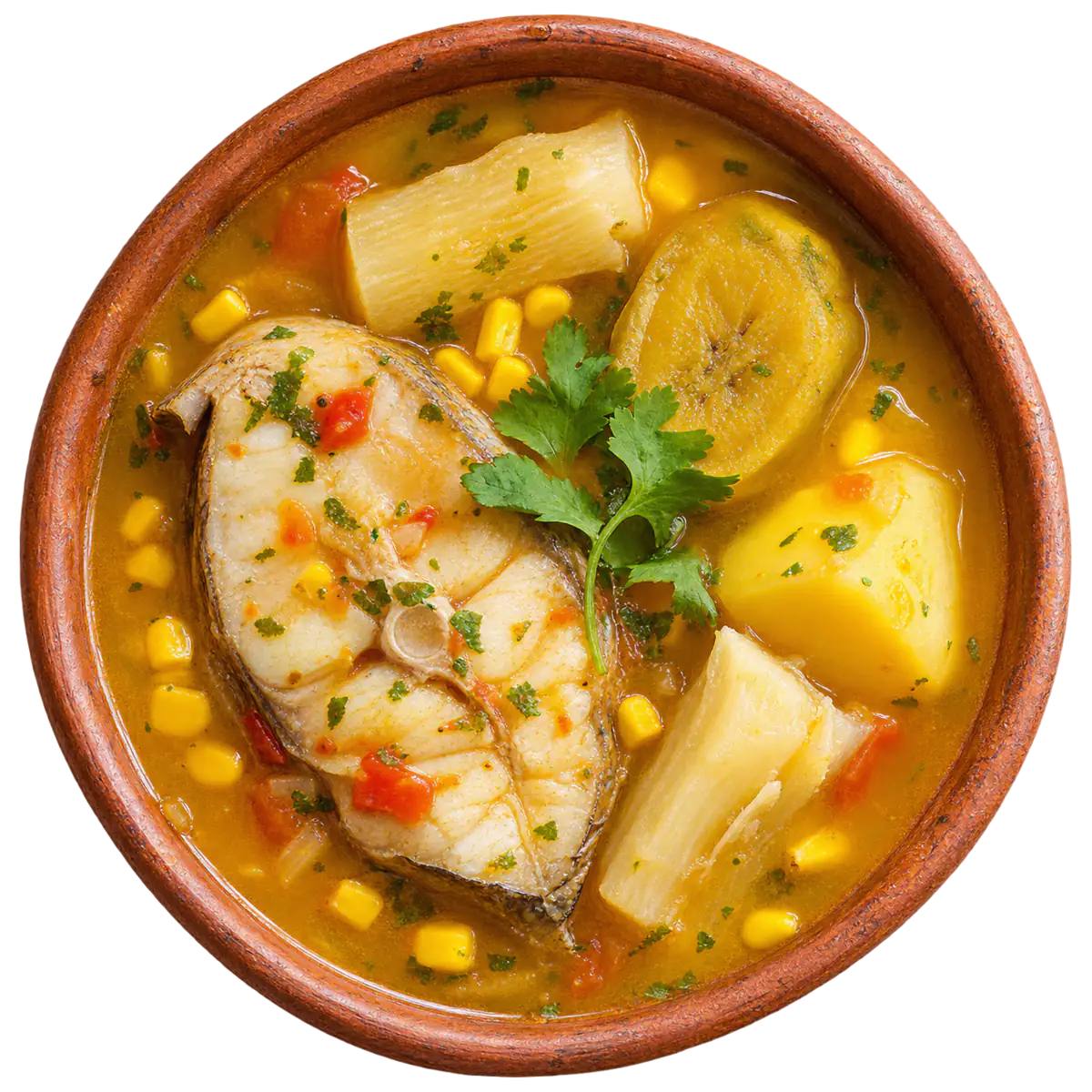
Sancocho made with fish in place of meat, with ñame, yuca and plantain; the traditional sancocho of Colombia's Pacific coast, also made on the Caribbean coast (bocachico) and, with peanut paste, on the Ecuadorian coast.
Origin and history
Sancocho takes the main ingredient of its region, and on Colombia's coasts that is fish. Colombian food writers call fish sancocho the traditional sancocho of the Pacific coast, cooked with ñame and half-ripe plantain and eaten with coconut rice; on the Caribbean coast fish sancochos made with bocachico are among the most popular. On the coast of Ecuador fish sancocho is made with peanut paste.
Make it at home
- Makes
- 6 servings
- Total time
- 1 h 30 min
- Hands-on
- 35 min
Ingredients
- 1.2 kg2.6 lb firm white fish steaks on the bone: bagre (catfish), bocachico, róbalo (snook) or red snapper, cut about 3 cm (1 1/4 in) thick
- 1 (about 500 g)1 (about 1 lb) fish head and frames, gills removed, rinsed; for the broth
- 3 l12 1/2 cups water
- 1 lime, juiced
- 5 cloves garlic, minced; divided
- 2 tbsp vegetable oil
- 1 onion, finely chopped
- 4 stalks cebolla larga (long green onion) or scallions, finely chopped
- 4, or 1 small ají dulce (sweet chiles), or a red bell pepper, seeded, finely chopped
- 1 tsp ground achiote (annatto) or color, for colour
- 1/2 tsp ground cumin
- 2 green plantains, peeled, snapped into chunks
- 1 half-ripe plantain (plátano pintón), peeled, cut in chunks; optional, for a touch of sweetness
- 500 g1.1 lb yuca (cassava), peeled, core removed, cut in large pieces
- 400 g14 oz ñame (white yam) or waxy potatoes, peeled, cut in large pieces
- 2 ears of corn, optional; cut into rounds
- 1/2 cup (about 15 g)1/2 cup fresh cilantro, chopped
- salt and black pepper, to taste
- to serve: white rice or coconut rice, avocado, lime wedges
Method
-
1. Season the fish steaks with salt, pepper, half the garlic and the lime juice, and keep them in the fridge while you make the broth.
-
2. Put the fish head and frames in a large pot with the water and a good pinch of salt, bring to a boil, skim, and simmer gently for 25 minutes.
-
3. Strain the broth through a fine sieve and discard the head and bones.
-
4. Rinse and dry the pot, heat the oil over medium heat and cook the onion, green onion, ají dulce and the rest of the garlic for about 6 minutes, until soft but not browned. Stir in the achiote and cumin for 30 seconds.
-
5. Pour in the fish broth and bring it to a boil. Add the green plantain, the yuca, the ñame or potatoes and the corn, if using.
-
6. Lower the heat, cover and simmer for 25 to 30 minutes, until the yuca is translucent and splits easily with a fork. Add the half-ripe plantain for the last 15 minutes.
-
7. For body, lift out one piece of green plantain, mash it with a fork and stir it back into the broth. Taste for salt.
-
8. Lay the fish steaks on top of the vegetables, push them gently under the broth and simmer, uncovered and without stirring, for 10 to 12 minutes, until the flesh turns opaque and pulls away from the bone.
-
9. Scatter over the cilantro, turn off the heat and let it sit for 5 minutes.
-
10. Ladle into deep bowls with a steak of fish and a share of the roots in each, and serve with rice, avocado and lime.
Notes
- Fish: on the Colombian coasts sancocho takes whatever the local catch is. Bagre (catfish) is the classic; on the Caribbean coast bocachico, a river fish, is a favourite; on the Pacific, sea fish such as snapper. Any firm fish cut through the bone works; fillets fall apart, so add them for the last 6 to 8 minutes only.
- Pacific coast: the traditional sancocho of the Colombian Pacific is a fish sancocho with ñame and half-ripe plantain, which gives a slightly sweet note; many cooks there finish it with coconut milk (about 400 ml / 1 2/3 cups stirred in with the fish) and herbs such as cimarrón. Serve it with coconut rice.
- Ecuadorian coast: there a fish sancocho is enriched with peanut paste; stir about 100 g (scant 1/2 cup) of smooth unsweetened peanut paste, loosened with a ladle of broth, into the pot before adding the fish.
- Do not stir once the fish is in, or it will break up; shake the pot gently instead.
- The broth with the roots can be made a few hours ahead; reheat it and poach the fish only just before serving.
- Related pages on the site: the parent sancocho, sancocho de gallina (hen) and sancocho trifásico (three meats). The Pacific tapao, fish and green plantain cooked covered, often in coconut milk, is a related but separate dish.
Adapted from Erica Dinho, Sancocho de pescado (Colombian fish soup), My Colombian Recipes, Este es el paso a paso para cocinar un sancocho de pescado, El Espectador, and Edd Cabarcas, Cómo preparar sancocho de pescado con leche de coco, El Espectador.
At the festivals
Served at 3 festivals in Colombia and Ecuador.
Earlier editions
-
July 26, 2026
🇨🇴 Santa Elena, Medellín, Colombia
Festival de Sancochos de Santa Elena
-
June 26, 2025 – July 06, 2025
🇪🇨 Guayaquil, Ecuador
Tercer Festival de Sopas
-
December 10, 2023
🇨🇴 Barrancabermeja, Colombia
XVIII Festival del Sancocho
On the menu as sancocho de cabeza de bagre and El Dinamita
By a participant who cooks at the Muelle