
🇰🇷 South Korea · Korea; Jeolla, Gyeonggi and Chungcheong are known for it
Sundae-gukKorean blood sausage soup
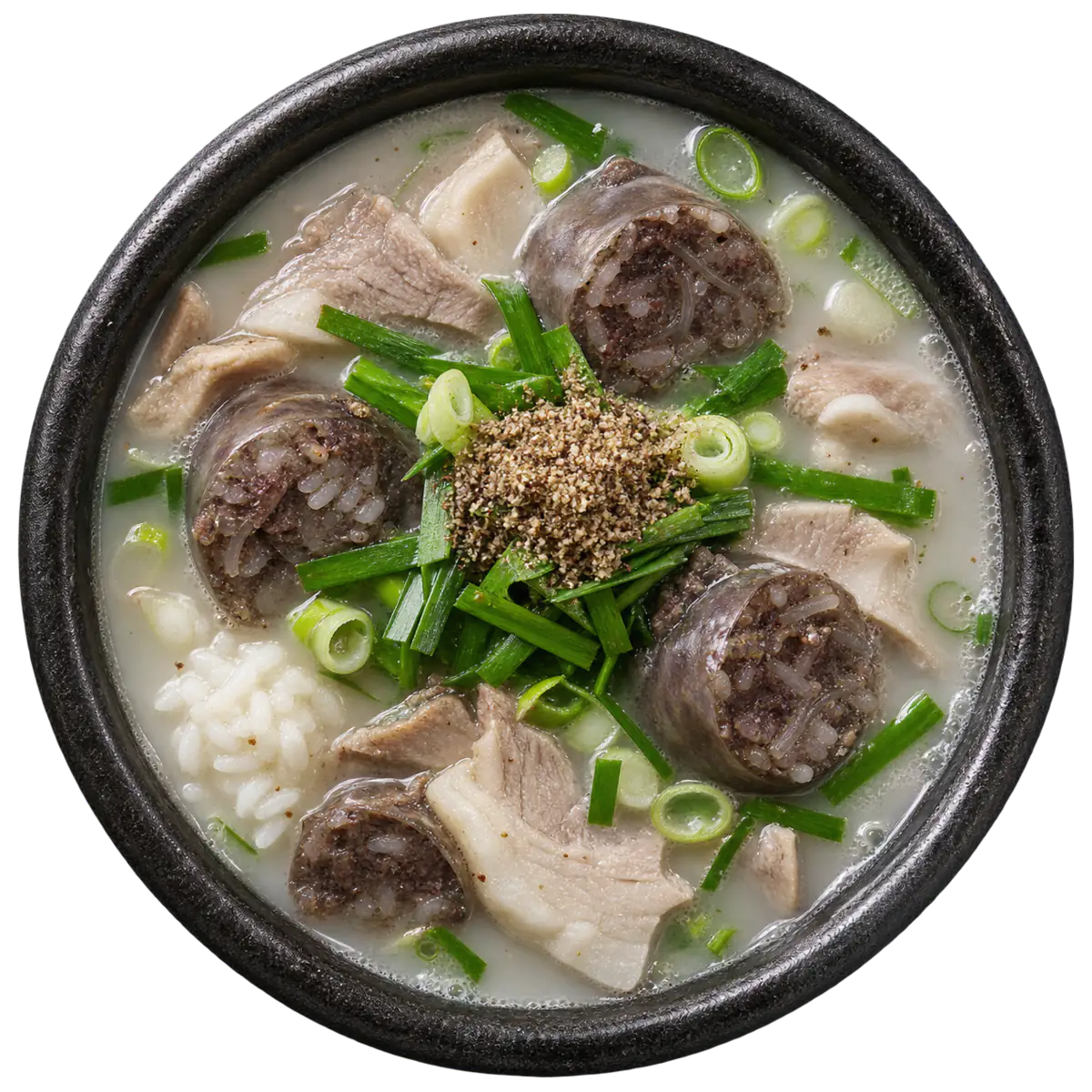
A milky bone broth holding slices of sundae (Korean blood sausage) and pork offal and head meat, seasoned at the table with salted shrimp, perilla powder, chives and chili, and eaten with rice.
Origin and history
The Korea Tourism Organization notes that the name sundae first appears in the late-Joseon cookbook Siuijeonseo, and the Encyclopedia of Korean Culture adds that Gyuhap chongseo also has a sundae recipe. The Encyclopedia defines sundae as intestines stuffed with fillings (pig blood, bean sprouts, watercress, radish, tofu and kimchi in the pig form) and boiled or steamed; it records that pig sundae is sliced and floated in soup, especially in Pyeongan and Hamgyong provinces.
Make it at home
- Makes
- 4 servings
- Total time
- 1 h 30 min
- Hands-on
- 25 min
Ingredients
- 300 g10.5 oz sundae (Korean blood sausage), bought ready-made; cut in thick slices
- 500 g1.1 lb pork front shoulder or shank, in one piece, simmered for the meat stock, then sliced thin; offal (liver, heart, head meat) may be added too
- 1 L1 qt water, for the pork stock
- 2/3 stalk scallion, for the stock
- 1/2 onion, for the stock
- 6 cloves garlic, for the stock
- 1 small piece ginger, garlic-clove size
- 1 tbsp cheongju (rice wine), for the stock
- 1 L1 qt beef or pork bone broth, long-simmered, milky; unsalted store-bought is common
- 1/2 stalk scallion, finely chopped
- 1/2 handful garlic chives (buchu), cut in 5 cm (2 in) lengths
- 3 tbsp gochugaru (Korean chili flakes), for the seasoning paste (dadaegi)
- 1 tbsp minced garlic, for the dadaegi
- 1 tbsp guk-ganjang (Korean soup soy sauce), for the dadaegi
- 1 tbsp chamchi-aek (tuna liquid seasoning) or anchovy fish sauce, for the dadaegi
- saeujeot (salted shrimp), perilla seed powder, salt and black pepper, to taste, at the table
- 4 bowls cooked rice, to serve
Method
-
1. Put the pork, scallion, onion, garlic, ginger and rice wine in the 1 L (1 qt) water. Boil hard for 20 minutes, then simmer over medium heat for about 1 hour in all, until the stock is milky and the meat tender.
-
2. Take out the pork and slice it thin. Strain the stock and skim off the fat.
-
3. Mix the gochugaru, garlic, soup soy sauce, liquid seasoning and 3 tbsp of the pork stock into the dadaegi paste.
-
4. Combine about 400 to 500 ml each of the bone broth and the pork stock in a pot, bring to a boil and season with salt and pepper.
-
5. Warm the sundae slices in a strainer set over the simmering broth for a minute or two.
-
6. Put the pork and sundae in four bowls with a little cooked rice if you like, ladle in the boiling broth, and top with scallion, garlic chives and a spoonful of perilla powder.
-
7. Serve with salted shrimp and the dadaegi on the side, so each person seasons their own bowl.
Notes
- The Korea Tourism Organization describes the broth as made from bones simmered overnight and milky, though clear at Hanil in Gokseong, which cooks it in a large cast-iron cauldron. The bowls hold sliced sundae, offal such as liver and heart, and head meat; the page names a sundae-guk road through Iksan, Jeonju, Gimje, Gokseong and Damyang.
- Sundae differs by region: blood sundae (pi-sundae) is known in Jeonju and Suncheon, a vegetable sundae in Gokseong. Blood and makchang sundae are recommended dipped in sweet-and-sour gochujang (chogochujang) rather than salted shrimp.
- Side dishes are aged kimchi, seokbakji (chopped radish kimchi), and raw onion and green chili dipped in doenjang.
- For a quicker soup, use a good store-bought bone broth for all the liquid and skip the pork stock; if it is already salted, taste before adding salt.
- Sundae is cooked, so just warm it through; cooking it long in the broth makes it split.
Adapted from Marketkurly recipe: Sundae-guk for 4, Korea Tourism Organization (VisitKorea): Sundae-guk, and Encyclopedia of Korean Culture (Academy of Korean Studies): Sundae.
At the festivals
No festival we list has printed it on a menu yet.